
DIASPORA | Caribbean Cultural Heritage Under Threat: Dr. Bertram Melbourne Sounds Alarm on Cultural Preservation
DIASPORA | Caribbean Cultural Heritage Under Threat: Dr. Bertram Melbourne Sounds Alarm on Cultural Preservation
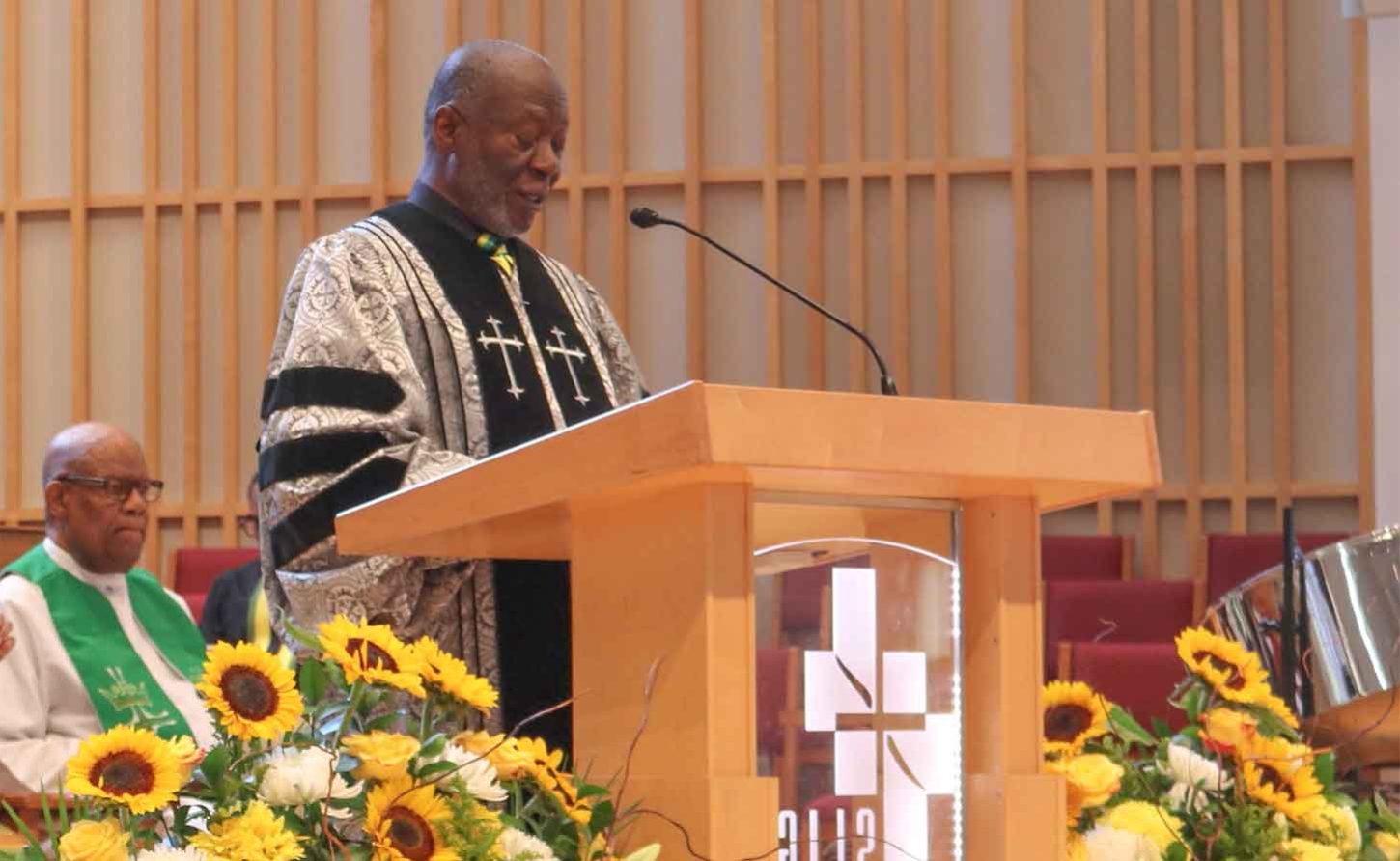
WASHINGTON DC, July 31, 2025 - "Mi glad fi si ounu, yu si. Mi glad bag almost bus-up," declared Dr. Bertram Melbourne, his voice carrying Jamaica's authentic rhythms as he addressed hundreds packed into Sligo Seventh Day Adventist Church in Maryland on July 27, 2025.
The Howard University professor and former dean, speaking at Jamaica's 63rd independence celebration, delivered an urgent call for cultural preservation in an era of "revisionist history and fake news." Melbourne's patois greeting—"I'm glad to see you all, you see. I'm so glad my heart could burst"—set the tone for a celebration that doubled as a cultural battle cry.
The DMV region's traditional independence gathering gained heightened significance with the introduction of Jamaica's newly appointed 14th Ambassador to the United States and Organization of American States, Antony Anderson.
The former Major General brings unprecedented security credentials to his diplomatic role, having served as Jamaica's Commissioner of Police, National Security Advisor, and Chief of Defence Staff over a distinguished 34-year military career.
Anderson's March 2025 appointment—formalized with credential presentations to President Donald Trump and OAS Secretary General Albert Ramdin—positions Jamaica strategically during a period of growing global influence.
His extensive experience in "regional cooperation" and "multinational security operations throughout the Caribbean" provides crucial expertise as Jamaica navigates complex international challenges.
At the heart of Melbourne's address was the Anansi metaphor—a cultural preservation plea wrapped in West African folklore. "They knew my name throughout Jamaica," Melbourne quoted the legendary spider figure as saying. "Please keep me alive." This ancient trickster's desperate appeal became Melbourne's rallying cry against what he characterized as 2025's "fractured information landscape."
Drawing on Marcus Garvey's foundational wisdom that "a people without the knowledge of their past history, origin and culture is like a tree without roots," Melbourne framed cultural amnesia as an existential threat.
The celebration embraced "Emancipendence"—the portmanteau connecting August 1st's Emancipation Day with August 6th's Independence Day—as a symbol of historical continuity under assault. Melbourne's message resonated beyond folklore: in an age of information warfare, cultural authenticity becomes both shield and weapon.
Melbourne's assessment of Jamaica's outsized global impact provided striking evidence for his preservation argument. "No other small nation" has achieved greater influence across "cuisine, academics, economics, politics, music, or athletics," he declared, embodying the almost national motto "Wi likkle but wi talawa"—we're small but we're strong.
With fewer than 3 million citizens, Jamaica has produced cultural phenomena from reggae to Usain Bolt's sprint records, establishing what amounts to the world's least populous cultural superpower. Yet Melbourne warned that contemporary challenges—climate change, rising nationalism, artificial intelligence, and economic volatility—threaten this remarkable legacy.
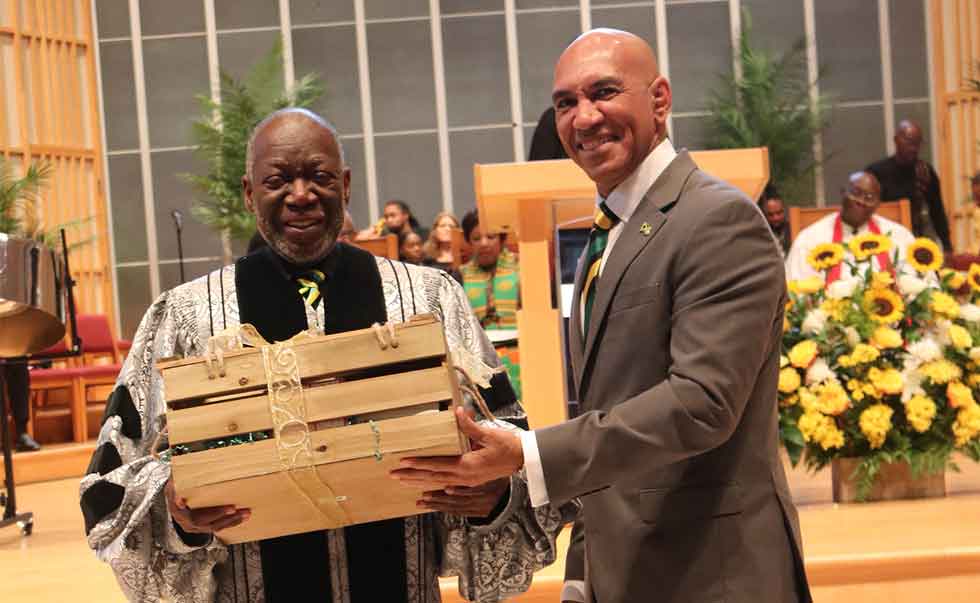
Dr. Bertram Melbourne being presented with a gift by Ambassador Antony Anderson for his more than thirty years in organizing Jamaica's independence service on behalf of the Jamaican embassy in Washington DC.
Melbourne's challenge to the diaspora carried the weight of urgent responsibility. "Be Bold. Be Proud in our black, green, and gold," he declared, invoking Jamaica's flag colors as symbols of identity that transcend geography.
This fourth consecutive year of celebration at the Maryland venue—a COVID-19 adaptation from four decades of Howard University traditions—symbolized resilience and continuity.
Melbourne positioned individual cultural preservation as essential to Jamaica's continued global influence, arguing that each diaspora member serves as a guardian of heritage that government policy alone cannot protect.
The gathering represented more than nostalgia; it constituted strategic cultural defense in an era where authentic narratives compete with manufactured ones.
The Anansi metaphor returned in Melbourne's conclusion, completing a circular narrative that honored traditional storytelling while addressing contemporary threats. Jamaica faces a critical inflection point: its remarkable cultural influence can either expand through committed preservation or contract through neglect.
Melbourne's gathering demonstrated that cultural heritage requires active defense, transforming celebration into strategy. As Ambassador Anderson prepares to represent Jamaica's interests on hemispheric stages, the diaspora community's role in maintaining cultural authenticity becomes increasingly vital.
The spider's plea—"Please keep me alive"—echoes through Maryland and beyond, a reminder that even the smallest nations can cast the largest cultural shadows when their stories survive.
-30-
