
CARIBBEAN | The Children Left Behind: Caribbean Families in the Crosshairs of America’s Third-Country Removals
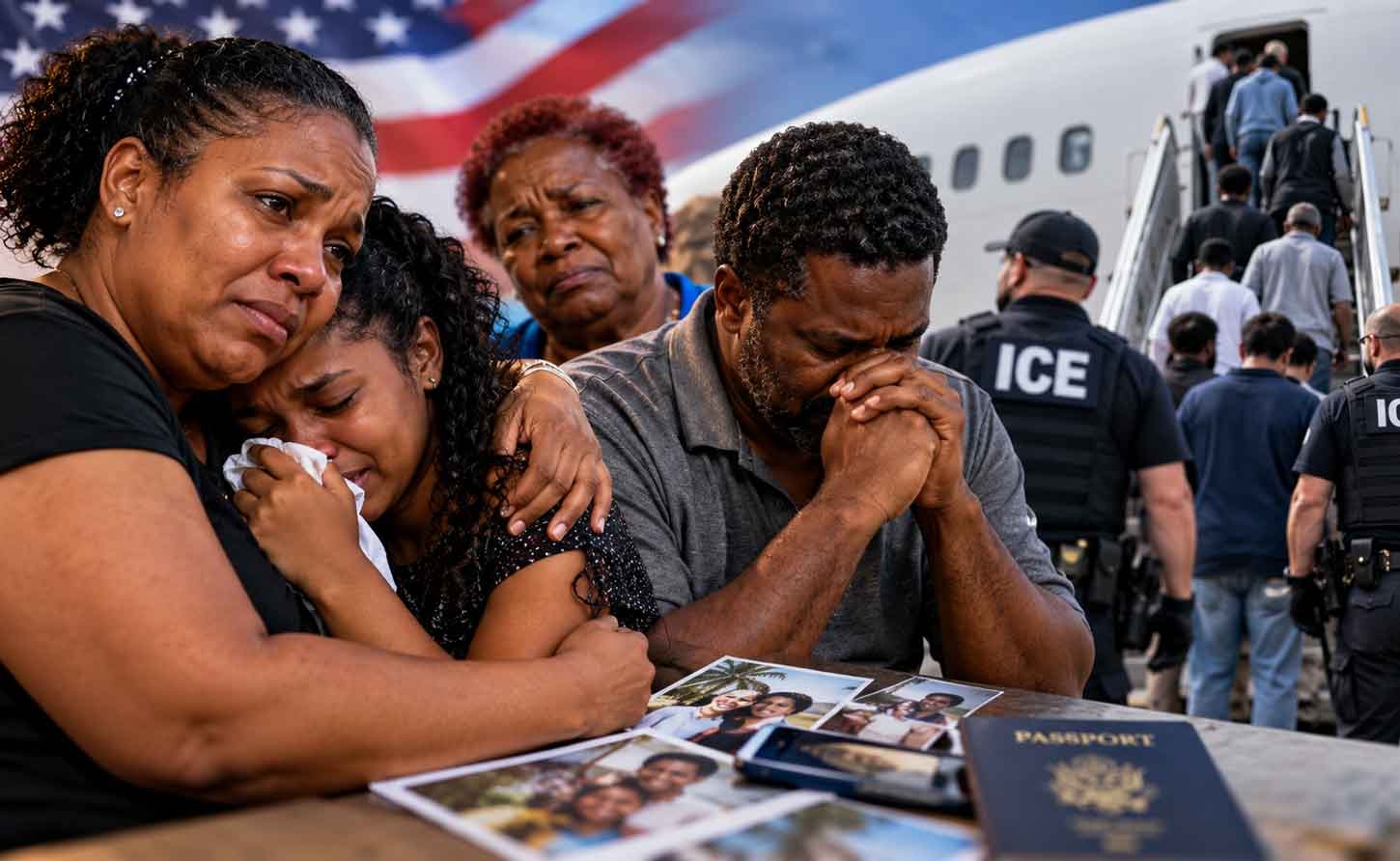
CARIBBEAN | The Children Left Behind: Caribbean Families in the Crosshairs of America’s Third-Country Removals
Washington has now sent some 25,000 people to countries that are not their own. For Caribbean families in the United States, the policy is quietly redrawing the meaning of separation — and the region’s own governments have become part of the machinery.
CALVIN G. BROWN | INVESTIGATIONS | WIREDJA
MONTEGO BAY, Jamaica, October 4, 2026 - Calvin G Brown - Investigations | Roberto Mosquera never got to say goodbye. In June 2025, two days before Father’s Day, immigration agents detained the Cuban-born plumber who had spent most of his life in South Florida raising three daughters. He had a long criminal record, including an attempted murder conviction for which he served his prison time. Like many Cubans with old deportation orders that Havana would not honour, he had reported to immigration officials every year since his release.
Cuba did not take him back. So the United States sent him somewhere else: Eswatini, a small absolute monarchy in southern Africa where he had never set foot. Fourteen months later, Miami’s Local 10 News found him still behind bars there, though his lawyer says he faces no charge in that country. His family waits in Homestead, Florida.
Mosquera’s story is not offered here as a defence of his past. It is a window into a policy whose human cost is felt far from the people it targets — by the children, spouses and parents left on American soil, many of them Caribbean, many of them US citizens.
A new geography of exile
“Third-country removal” means deporting someone to a nation that is neither their birthplace nor a place where they hold legal status. Once a rarity, it has become a pillar of the Trump regime’s enforcement drive. On 23 September, Department of Homeland Security general counsel James Percival put the total at 25,000 people, calling the practice an essential public safety tool. Advocacy groups count agreements with at least 35 countries.
For Caribbean nationals, the busiest route runs south. Human Rights Watch found that between January 2025 and March 2026 the US deported almost 13,000 third-country nationals to Mexico, with Cubans the largest group at an estimated 4,353.
Many had held green cards for decades before losing them over criminal convictions, and many have American spouses and children. Mexico does not grant them clear legal status; Human Rights Watch documented people left without effective access to asylum or a path to settle.
Jamaica has its own emblematic case. Orville Etoria arrived in the US at 12 and lived there as a lawful permanent resident for decades. Convicted of a serious crime in 1997, he served 25 years, earned a bachelor’s degree behind bars, won parole in 2021 and went on to work as a case manager at a men’s shelter.
When ICE asked him to obtain a passport in 2025, Jamaica issued one. ICE then flew him to Eswatini, where, his lawyers at New York’s Legal Aid Society say, he was held in a maximum-security prison for more than two months without charge or access to counsel.
Homeland Security described the men on that flight as so “uniquely barbaric” that their home countries refused to take them back. Kingston’s Foreign Ministry responded that the Government had not refused the return of any Jamaican. Etoria came home in September 2025. He left behind US-citizen adult children and grandchildren.
The choice that isn’t
The Trump regime insists it does not break up families. “ICE does NOT separate families,” DHS spokesperson Tricia McLaughlin told NOTUS earlier this year, explaining that parents are asked whether they want to be removed with their children or have them placed with a safe person they designate.
In an ordinary deportation, that is at least a real, if painful, choice. In a third-country removal, it collapses. No parent can realistically carry a US-citizen child into an Eswatini prison cell, or onto the streets of a Mexican city where the parent has no papers, no work permit and no family. The “choice” becomes separation by default.
In a third-country removal, the parent’s “choice” collapses into separation by default.
The safeguards have also thinned. In July 2025, ICE replaced the 2022 Parental Interests Directive with a new Detained Parents Directive. The Women’s Refugee Commission says the new version weakens protections for noncitizen parents and sharply reduces ICE’s obligations to keep families together.
How many children are affected? Nobody can say. When NOTUS asked all 50 states, it found at least 32 children of immigrants had entered foster care in seven states after a parent was detained or deported — and concluded that the federal government keeps no comprehensive count.
The Migration Policy Institute estimates that 5.3 million US-citizen children are at risk of losing a parent to deportation. In July 2026, a letter published by Representative Pramila Jayapal pressed ICE on how many US-citizen children have had a parent deported.
Crucially, none of these figures is broken down by nationality. There is no public number for the Jamaican, Haitian, Guyanese or Trinidadian children left behind. That silence is itself a finding.
Haiti: the dilemma at scale
Haitians are not, for the most part, being sent to third countries. But the parental dilemma is identical, and the numbers are far larger. After a 6–3 Supreme Court ruling in June, a federal judge on 5 August lifted the last block on ending Temporary Protected Status for up to 350,000 Haitians.
Roughly 50,000 children have been born in the US to Haitian TPS families, NPR reported. The first post-TPS deportation flight, carrying more than 160 people, landed in Cap-Haïtien on 21 August.
Parents must now weigh taking American-born children to a country under a US “do not travel” advisory, or leaving them behind. Guerline Jozef of the Haitian Bridge Alliance put it bluntly: it is impossible for them to be safe there. States with large Haitian communities, such as Massachusetts, have published guides to help parents appoint temporary guardians — a bureaucratic answer to an impossible question.
The Caribbean in the mirror
The uncomfortable twist is that Caribbean governments are now part of the system. At least seven CARICOM states, among them Antigua and Barbuda, Belize, Dominica, Grenada, Guyana, St Kitts and Nevis and St Lucia, have signed or are negotiating transfer arrangements with Washington.
On 19 May 2026, three CARICOM nationals from Jamaica and Belize were flown from the US to St Kitts and Nevis — Caribbean people moved, island to island, by American decision. The St Kitts deal explicitly excludes Haitians, though Haiti is a full CARICOM member.
Dominica’s Prime Minister Roosevelt Skerrit called his country’s agreement a pragmatic step to protect vital ties with Washington. It followed US visa restrictions on Dominica and Antigua that critics across the region read as pressure.
Antigua and Barbuda took the opposite tack. Its government published a White Paper in July offering, at most, 10 people in 2026, each approved case by case, with asylum seekers, minors and criminal offenders excluded and every cost guaranteed in writing beforehand.
Parliament then barred any standing programme. Prime Minister Gaston Browne has said US visa restrictions on Antiguans were used to push his country toward a deal; Ambassador Sir Ronald Sanders says no agreement has been signed and no transfer authorised.
Jamaica signed its memorandum of understanding on 10 June 2026, and the public learned of it from a leaked US Embassy document published by The Gleaner. Operating procedures were finalised on 16 September.
Foreign Minister Kamina Johnson Smith says the arrangement allows up to 25 transfers every two weeks with no more than 10 people on the island at a time, costs Jamaica nothing, admits no one with criminal antecedents, works through the International Organization for Migration, and will be suspended if 10 transferees seek asylum. She insists those transiting are not deportees.
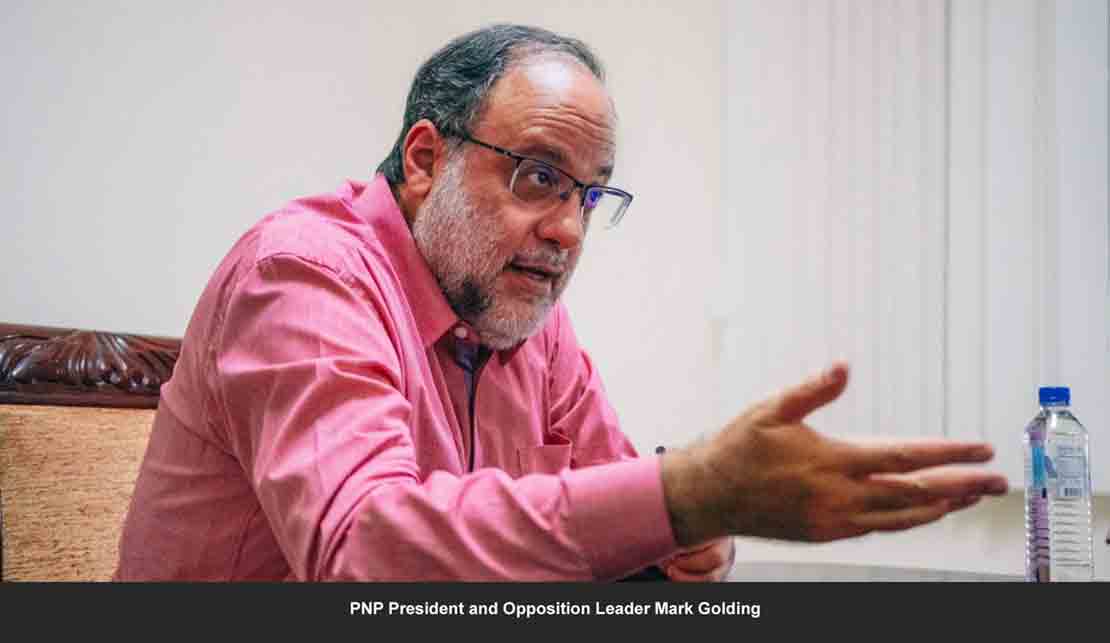
Opposition Leader Mark Golding wants to find out what is Jamaica getting for its troubles?
Opposition Leader Mark Golding has said he would have approached the deal with caution given the live US court challenges.
The regional agreements bar unaccompanied minors from arriving on Caribbean shores. None of them says anything about the children left behind on the other end of the flight.
The case for the policy, and the courts
The regime’s argument deserves a fair hearing. US immigration law expressly allows removal to a third country when return to the designated country is impracticable or impossible. Some governments, Cuba chief among them, routinely refuse their own nationals, leaving people with final removal orders in limbo for years.
Many of those removed have serious convictions. Attorney General Todd Blanche has called the practice entirely lawful and a critical enforcement tool.
The courts have been less sure. In February, US District Judge Brian Murphy ruled the policy unlawful, holding that people must get meaningful notice of where they are being sent and a real chance to object before removal.
The First Circuit largely upheld him on 18 September. On 29 September, the Supreme Court stayed that judgment and agreed to hear the case in December, with Justices Sotomayor, Kagan and Jackson dissenting from the stay. Until the Court rules, the flights continue.
What the region can do
Caribbean governments are not powerless. Etoria’s return showed that sustained consular pressure can bring a citizen home in weeks. Regional ministries can insist on advance notice whenever one of their nationals is designated for removal anywhere other than home, and can ask Washington the question Congress is already asking: how many of our nationals’ children have been left behind?
A common CARICOM position that includes Haiti, rather than carving it out, would carry more weight than bilateral deals struck one island at a time.
In the diaspora, the advice from Kingston has been consistent: get professional legal advice early, and put guardianship arrangements in writing before a knock on the door makes the decision for you.
In Homestead, three daughters are still waiting. The Supreme Court may yet decide whether their father should have been sent to Africa. No court has yet asked what happens to them.
— 30 —
