
JAMAICA | “Go Make a Song of It”: Cultural Rights The Caribbean Case
JAMAICA | “Go Make a Song of It”: Cultural Rights The Caribbean Case
From Paris to Portland, Accompong to the Guyanese Forests: what UNESCO’s new work on cultural rights can learn from the Caribbean.
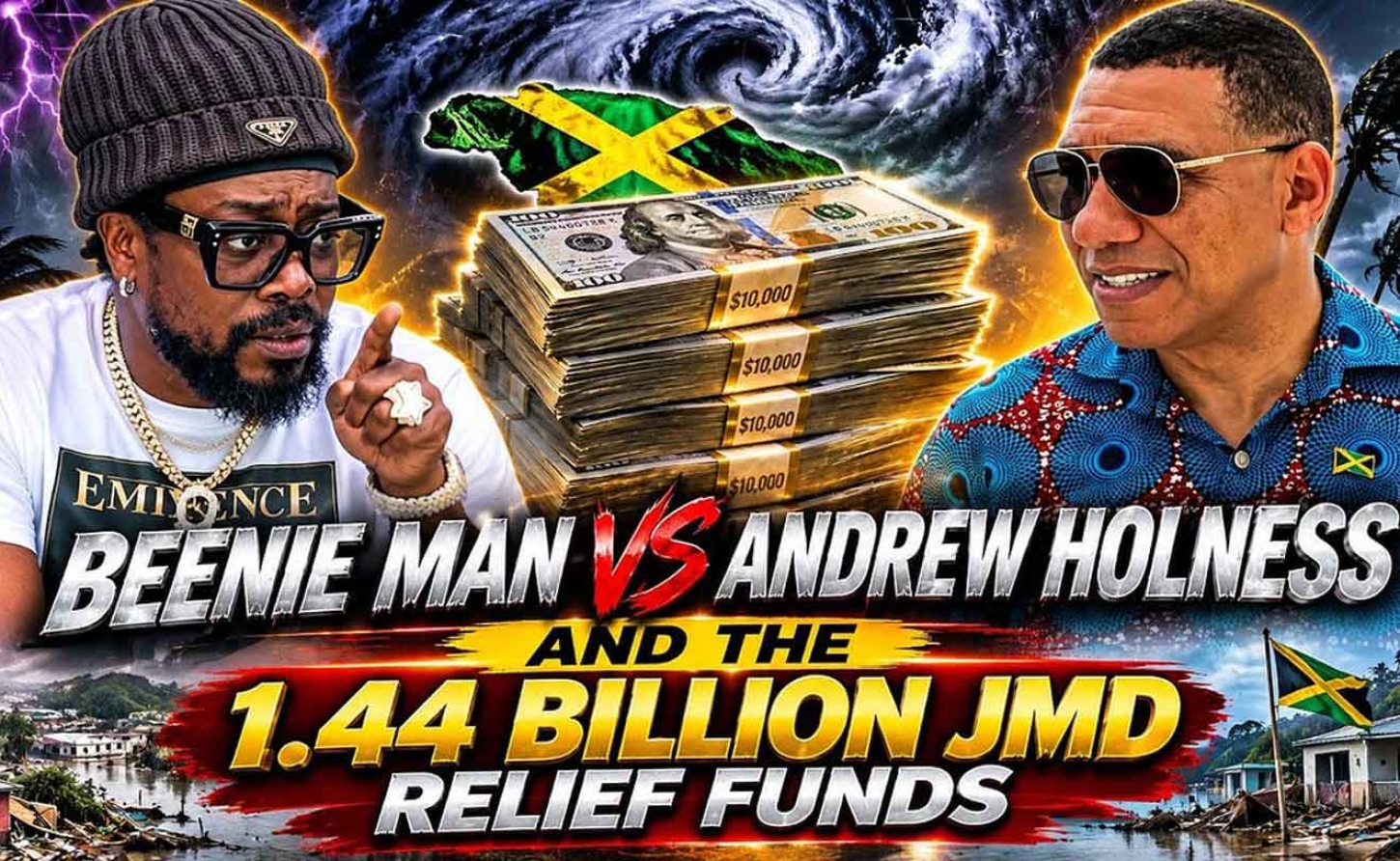
KINGSTON, Jamaica November 15, 2026 - By Deborah Hickling Gordon| “Go make a song of it.” That is what the Prime Minister of Jamaica told his critics this week, after one of our most celebrated dancehall artists asked, on British television, where the hurricane relief money had gone. The artist answered the way artists do: with a song, Weh Di Money Deh? Others joined him. Within a week there were several satirical tunes on YouTube.
On the face of it I could not have asked for a better opening for what I wanted to talk about, because the whole of the meeting’s subject is in that one exchange. Who owns our culture? Who gets to use it to speak? Who is allowed to criticise, and where? Whose ‘is’ the “Nation Brand”, the State or the people who built it? What is the impact of the illiberal state-led gaslight of being unpatriotic to speak of these things ‘on the world stage’?
Those are all cultural rights questions. Last week they were on the table in Paris. Colleagues from Iran, Palestine, Belgium, Switzerland, several countries of the African and European Unions, Canada and others joined a UNESCO convened Expert Meeting to Advance Dialogue and Policy Guidance on the Implementation of Cultural Rights. Jamaica was at the table. The Caribbean was represented. It is in these spaces that the relative under-representation of the Caribbean voice is felt, and the need for us to be in more of these rooms.
I didn’t use the parochial example of our clash of state and singer directly this time. Instead I pointed to the impact of growing global state-driven illiberalism trampling on the cultural rights of global citizens; the subtle political actions that overwhelm the public-will to participate beyond seeing to their own subsistence; and the participation-fatigue, self censorship and political apathy, all grounded in a silent sense of futility that result. I thought about Beenie Man’s castigation as I spoke.
What are cultural rights, really?
Cultural Rights
Cultural Rights focus on identity and heritage; participation and action; creativity and artistic freedom; language and knowledge and cultural exchange and cooperation. In plain language, that means three things: access to culture, participation in shaping it, and the right to contribute to it and benefit from it. The third is the one we neglect the most, and for creators in small states it is the one with the most at stake. Contribution without ownership, fair pay and a route to market is extraction by another name.
These fora are seen as talk-shops - theory driven. If I’ve heard it once, I’ve heard it a thousand times: tieri kyaan nyam, theory cannot be eaten. My whole career argues the opposite. Ideas about culture decide who in our sectors eat. Who gets funded, who gets a licence, who gets on air, who gets to the beach, whose religion is a crime and whose is a holiday: every one of those is a decision about cultural rights.
Why now? Three things have converged:
- MONDIACULT. The 2022 Declaration called culture a global public good. The 2025 Barcelona outcome put cultural rights at the foundation of its priorities and called for culture as a stand-alone goal after 2030. The mandate is there.
- The UN Special Rapporteur’s new report, Assessing the implementation of cultural rights (A/81/373), presented to the General Assembly on 20 October 2026.
- The 80th anniversary of the Universal Declaration in 2028, a moment to put cultural rights back where they belong, inside the human rights framework, not at its edges.
What we do not yet have is the method. That is what the Paris meeting was about.
The meeting: from recognition to implementation
UNESCO is drafting a policy guidance note on the implementation of cultural rights. It will not be a treaty or a legal commentary. It is meant to be a practical, non-binding tool to help governments and others design policies, cultural infrastructure and governance that enable equitable access to, participation in and contribution to cultural life, with diagnostic questions, policy levers, implementation pathways and examples from different regions.
That is the right ambition. The gap in our region has never been a shortage of declarations. It is the long distance between a policy draft and a funded, legislated, measured programme. Jamaica has been revising culture policy since our 20th century versions - our 2003 draft, our 2015 framework; and the Green Paper tabled in 2025. All are welcome, but they still remain a framework. Belize has had a policy since 2017 which is now due for revision. They are now on to cultural sector implementation. Barbados went directly to legislation and Trinidad and Tobago published their cultural policy in 2020, which is also pending updating.
My job, as I see it, was to make sure the Caribbean was not an afterthought in the note, not a footnote to the Global South.
What was surreal in that UNESCO virtual boardroom was juxtaposing, existentially, the vacuum left in societies afflicted by subtle-silencing; with the roaring cultural atrocities taking place on the battlefields of places like Tehran and Islamabad. Different forms of trauma and disruption. The awakening of youth awareness and its human groundswell of protest driven by the digital environment, seen across the world; as compared to the intense pockets of youth-cultures-of-silence-as-protest prevail elsewhere, was another interesting juxtaposition in my mind. Inherent is this question of whether the Caribbean case is comparatively sufficient. The answer is a resounding, Yes!
The Caribbean context: the duppies and the elephants in the room
 Cultural policy cannot start from the comfortable claim that we have “overcome”. Resilience is not an ideal and ‘likkle but tallawah’ is not an end game. If we ask the wrong questions, we will not get the right answers. So here are some of the right questions, from home.
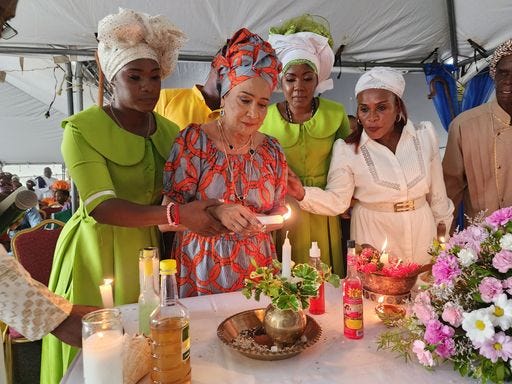
Colonial law is not history. Some of it is still in force. Trinidad and Tobago banned the Spiritual Baptist faith from 1917 to 1951; today the date of repeal is a national holiday. That is what repair can look like. Jamaica, meanwhile, still has its 1898 Obeah Act on the books, a law that never defined what it banned and fell hardest on healers, religious practitioners and poor people. A constitutional challenge, filed in 2025, is pending. Our 1956 Beach Control Act still governs a coastline where, by the Jamaica Beach Birthright Environmental Movement’s count, under 1% is freely open to Jamaicans. When we are offered hotel “beach passes” for a “reasonable fee” to reach our own sea, that is plantation logic in a new bottle.
Recognition without status is not a right. We honour Nanny and the Maroon treaties in our cultural celebrations and on our currency. Yet in 2022 Jamaica told the UN Committee on the Elimination of Racial Discrimination (CERD) that there are no Indigenous Peoples in Jamaica, only Maroon and Taíno “cultures”. The Committee told us to apply self-identification, consult Maroon and Taíno communities, address bauxite mining in Cockpit Country without consultation, and ratify ILO Convention 169. The Maroons await an update and are wondering when and whether the Jamaican State Actors will return this to the agenda. Across the region the story repeats: the Garifuna have won four times at the Inter-American Court against Honduras and were still evicted from San Juan in July; Belize’s Maya won at the CCJ in 2015 and are still waiting. Winning in court is not implementation.
Access is physical, economic and geographic. Jamaica was the first country in the world to ratify the Convention on the Rights of Persons with Disabilities, but our Disabilities Act took eight years to come into force. Accessibility cannot stop at museum ramps. It must reach the carnival road, the street dance, the beach, the rural festival. Our living heritage is mostly rural and working class, and Hurricane Melissa hit those communities hardest. A year on, by the Government’s own figures, close to 60,000 households are still waiting for help.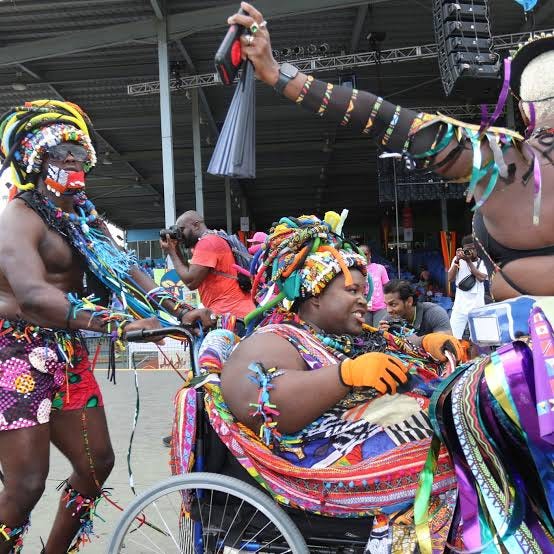
Women lead on stage, but who owns the stage? Calypso Rose forced Trinidad to rename the Calypso King contest in 1977. Our dancehall queens ran relief convoys after Melissa while the State found its footing. Beverley Ramsey-Moore became the first woman president of Pan Trinbago in 2018. K2K became the first female-led medium band to win Band of the Year in 2019, although the large bands are still led mostly by men. While we have great dominance in the Caribbean culture sector, specifically our audiovisual sub sectors; on boards, in ownership of labels, studios and festivals, and in pay, the picture is very different, and we do not even publish the data.
Voice is a cultural right. Which brings me back to Weh Di Money Deh? Dancehall has always been the people’s newspaper. When an artist is told he “benefits from brand Jamaica” and so should not criticise the country abroad, we have confused the brand with the people who built it. As Buju Banton put it, “we are the brand Jamaica”. Creative work is work, and creative voice is participation, not disloyalty. Gratitude does not pay the bills, and silence does not build a nation. The Guyana Press Association has warned of “creeping information control by the Guyana government”. Trinidad and Tobago fell 13 places in the 2026 World Press Freedom Index compiled by Reporters Without Borders, dropping from 19th to 32nd out of 180 countries. Journalists there have called for changes to a sweeping new bill that increases police powers of search and seizure. MATT wants a clause amended “to explicitly shield our devices and materials ... and confidential sources”. Haiti’s censorship is from non-state actors and relates mainly to death and danger to journalists rather than state censorship.
Repair is cultural. In July, CARICOM Heads approved the revised Ten-Point Plan for Reparatory Justice, A Manifesto for the Coming Enlightenment. Look at the points: apology, repatriation, an Indigenous peoples’ development programme, cultural institutions, an African knowledge programme, psychological rehabilitation. At least six of the ten are cultural rights measures. The UN General Assembly has called the enslavement of Africans “the gravest crime against humanity”; Jamaica’s petition is before the Privy Council; and at CHOGM this month Britain offered “sorrow and regret” and a dialogue, but placed reparations outside the room. How do we make the issue of repair accessible to more people? Sankofa teaches us to look to the then to contextualise the now, and find the how. UNESCO’s note can help find the how.
These are the ‘asks’ I put to the room, each something a ministry in a small developing state could begin within a budget cycle.
- An implementation process, not a checklist of measures. Map, legislate, finance, institutionalise, measure. Let States say honestly where they are stuck, and report progress between the rungs.
- Map culture from below before you govern it. Our (DHG and STGR) Networks of Culture method was built for countries early in cultural policy, to see cultural life as it is actually lived, including the informal and the rural.
- A section on historical and reparative justice. Ask States to audit colonial-era laws still in force that restrict cultural and religious practice, and to treat their effects as present discrimination. Judge repair by whether communities shaped it, whether it is material as well as symbolic, collective as well as individual, and whether the harmful laws are changed.
- Self-identification, not State permission. No State should decide alone that it has no Indigenous or tribal peoples. Build in self-identification, consultation before decisions on land and heritage, and data disaggregated by disability, sex, ethnicity, religion, language and location.
- Accessibility that reaches the street. Festivals, carnivals, outdoor heritage and coastlines, not only buildings, planned with disabled people. Treat beaches, rivers and landscapes of cultural meaning as cultural commons.
- Measure gender equality where power sits: governance, ownership, pay and finance, not only who performs. Remember rural communities, in particular rural women who depend on cultural expression and production.
- Make the right to contribute economic. Fair pay, social protection, collective bargaining for creative workers, formalisation as a gentle pull rather than a big stick, and finance designed for creative precarity.
- Information and voice as enablers. Accessible and multilingual public information, including our nation languages and sign language; published sector data and policy; information before consultation; and protection for artists and communities who use their voice to question the State, at home or abroad.
- Culture in disaster recovery. Creatives were first responders after Melissa. Cultural rights belong in reconstruction plans, budgets and consultation.
- Cost it for small states. The global North invests about twenty times more in culture than the South. A guidance note that ignores fiscal capacity will be read as aspiration, not instruction.
So, go make a song of it
Implementing cultural rights is not a photo opportunity, and it does not require a show of gratitude from creators. It is an obligation. International conventions and our own ratifications insist on it. Better yet, a growing sector depends on it.
The Prime Minister was right about one thing. Jamaicans, and indeed Caribbean people will make a song of it. We always have. Miss Lou made poetry of a language the schools told us to be ashamed of. Bob made anthems of our suffering. Sparrow celebrated our Caribbeanness. Our ancestors turned drums the colonists banned into the heartbeat of a nation. That is what cultural rights look like when the State is not paying attention: the people carry them anyway.
What Paris can do, and what I will argue for, is to make sure the State pays attention, and that the next generation does not have to fight for the right to the beach, the right to their faith, the right to their language, or the right to ask where the money went.
Tieri kyaan nyam? It can. Let’s feed the nation.
Deborah Hickling Gordon is a cultural policy scholar and practitioner, author of Cultural Economy and Television in Jamaica and Ghana: #decolonization2point0 (Palgrave, 2020), and a UNESCO consultant on participatory cultural governance as two time Member of the Expert Facility on the 2005 Convention. She writes at Culture Trod.
-30-
