
AFRICA & GLOBAL ECONOMY | Ghana's Small Miners Strike Gold Again: 54 Tonnes in Six Months Puts New Record Within Reach
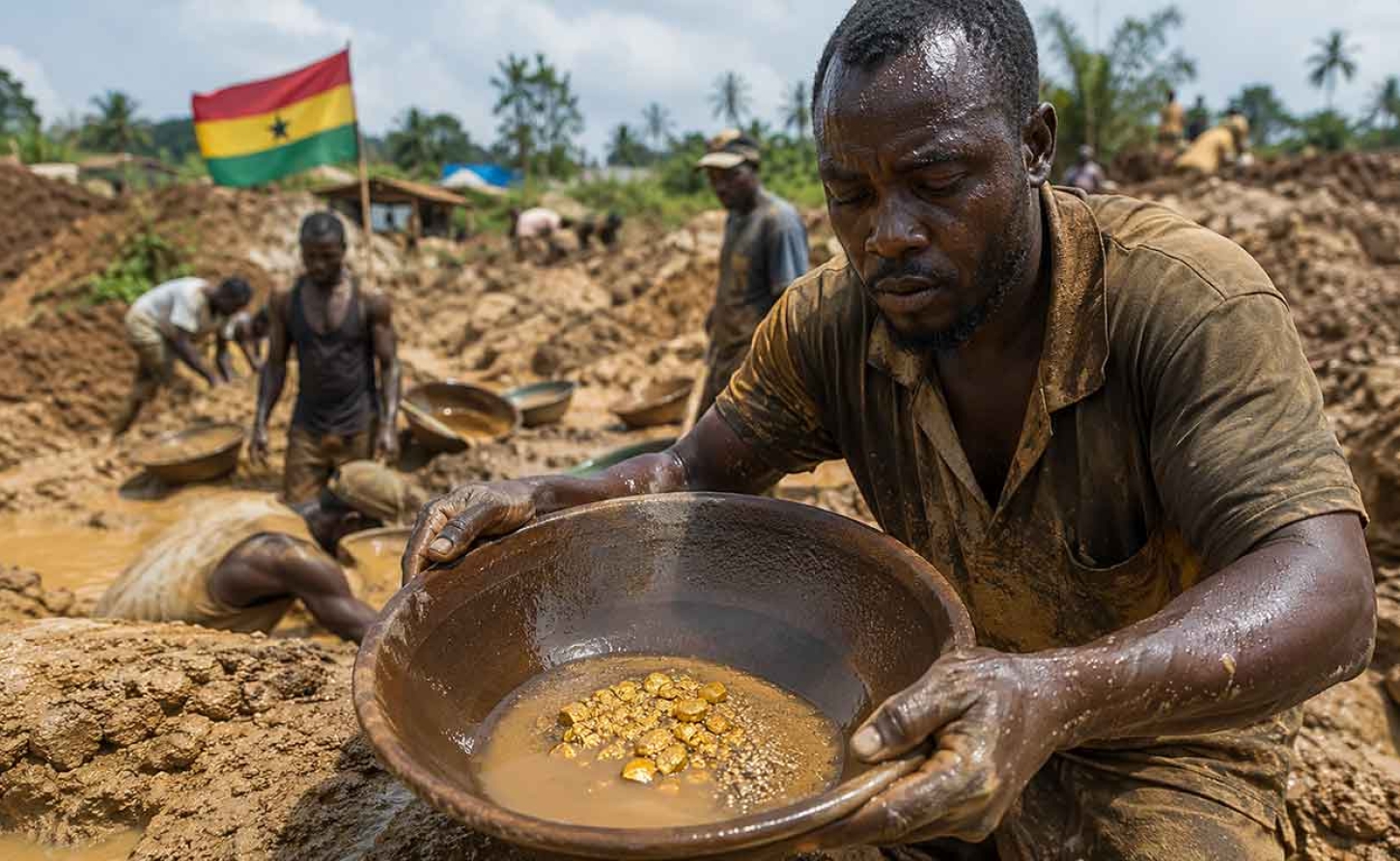
Ghana's small gold miners strike gold again and may have a record year.
The artisanal miners once dismissed as the industry's poor relations are now outproducing the multinationals — and bankrolling Ghana's economic recovery in the process.
ACCRA, Ghana — By Calvin G. Brown | WiredJa News • Thursday, July 16, 2026 - Ghana's small-scale gold miners are digging their way into the record books for a second consecutive year, with the state's official buyer confirming purchases of between 50 and 54 metric tonnes of gold in the first half of 2026 alone — a pace that puts Africa's leading gold producer on course to equal or surpass its historic 2025 output.
The figures, disclosed this week by Ghana Gold Board (GoldBod) Chief Executive Officer Samuel Gyamfi, confirm what the numbers have been whispering for months: the artisanal and small-scale mining (ASM) sector — long treated as the informal underbelly of Ghana's minerals economy — is now its beating heart.
"We are around 50-54 metric tonnes this year in purchases," Gyamfi told reporters. "At this rate, we are likely to match or even surpass last year's output."
The year the small miners overtook the giants
To grasp the weight of that statement, consider what happened in 2025. Ghana's artisanal and small-scale miners produced a record 104 metric tonnes of gold — and in doing so, out-produced the multinational large-scale mining houses for the first time in the country's history.
It was a seismic shift in an industry that foreign capital had dominated since the colonial era, when the territory was quite literally branded the Gold Coast for the benefit of others.
The money followed the metal. According to Gyamfi, the ASM sector generated nearly US$11 billion in foreign exchange earnings last year, comfortably eclipsing the roughly US$9 billion contributed by the large-scale multinational operators.
Ghana's small miners delivered US$11 billion in foreign exchange last year — US$2 billion more than the multinationals. The Gold Coast is finally paying its own people first.
That hard currency has arrived at precisely the moment Ghana needs it most. Still rebuilding from its most severe financial crisis in decades, the country has leaned on gold receipts to stabilise the cedi, rebuild external reserves and shore up government revenue while fiscal reforms and debt restructuring run their painful course.
Reform, not luck
None of this happened by accident. For decades, a substantial share of small-scale production leaked across Ghana's borders through smuggling networks, enriching middlemen in Dubai and elsewhere while the state watched its patrimony walk out the door.
The government's answer was structural: formalise the sector, tighten licensing, strengthen monitoring, and — critically — create GoldBod as a centralised state purchaser offering miners a legal, reliable route to market.
The strategy is delivering measurable returns. More miners are selling through regulated channels, more foreign exchange is staying onshore, and the state is capturing value that once vanished into the informal economy. It is a case study in resource sovereignty that governments across the Global South — the Caribbean included — would do well to study closely.
A price problem — and an environmental reckoning
There is, however, a wrinkle. GoldBod built its 2026 forecasts on an assumed average gold price of roughly US$5,000 per ounce and weekly purchases of about 2.5 metric tonnes. Recent declines in bullion prices mean revenues may fall short of those ambitious projections.
Even so, Gyamfi remains bullish, noting that average prices still sit above 2025 levels — meaning Ghana remains on course to earn more from gold exports this year than last, even in a softer market.
The harder question is sustainability. The same boom powering Ghana's recovery is intensifying pressure on rivers, water bodies and farmland, where illegal operations continue to undermine legitimate miners and poison the environment. Balancing record production against environmental protection is now the defining test for Accra's policymakers — because a gold rush that destroys the land beneath it is no victory at all.
For now, though, the verdict is unambiguous. Ghana's small miners — the men and women once locked out of their own country's mineral wealth — are carrying the national economy on their backs. If the current pace holds, 2026 will be another record-breaking year, and the Gold Coast will have proven that the most valuable reform of all is putting your own people at the centre of your own resources.
— 30 —
