
AFRICA | Ruto Defies Court Order: Kenya Becomes Trump’s US$13-Million Ebola Dumping Ground
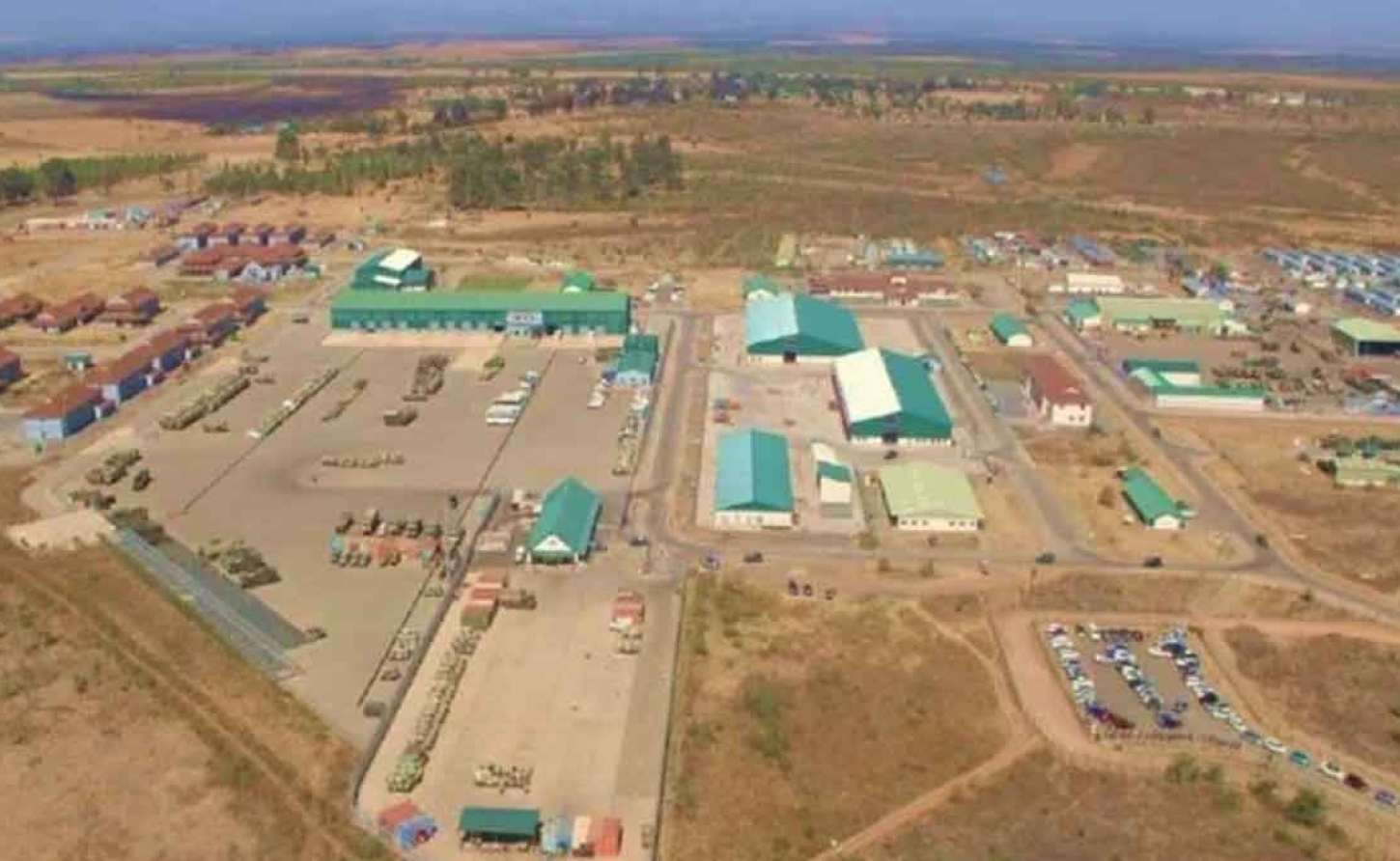
The Laikipia Air Base in Nanyuki, Kenya, identified as the site of the proposed plan by the United States government to set up a quarantine facility for its citizens exposed to Ebola during the ongoing outbreak in the Democratic Republic of Congo (DRC).
A Kenyan High Court blocked Trump’s secret Ebola quarantine facility on the very day it was to open. Then, in a breathtaking act of defiance, President William Ruto’s government pushed ahead anyway — exposing not just Kenya’s biosecurity, but the fragility of its democracy.
MONTEGO BAY, Jamaica, June 1, 2026 - Calvin G. Brown - It was supposed to be a done deal — a 50-bed field hospital at Laikipia Air Base, 124 miles north of Nairobi, ready to receive Americans exposed to Ebola so that no infected body would ever set foot on U.S. soil again. The facility was days in the building and hours from opening on Friday, May 30, when the Kenyan High Court intervened.
Judge Patricia Nyaundi issued an order so broad it left no room for ambiguity: no Ebola quarantine or treatment facility of any kind, under any arrangement with the United States or any foreign government. No admission of anyone exposed to or infected with the virus. Full stop. Return to court June 2.
The order froze the plan on the very morning it was scheduled to become operational. For a brief moment, it appeared Kenya’s judiciary had done what Kenya’s executive refused to — draw a line. That moment did not last.
By the weekend, Ruto’s Health Ministry had issued a statement announcing the government would proceed regardless. As of this writing, the facility at Laikipia Air Base is moving forward, a functioning structure in defiance of a live court order.
The Petition That Stopped a President
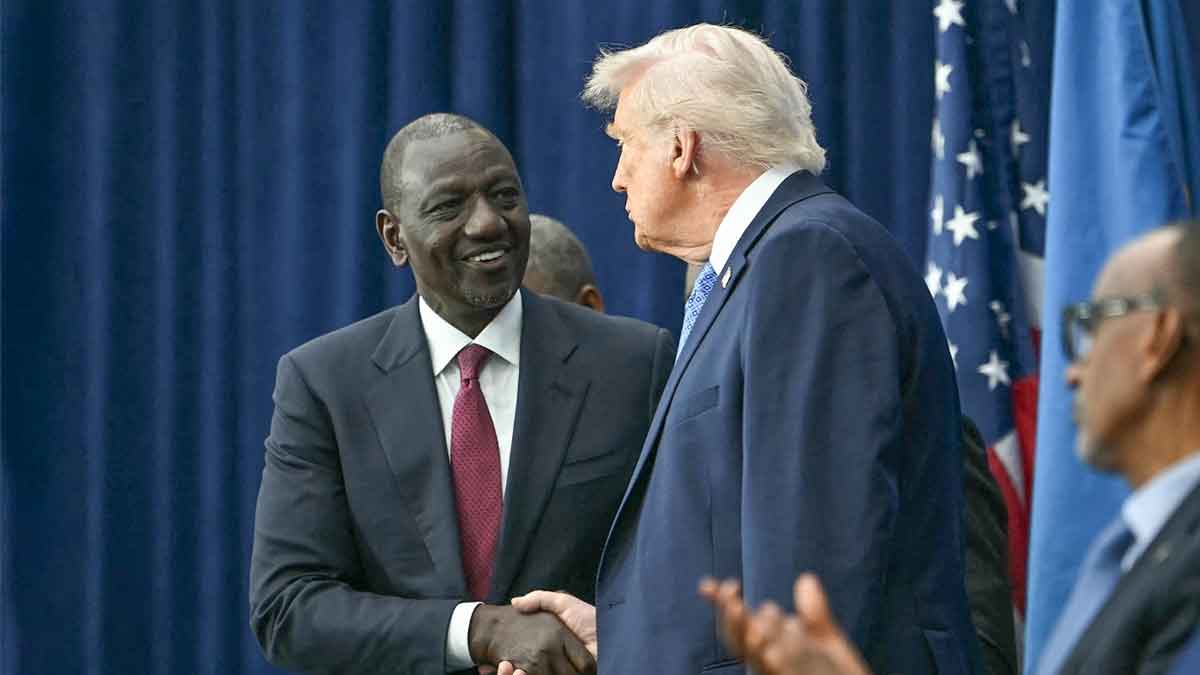
The High Court of Kenya has temporarily blocked a controversial deal between Kenyan President William Ruto and the Donald Trump administration to establish a U.S. military-run Ebola quarantine facility on Kenyan soil.
“At its core,” said Katiba Institute Executive Director Nora Mbagathi, “the case is about preserving constitutional accountability, protecting public health, and ensuring that no government may place expediency above the lives and safety of the people of Kenya.” The Law Society of Kenya, filing a parallel challenge, warned the country lacked “the high-containment infrastructure required to safely manage such a facility.”
Judge Nyaundi’s two conservatory orders were explicit. The first barred any establishment, operation, or facilitation of Ebola-related facilities under U.S. or foreign government arrangements. The second barred the admission into Kenya of any person exposed to or infected with Ebola under the disputed deal.
“As the vanguard of Kenya’s healthcare system, we are utterly disgusted by the government’s apparent willingness to trade national biosecurity and the lives of its citizens for foreign aid.”— Davji Atellah, Secretary-General, Kenya Medical Practitioners, Pharmacists and Dentists’ Union
The Bribe That Came With the Ruling
The timing of Washington’s financial overtures tells its own story. On Thursday — the same day the court challenge was filed, and hours before Judge Nyaundi’s order — Secretary of State Marco Rubio telephoned President Ruto.
The State Department confirmed Rubio announced a U.S. commitment of $13.5 million toward Kenya’s Ebola preparedness efforts. The payment announcement followed the legal challenge almost immediately.
Critics were not subtle in their reading of events. The doctors’ union had already accused the Kenyan government of “trading national biosecurity for foreign aid.” The sequence of events — secret negotiation, public backlash, court injunction, emergency phone call, money — hardly refutes the charge.
Ruto’s Calculation — and Its Cost
The Ruto administration’s decision to defy the court order is perhaps the most damaging aspect of the entire affair. In a country where the Gen-Z uprising of 2024 was a protest against a government perceived as lawless and unaccountable, the spectacle of a sitting president proceeding with a constitutionally challenged arrangement in open contempt of a court order is not merely a health story. It is a democratic emergency.
Washington, for its part, is unmoved by Kenyan constitutional law. The U.S. State Department issued a statement: “We are aware of the court action filed in Kenya against the Ebola isolation facility. We are in touch with Kenyan authorities and are optimistic we can resolve objections.” Resolve objections.
The phrase treats a High Court order as an administrative inconvenience — an attitude entirely consistent with an administration that pulled out of the WHO, silenced the CDC, and then claimed it was best placed to manage a global epidemic.
The Outbreak That Made This Possible
The Bundibugyo strain of Ebola — rare, with no licensed treatments or vaccines and a mortality rate between 30 and 50 percent — has now recorded over 1,000 suspected cases in the DRC’s Ituri Province, crossing into Uganda. Nearly 250 people are thought to have died, making this already the third-largest Ebola outbreak on record.
Public health officials believe the virus circulated undetected for months before confirmation — a delay directly attributable to the collapse of U.S.-funded disease surveillance infrastructure in the region.
And yet the administration’s response remains organized around one overriding principle: keep it out of America. Not stop it. Not fund its containment at the source. Not restore the surveillance architecture that would have caught it earlier. Simply: do not let it cross the U.S. border.
What June 2 Will Tell Us
The case returned to the Kenyan High Court on Tuesday June 2, 2026. Judge Nyaundi will hear full arguments on whether the arrangement violates Kenyans’ constitutional rights to life, health, fair administrative action, public participation, and parliamentary oversight.
The Ruto government, already in apparent contempt, must explain why it is continuing to operationalize a facility its own courts have ordered suspended.
The Caribbean watches all of this with a recognition that runs deeper than geography. The architecture of this arrangement — a powerful nation, a bilateral health deal, a compliant government, a silenced civil society, and a patch of land absorbing risk on behalf of the powerful — is one the region has encountered before, under different names and in different centuries.
Colonialism, after all, was also sold as cooperation.
Kenya’s judges saw it for what it was. Whether Kenya’s president will be allowed to continue ignoring them is the question that will define not just this outbreak, but the relationship between African sovereignty and American expediency for years to come.
— 30 —
