
ANTIGUA | Pushed out of sight: the Independence Antigua was told to "small-up"
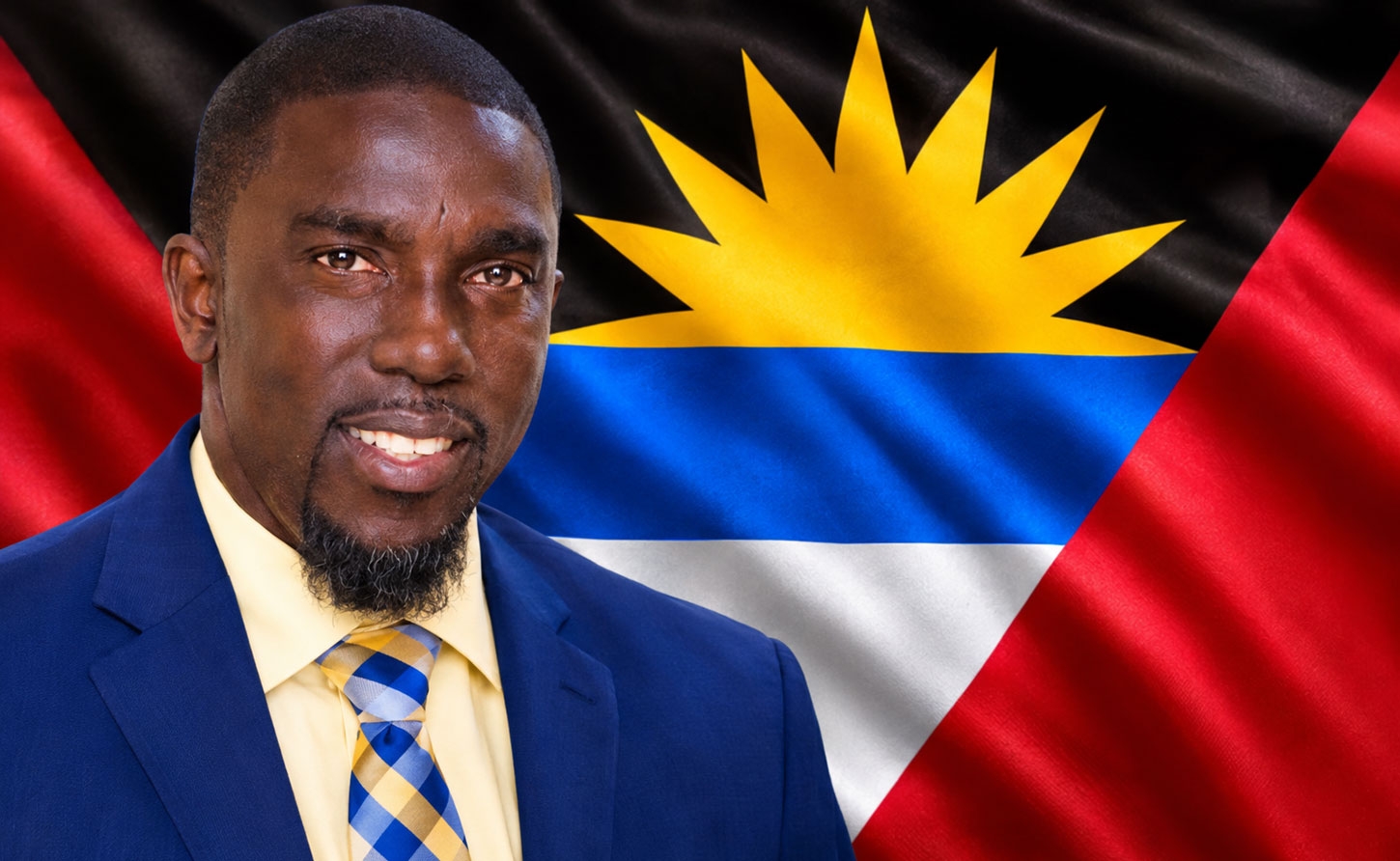
Opposition Leader Jamale Pringle
Opposition Leader Jamale Pringle's Independence 45 message says citizens were pushed into the background by CHOGM and a royal visit. For the residents inside the St John's security zone, that was not a metaphor. It was a police instruction.
ST.JOHN'S, Antigua and Barbuda, November 2, 2026 - — For 44 years, November 1 in Antigua and Barbuda belonged to the people who built the place. The parade, the food fair, the bunting on the verandah, the cousins home from New York and Toronto — it was the one week in the year when a small nation took up all the room it wanted. This year it was asked to make itself smaller.
That is the charge at the heart of Opposition Leader Jamale Pringle's Independence 45 message, and it is the one that will linger after the motorcades have gone. Many citizens and residents, he says, feel they have been "pushed into the background; pushed out of sight, in fact", and the usually joyful national celebration has had to "small-up" itself this year.
He is describing something that is easy to feel and hard to put in a press release: the sense of being a guest at your own birthday party.
Stay inside, or leave at your own cost
The arithmetic of the week explains the mood. The Commonwealth Heads of Government Meeting runs from November 1 to 4, delivering 56 governments to a country of about 100,000. King Charles III and Queen Camilla arrived on October 30 for the monarch's first visit to the islands as Sovereign. Nearly 300 foreign security personnel flew in from Canada, Jamaica, Barbados, the Cayman Islands and the Regional Security System to protect them.
For the people who actually live in the capital, the summit arrived as an instruction. Residents inside the security perimeter around the new Performing Arts Centre on High Street were told by Police Superintendent Rodney Ellis to remain indoors during the opening ceremony restrictions or arrange, ahead of time and on their own account, to stay with relatives or be somewhere else.
Anyone who stepped out without accreditation would not be allowed back through the checkpoints until the controls were lifted. When a Church Street resident asked at a town hall how long he would be barred from his own house, he was told about two hours on the Tuesday morning.
Two hours is not a siege. But the principle underneath it is the thing citizens heard: on the week the nation celebrates self-government, people in the heart of St John's were told that whether they could enter their own front door depended on a laminated pass issued for someone else's meeting, and that any inconvenience was theirs to absorb.
Nobody offered to put them up. Nobody offered to pay. The government spent months assuring the public there would be no "islandwide lockdown", which is true, and beside the point for the family on Church Street.
That is what Pringle means when he says citizens have been "pushed into the background; pushed out of sight, in fact". For the residents of the security zone, it was a police instruction. And his observation that the celebration had to "small-up" itself is pure Antiguan, devastating precisely because it is not angry. It is resigned. It is the voice of people who understand why the week was built this way and still feel the loss of it.
Whether they could enter their own front door depended on a laminated pass issued for someone else's meeting.
Who chose the date?
The government will say, with some justice, that hosting CHOGM is the biggest diplomatic prize in the country's history and that pairing it with Independence 45 lets the world see Antigua and Barbuda at its proudest. Sports and Creative Industries Minister Dwayne George has promised celebrations that "belong to everyone", from Antigua to Barbuda to the diaspora.
But the government chose both dates. It bid for CHOGM, it accepted the November window, and it decided that a milestone anniversary could share the stage. That was a political judgment, and Pringle is entitled to say the judgment put the visitors ahead of the hosts.
Independence is not a programme a government delivers; it is the shared property of the people who voted for it, against it, and not at all. When the week built around that inheritance is quietly re-purposed as a backdrop, the people notice, even when they are too polite to say so.
The theme makes it worse
The sense of exclusion is sharpened by the official theme: "Renaissance: Rooted in Pride, Bounded by Prosperity for All". Only months ago "The Renaissance" was the Antigua and Barbuda Labour Party's campaign slogan, its manifesto title and its billboard tagline. The ABLP won 15 of 17 seats in April on that word, then carried it into the national anniversary.
Pringle calls it a theme that "speaks to partisanship", and says that for the first time Independence is associated with party politics instead of national unity. A government that commands 60 per cent of the vote does not need to brand the nation's birthday with its own slogan. Doing so tells the other 40 per cent, and the 38 per cent who stayed home, that the celebration was planned for someone else. Pushed to the background by a summit; pushed to the margins by a slogan. The two complaints are really one.
Unsure of itself abroad, uneasy at home
There is a wider anxiety beneath all this. Pringle describes a country "rather unsure of itself on the regional and world stages", caught between proven friends and former allies. The former ally is unmistakably Washington: since January 1, Antiguan and Barbudan nationals have been shut out of new US visas under a presidential proclamation targeting the citizenship-by-investment programme, and Prime Minister Gaston Browne's letters to Donald Trump and Marco Rubio have yet to move it. A nation whose citizens cannot get a visa to visit their relatives in Miami is being told to celebrate its arrival on the world stage. The contradiction is not lost on them.
Pringle closes with the anthem's call to "gird your loins". The nation, he suggests, is about to need them. Antigua and Barbuda is more prosperous and more visible at 45 than at any point in its history — and, for one week in November, less visible to itself than it has ever been.
— 30 —
