
CARIBBEAN | ‘Grand-standing’ With Consequences: Sir Ronald Sanders Confronts US Bill Branding Antigua and Barbuda ‘Third World’
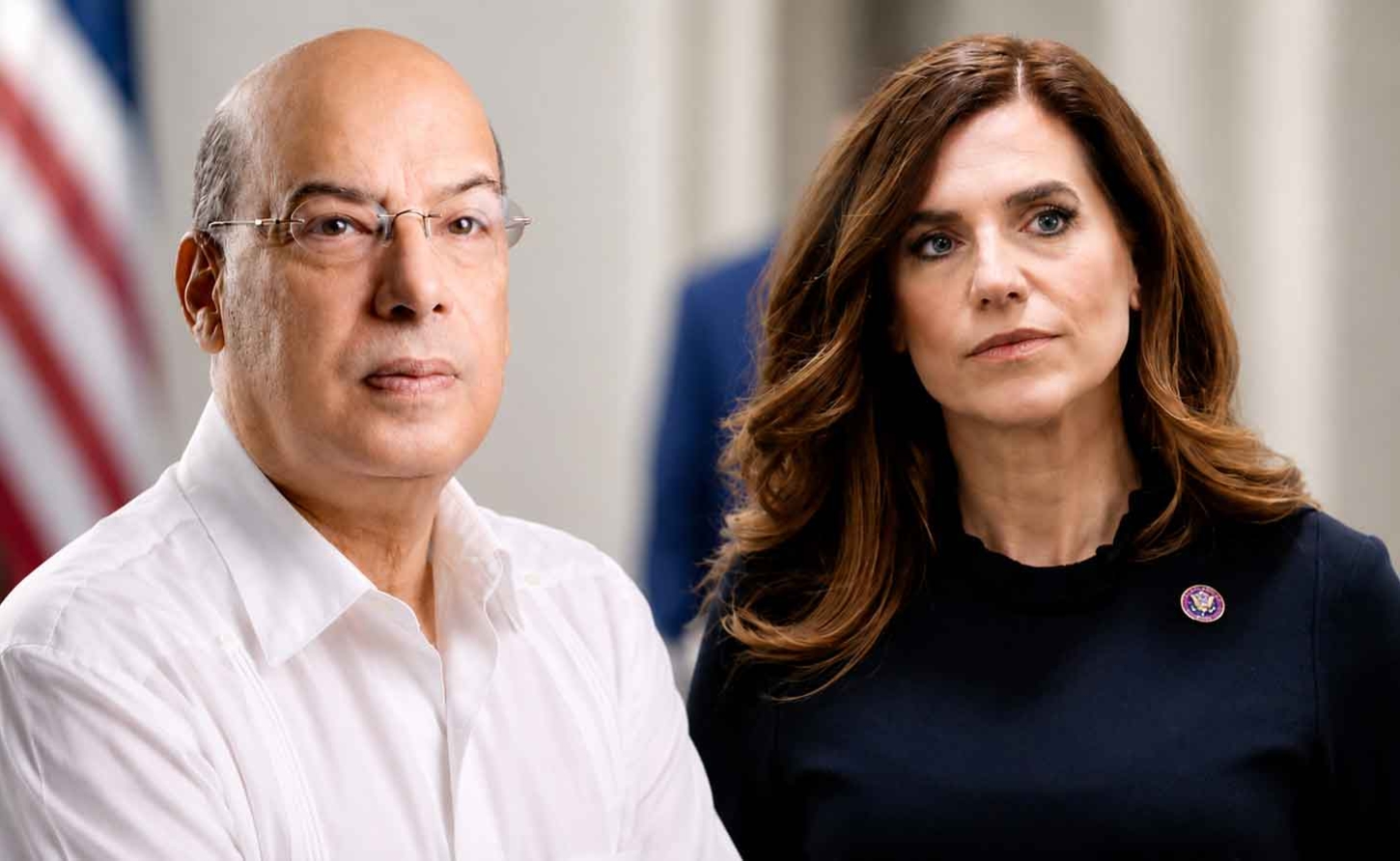
Antigua and Barbuda's Ambassador to the US, Sir Ronald Sanders and Congresswoman Nancy Mace of South Carolina.
When a South Carolina congresswoman lumped one of the Caribbean’s most stable democracies in with war-torn states and declared “the free ride is over”, Antigua and Barbuda’s veteran envoy in Washington reached for his pen — and the facts.
WASHINGTON, DC — Sunday, 19 July 2026 - Antigua and Barbuda’s Ambassador to the United States, Sir Ronald Sanders, has written to Congresswoman Nancy Mace of South Carolina challenging legislation that would permanently bar nationals of the twin-island state — along with those of 38 other countries — from entering the United States.
The bill, introduced in the US House of Representatives on 15 July and provocatively titled the “Third World Immigration Moratorium Act”, mirrors the country list in President Trump’s proclamation restricting the entry of certain foreign nationals.
Five Western Hemisphere nations appear on it — Antigua and Barbuda, Cuba, Dominica, Haiti and Venezuela — alongside Afghanistan, Iran, Libya, Somalia, Syria and dozens of African and Asian states. Holders of travel documents issued by the Palestinian Authority would also be barred.
In his letter, copied to several senior members of the House, Sir Ronald acknowledged the right of any member to propose immigration legislation, but insisted that “any proposed measures affecting friendly countries should be informed by accurate information and objective facts.”
On that score, he argued, the Mace bill fails at the first hurdle.
A bill that cannot name its target
In an error that would be comic were the stakes not so serious, the legislation refers separately to “Antigua” and “Barbuda” as though they were two independent sovereign states. The blunder, Sir Ronald wrote, “illustrates the importance of ensuring that legislation affecting friendly nations is founded upon accurate and verified information.”
The deeper flaw lies in the bill’s foundation. It draws on Presidential Proclamation 10998 — the December measure that imposed a partial travel ban on Antigua and Barbuda and Dominica — which claims the country “has historically had Citizenship by Investment without residency”.
That statement, the Ambassador made clear, is factually incorrect: the programme has always included a residency requirement, a fact St John’s has formally communicated to Washington on multiple occasions. The correction has yet to be acknowledged; instead, the error has now migrated from proclamation to proposed statute.
The record Washington ignores
The facts Sir Ronald marshalled make the country’s inclusion on the list difficult to comprehend. No citizen of Antigua and Barbuda has ever sought refugee status in the United States. Visa overstays have historically hovered at little more than one per cent.
The government has consistently cooperated with US immigration authorities in accepting the prompt return of nationals lawfully removed — the very benchmark the bill claims its targets have failed.
Far from a nation in “social and economic tumult”, Antigua and Barbuda was recently classified by the World Bank among high-income countries and boasts one of the highest per capita incomes in the Caribbean.
It is, in the Ambassador’s words, a stable parliamentary democracy founded upon the rule of law, with an independent judiciary and institutions that command the confidence of citizens and international partners alike. Americans travel there without visas, own homes and businesses under the protection of Antiguan law, and the two countries cooperate closely on security, law enforcement, disaster response, education, tourism, trade and investment.
‘Dumping ground’ politics
Mace, for her part, has made no pretence of diplomatic nicety. “We are not a dumping ground for the Third World’s problems,” she declared, promoting the bill on Facebook with imagery of heavily armed Black soldiers and the warning: “If you import the third world, you will become the third world.”
The congresswoman, serving out the final months of her term after losing her bid for South Carolina governor, insists that “the free ride is over”.
The bill lists 39 countries — overwhelmingly Black and brown nations — for a permanent ban, while its central claims about Antigua and Barbuda collapse under the most cursory scrutiny.
Sir Ronald’s objection is precise: his country of 90,000 people has been thrown into “the same category as several countries facing armed conflict, prolonged economic instability or large-scale irregular migration” — grouped with Haiti and the Republic of the Congo on no evidentiary basis whatsoever.
‘Not a snowball’s chance in hell’
The veteran diplomat is under no illusions about the bill’s prospects. He has described it bluntly as “grand-standing” by Representative Mace, and does not believe “it has a snowball chance in hell of getting anywhere”. The measure has no Senate companion and faces an uphill battle even within Congress.
But small states cannot afford the luxury of ignoring even doomed legislation. December’s travel ban demonstrated how an unverified claim, left unchallenged, hardens into policy. This bill would require the Secretary of State to report to Congress every 180 days on whether the prohibitions should be “continued, modified, or expanded” — a mechanism through which today’s errors could become tomorrow’s permanent architecture.
Sir Ronald has called on Mace to remove Antigua and Barbuda from the legislation and to ground any future measures in accurate, current information. Whether the congresswoman responds or not, the record has been corrected — formally, publicly, and on Washington’s own doorstep. For a nation whose relationship with the United States has been orderly and lawful for decades, that is not grand-standing. That is sovereignty, defended one letter at a time.
— 30 —
