
CARICOM | Heads Send Controversial Barnett Reappointment Row to the CCJ
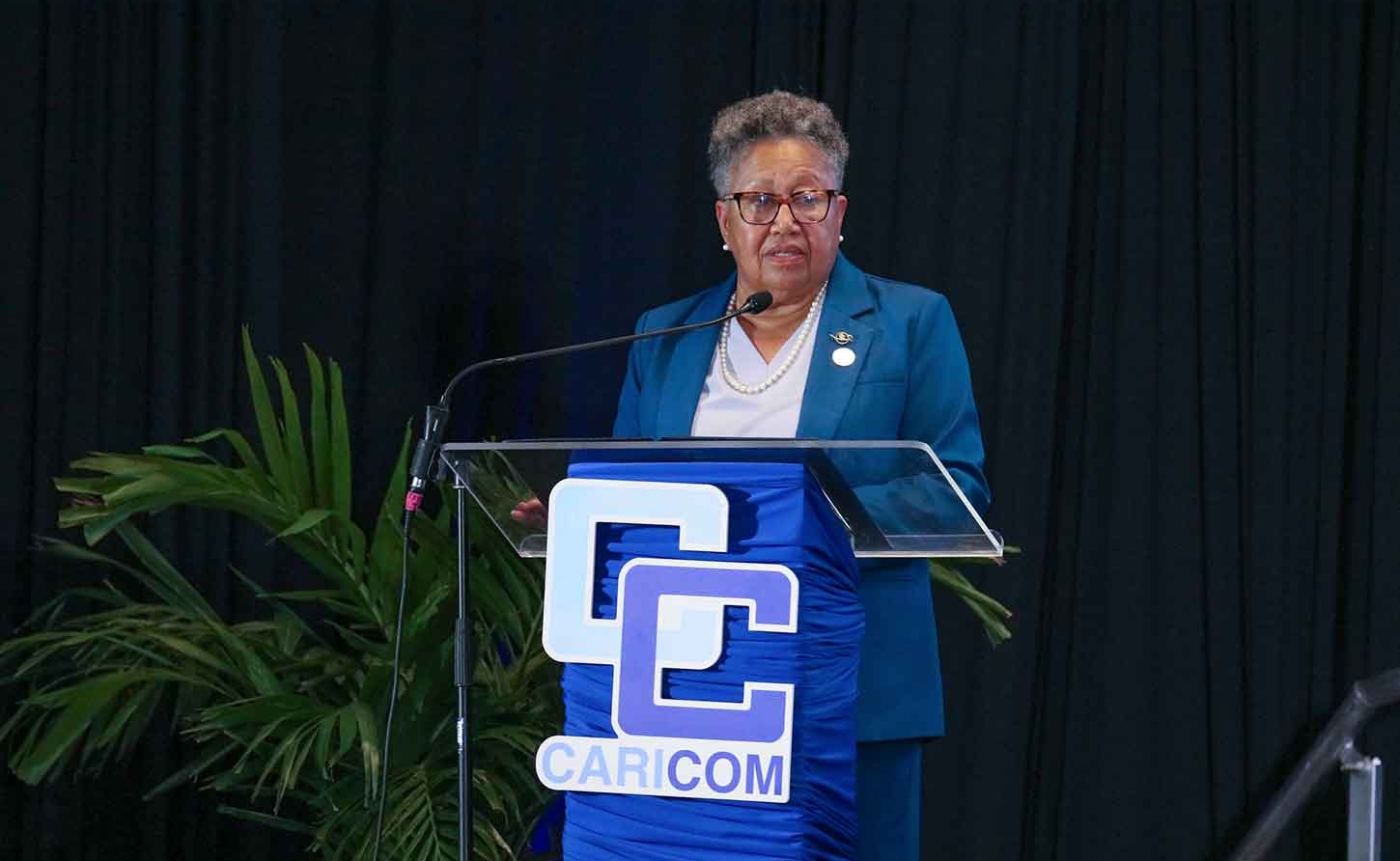
CARICOM Secretary-General Dr Carla Barnett reappointymernt referred to the Caribbean Court of Justice, CCJ.
After five months of open rupture, Heads of Government agree to seek a CCJ advisory opinion on the disputed reappointment of Secretary-General Dr Carla Barnett — a rare victory for Caribbean institutionalism over political attrition.
GEORGETOWN, Guyana, Tuesday, 7 July 2026 | Calvin G. Brown - After five months of escalating recrimination that threatened to fracture the Caribbean Community at its highest level, CARICOM's Heads of Government have chosen law over politics.
In a statement issued Tuesday from the Secretariat at Turkeyen, the Conference announced that the bitter dispute over the reappointment of Secretary-General Dr Carla Barnett will be referred to the Caribbean Court of Justice (CCJ) for an advisory opinion — with the status quo preserved “unless and until” the Community considers the Court's answer.
The decision emerged from the Heads of Government Retreat held on 6 July during the 51st Regular Meeting in Saint Lucia, where the Republic of Trinidad and Tobago “maintained its objection to the process used in the reappointment” of the Secretary-General.
Acknowledging Port of Spain's desire to have the matter tested judicially, the Community agreed to commence proceedings for an advisory opinion under Article 212 of the Revised Treaty of Chaguaramas — and, in a line freighted with meaning, reminded itself that this is “the very purpose for which the CCJ was created”: to serve as a treaty interpretation body.
How the Community Got Here
The row erupted in February, when Dr Barnett — the Belizean economist who in 2021 became the first woman to lead the Secretariat — was reappointed during the Heads' Retreat at the 50th Regular Meeting in St Kitts and Nevis.
Prime Minister Kamla Persad-Bissessar has argued ever since that the reappointment never appeared on any provisional agenda, was never confirmed in plenary, and was settled at a retreat from which Trinidad and Tobago, Antigua and Barbuda, and The Bahamas were excluded through their designated representatives — some, she maintains, disinvited by WhatsApp message.
What began as a procedural objection curdled into open rupture. By May, Persad-Bissessar was declaring that Trinidad and Tobago would not recognise Dr Barnett beyond the expiry of her current term this August, warning that the Secretariat should expect “no quarter” from her Government, and professing indifference to the prospect of expulsion from the bloc altogether.
Jamaica, notably, declined to look away. In a letter to CARICOM Chairman Philip J. Pierre days before the Saint Lucia summit, Prime Minister Andrew Holness made clear that Kingston was not seeking to overturn the February decision — but insisted that a process departing from both previous practice and the Conference's own Rules of Procedure could not simply be waved through while a member state formally objected. Cohesion, he wrote, is indispensable to CARICOM's effective functioning.
The Court the Region Built
“The Community acknowledged that this is the very purpose for which the CCJ was created — to be a treaty interpretation body.” — Statement of the Conference of Heads of Government, 7 July 2026
There is a rich irony at the heart of Tuesday's statement. The CCJ sits in Port of Spain, yet Trinidad and Tobago has never adopted it as its final appellate court. But the Court's original jurisdiction — its authority to interpret the Revised Treaty — binds every member state, and it is precisely that jurisdiction the Community will now invoke.
For Jamaica, still debating its own accession to the CCJ's appellate jurisdiction as part of constitutional reform, the moment carries a lesson worth pondering: the region's court is being trusted to referee the region's most sensitive political quarrel, by leaders who might easily have chosen attrition instead.
The statement is also careful to insulate personalities, stressing that the process “does not impugn the integrity of any Member State or individual” and folding the episode into the broader governance review mandated in St Kitts and Nevis.
An Off-Ramp, Not a Resolution
Questions remain. Dr Barnett's current term expires in mid-August; the statement is silent on timelines, and advisory opinions are not rendered overnight. Nor does it say what follows should the Court find the February process defective. What the Community has bought itself, for now, is an amicable off-ramp — a means of resolving the matter, in the statement's words, “without prejudice to the ability of the Community to conduct its affairs.”
For a Community navigating what its leaders themselves call “these difficult times,” the choice of adjudication over attrition is no small thing. Better an argument settled in a Caribbean courtroom than a schism no communiqué could paper over.
— 30 —
