
CUBA | Havana Holds the Line: Cuba Brands 94 year old Raúl Castro Indictment a Fabrication Designed to Justify War
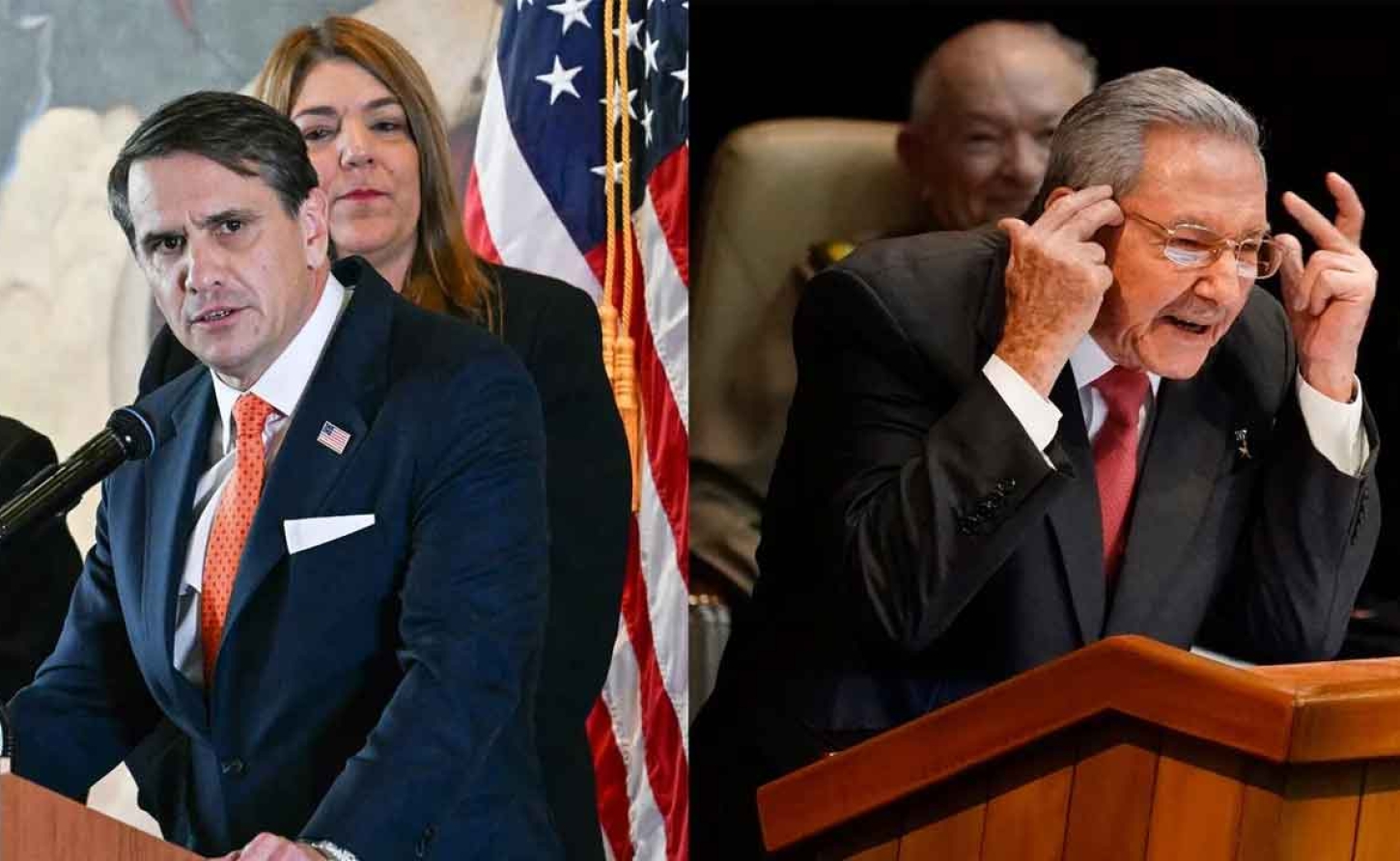
Acting United States Attorney General Todd Blanche announced murder and conspiracy charges Wednesday against former Cuban leader Raúl Castro and five others over the downing of two planes in Cubasn air space in 1996.
Thirty years after two planes went down over disputed waters, Washington has handed Havana exactly the narrative it needed — that this was never about justice, but about empire building a case for war.
May 20, 2026 — They announced the indictment at the Freedom Tower in Miami — and the symbolism was not accidental. That building, where Cuban refugees were once processed upon arrival to American shores, was chosen for maximum theatrical effect: a reminder of exile pain, Cuban-American political solidarity, and decades of grievance weaponised into law.
On that stage, United States Acting Attorney General Todd Blanche unsealed charges against 94-year-old Raúl Castro — murder, conspiracy to kill US nationals, destruction of aircraft — for ordering the shootdown of two Brothers to the Rescue planes on February 24, 1996, a cold morning thirty years in the rearview.
Within hours, Havana answered. And it answered without flinching.
The Empire Reveals Its Hand
Cuban President Miguel Díaz-Canel did not reach for diplomatic language. He reached for a verdict. In a statement issued the same day, the Cuban Revolutionary Government condemned the indictment in the sharpest of terms — calling it, in full, a political manoeuvre devoid of any legal foundation, aimed solely at padding the fabricated dossier they use to justify the folly of a military aggression against Cuba.
Read that again. Not a border dispute. Not a sovereignty spat. Cuba is explicitly accusing the United States of building a legal case — not for a courtroom, but for a war.
That is an extraordinary claim. But it does not exist in a vacuum. It arrives amid an escalating siege: Trump's January 2026 cut-off of fuel and funds between Venezuela and Cuba; economic penalties threatened against any nation daring to supply Havana with oil; media reports that the Trump administration has been in back-channel talks to engineer Díaz-Canel's removal from power. The indictment of a 94-year-old man who will never see the inside of an American courthouse lands in that context — and Havana reads it precisely for what it is.
"This is a political manoeuvre, devoid of any legal foundation, aimed solely at padding the fabricated dossier they use to justify the folly of a military aggression against Cuba." — Cuban Revolutionary Government, May 20, 2026
What Actually Happened on February 24, 1996
The facts of that day remain genuinely contested — and that contestation is itself the story. Two small Cessna aircraft operated by Brothers to the Rescue, a Miami-based Cuban exile group, were shot down by Cuban MiG fighter jets. Four men died: Armando Alejandre Jr., Carlos Costa, Mario De La Peña, and Pablo Morales — three Americans and one Cuban American. Their families have carried that grief for three decades.
But the legal architecture Washington is now constructing collapses under the weight of its own selective memory.
Cuba documented over 25 serious airspace violations by Brothers to the Rescue between 1994 and 1996. It formally notified the US State Department, the Federal Aviation Administration, and the International Civil Aviation Organization — on each occasion. It issued public warnings. It sent direct alerts to the President of the United States.
When the Cuban government finally acted, it did so, it argues, under the UN Charter's right to self-defence — after the very country now filing murder charges had been handed every opportunity to rein in the provocation and chose, repeatedly, to look away.
The ICAO ultimately concluded the planes were in international airspace at the moment of the shootdown. Cuba insists they were inside Cuban territory. That dispute — unresolved, genuinely complex — is the evidentiary ground upon which Washington is now seeking murder convictions.
American scholars who have studied the file closely have noted a blunt truth: in this story, there are no good guys. The Clinton administration itself repeatedly warned Brothers to the Rescue about provoking Cuba — and did nothing to stop them.
Havana's Prosecutorial Counter-Offensive
Cuba's Revolutionary Government did not stop at defending the 1996 action. It went on offence. The statement indicts Washington's own record with a precision that demands attention.
It notes, pointedly, that the United States — which presents itself as the victim pursuing justice — has murdered nearly 200 people and destroyed 57 vessels in international waters of the Caribbean and the Pacific, far from US territory, for alleged drug trafficking links that were never proven. It describes these as extrajudicial executions under international law. Then it asks: where are those indictments?
This is not rhetoric. It is a prosecutorial argument — and it is one that Caribbean people, who have lived in waters patrolled by the US military and DEA aircraft for generations, are uniquely positioned to assess. The region has seen its own vessels boarded, its own nationals detained, its own sovereignty quietly disregarded in the name of American security priorities. Cuba is naming an experience the Caribbean has long been asked to absorb in silence.
"If this is justice, it is justice with a very selective memory — one that reaches back thirty years for Raúl Castro but cannot seem to find the files on nearly 200 people killed in Caribbean and Pacific waters without trial, without charges, without a courtroom."
The Caribbean Must Ask the Hard Question
For CARICOM nations — many of which have maintained diplomatic and medical ties with Cuba, and which have publicly championed the island's sovereignty against US embargo pressure — this moment demands a clear-eyed accounting.
The indictment arrives as the United States is simultaneously engaged in what some reports describe as diplomatic overtures toward Havana — CIA Director John Ratcliffe's recent meetings with Cuban counterparts reportedly aimed at some form of engagement. Yet here is a murder indictment unsealed on the same day. The contradiction is not accidental. It is a pressure instrument: dialogue on American terms, or prosecution.
The Caribbean has seen this playbook before. The architecture of coercion — sanctions, indictments, regime-change narratives, legal mechanisms repurposed as foreign policy weapons — is not new to this region. What is new is its brazenness.
US Acting Attorney General Blanche stated, on the record, that he expects Castro to show up in American custody — either by his own will, or another way. In plain language, in the wake of Venezuela's Nicolás Maduro being seized and brought to US soil: that is a threat of abduction.
CARICOM cannot afford silence on that precedent. If a former head of state — any former head of state in this hemisphere — can be indicted, threatened with forcible rendition, and made to fear travel on the basis of a thirty-year-old contested military action, then the sovereignty of every small nation in this region sits on precarious ground.
Justice or Geopolitics? The Caribbean Must Decide
The families of Carlos Costa, Mario De La Peña, Armando Alejandre Jr., and Pablo Morales deserve truth. They deserve a full accounting of what happened on that February morning — including the full accounting of American complicity in allowing the provocations that led to it. That accounting will not come from a Miami courtroom designed for domestic political consumption.
Cuba's Revolutionary Government closed its statement with a declaration that will resonate far beyond the island's shores: that Cuba reaffirms its commitment to peace and its firm determination to exercise the inalienable right to self-defence.
It added six million Cuban signatures rejecting foreign interference. Whether that number is verified or symbolic, the posture is unambiguous. Havana is not preparing to negotiate its sovereignty.
The Caribbean is watching. And the Caribbean should be asking: is this justice, finally delivered after three decades? Or is this the latest chapter in a long imperial tradition of using law not to adjudicate truth, but to prosecute inconvenient governments?
On the evidence before us — the timing, the context, the threats, the siege — the answer is not hard to find.
— 30 —
