
DIASPORA | Laotian Freed After 14 Months — But Caribbean Deportees Remain in Eswatini, Africa's Last Absolute Monarchy
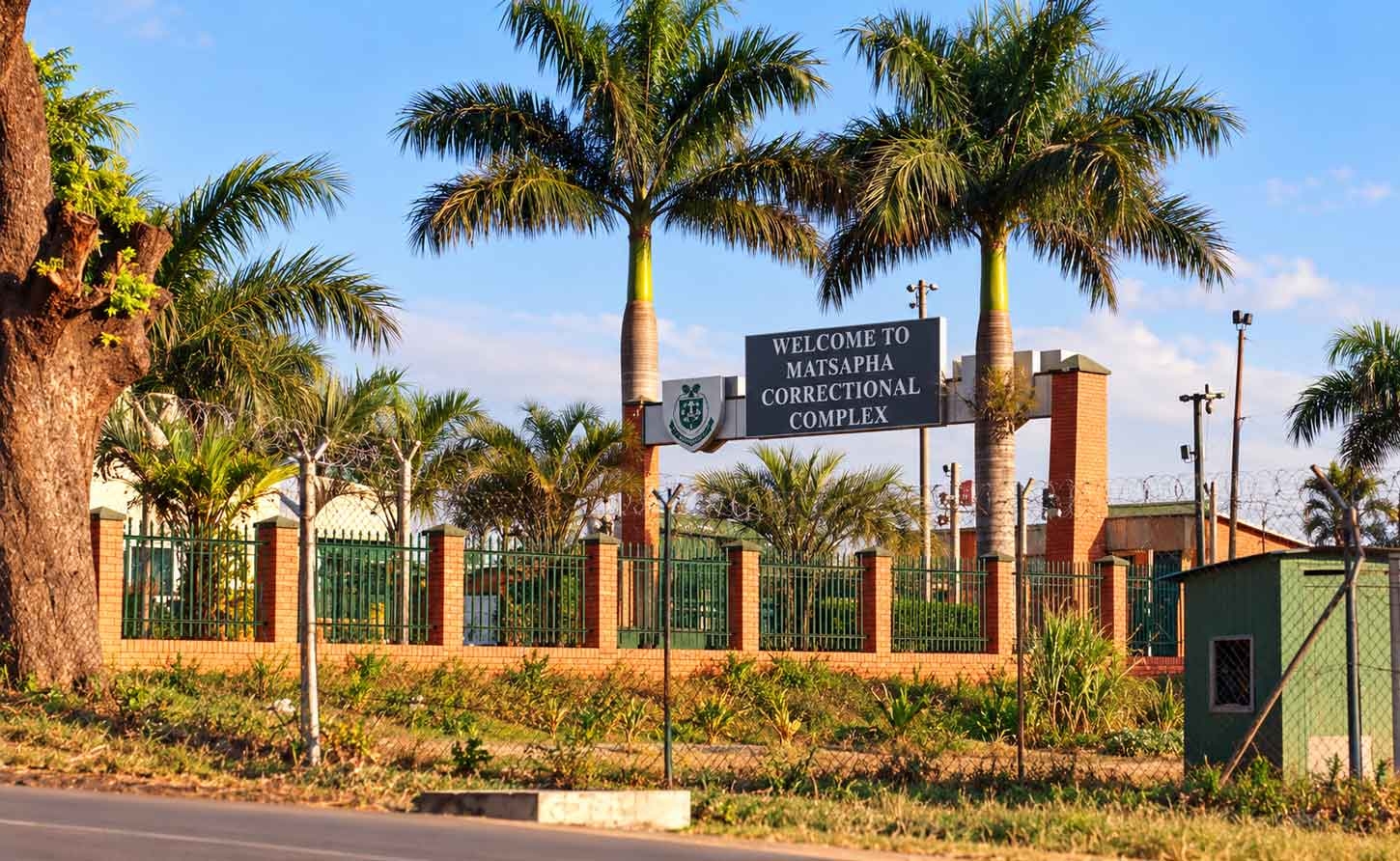
The Matsapha Correctional Complex in Matsapha near Mbabane, Eswatini.
Phone Chomsavanh's release from Eswatini's Matsapha prison closes one chapter of the Trump regime's third-country deportation scheme. For the Caribbean men flown to the same cells, the story is far from over.
MONTEGO BAY, JAMAICA, October 5, 2026 - On Sunday, Phone Chomsavanh walked out of the Matsapha Correctional Complex, a maximum-security prison near Mbabane, after more than 14 months in a country he had never heard of.
Born in a Thai refugee camp and raised in the United States from the age of seven, he had served his sentence for a serious crime before the Trump regime put him on a military cargo plane in July 2025 without telling him where it was headed. He is now on his way to Laos, his lawyer, Tin Thanh Nguyen, told The Associated Press.
“No notice, no hearing, no chance to object. That is not due process by any definition.” — Tin Thanh Nguyen, lawyer for Phone Chomsavanh
Caribbean readers should pay close attention to that sentence, because Chomsavanh did not travel alone.
The Jamaican on the first plane
The five men flown into Eswatini on July 15, 2025 came from Laos, Vietnam, Yemen, Cuba and Jamaica. Washington's Department of Homeland Security branded them so “uniquely barbaric” that their own countries would not take them back.
Kingston's experience tells a different story. Orville Isaac Etoria, then 62, had arrived in the US as a child and had already served a 25-year sentence for murder. His lawyers at New York's Legal Aid Society said Jamaica was willing to receive him.
Instead, he spent more than two months in Matsapha without charge or access to counsel before being repatriated in September 2025 with the help of the UN's International Organization for Migration. Eswatini's own government later reported that some of the home countries had denied ever rejecting their citizens.
If Jamaica would take its own, the obvious question is why a Jamaican was first flown halfway around the world to a prison in Southern Africa.
The Cuban still waiting
Roberto Mosquera del Peral has not been so fortunate. The 59-year-old Cuban, who arrived in the US as a child and worked as a plumber in South Florida, remains in Matsapha. According to Miami's WPLG Local 10, he secured access to a telephone only after a 30-day hunger strike. “I just want some answers,” he told the station.
Even the official case against him is contested. DHS publicly stated that he was convicted of first-degree murder; Florida corrections records reviewed by the Miami New Times show he served seven years for attempted murder. Mosquera does not hide from his past. He says he paid for what he did.
A second flight in October 2025 brought 10 more deportees, among them nationals of Cuba and Haiti. Their names and circumstances have not been made public.
The pastor with no conviction
The most troubling Caribbean case may be the newest. In July, the Jamaica Observer confirmed that Pastor Junior Alves, 64, was among 11 people flown to Eswatini on the programme's fourth flight.
His family says he has no criminal conviction in the US and had been permitted to remain there since 2016 under the Convention Against Torture, a protection designed to stop a person being sent anywhere they could face torture. ICE agents picked him up at home on January 11 and held him for six months before his removal.
Whatever one's view of deporting men who have served sentences for violent crimes, Alves's case does not fit the “worst of the worst” narrative at all.
Follow the money
The kingdom has been well compensated for its role. Eswatini received US$5.1 million, roughly J$800 million, from Washington, Finance Minister Neal Rijkenberg confirmed to Parliament in Mbabane in November 2025. Under the agreement first exposed by Human Rights Watch, the money is earmarked to build Eswatini's border and migration management capacity in exchange for accepting up to 160 deportees.
The arithmetic is stark. Spread across all 160 places, the payment works out to nearly US$32,000 a head. With only about 30 deportees received so far, Washington has effectively paid around US$170,000 for every man sent to Matsapha.
Rijkenberg told lawmakers the funds were routed through the country's disaster management agency, and that his own ministry learned what the money was for only after asking. Neither government has made the agreement public.
Kingston's quiet diplomacy
Jamaica's Ministry of Foreign Affairs says its embassy in Washington has sought information from US authorities on the circumstances of the removals, while the High Commission in Pretoria has made formal representations to the Government of Eswatini. Minister Kamina Johnson Smith reported in July that two of three recently deported Jamaicans had declined repatriation. The ministry told them it could not determine their US immigration status or secure their return there. The third man had not yet been reached.
That refusal deserves understanding, not judgement. For men who have spent most of their lives in America, “home” may be a place they barely remember, and accepting a ticket to Kingston may feel like surrendering any hope of rejoining families in Florida or New York.
The case for the programme
The Trump regime defends third-country removals as a way to swiftly remove people with final deportation orders when their home countries will not promptly take them back. Eswatini insists the men are held only temporarily pending repatriation. The courts remain split: last month a US appeals court upheld a ruling halting the programme for denying immigrants time to raise fears of persecution or torture, but last week the Supreme Court allowed removals to continue until it hears arguments in December.
What CARICOM must ask
Around 500 people have now been sent to African countries that are not their own, according to Human Rights First and Refugees International. At least four of them have been Jamaican. The region cannot treat this as someone else's problem. When a Caribbean government is willing to receive its citizen and Washington ships him to an absolute monarchy anyway, that is not immigration enforcement. It is a statement about whose sovereignty counts.
Chomsavanh is free. The Caribbean's men in Matsapha are still waiting for someone to tell them why.
— 30 —
