
DIASPORA | Mair to New York: Kingston Fills Its Biggest Consular Chair — Eight Months Late
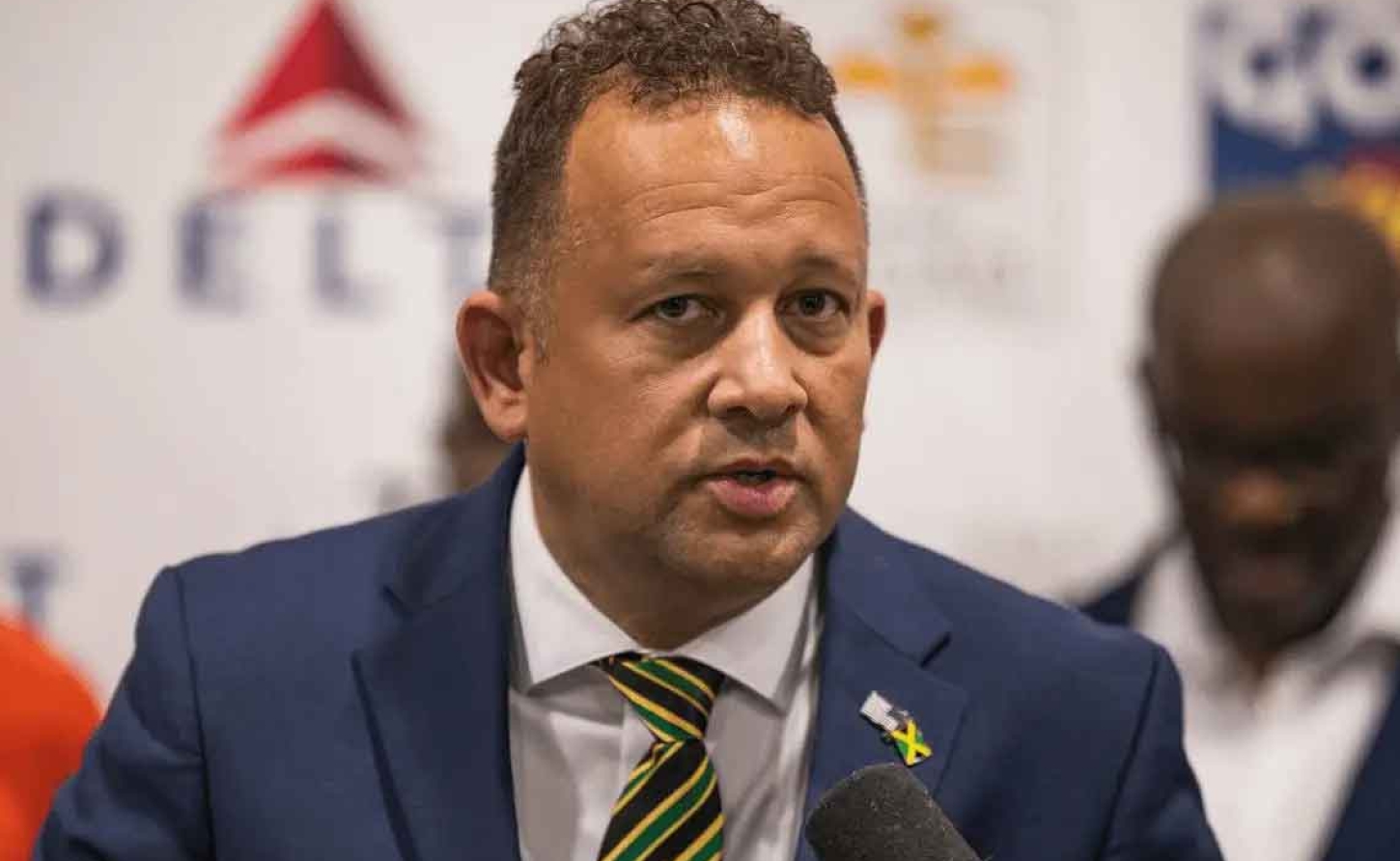
Consul-General in Miami, Roderick Oliver Mair appointed next Consul-General in New York
Roderick Oliver Mair moves from Miami to Manhattan, inheriting Jamaica’s largest overseas mission — and a chair that has sat empty since November.
KINGSTON, Jamaica — For eight and a half months, the most consequential consular post Jamaica maintains anywhere in the world has been run by a caretaker. That ends now. Minister of Foreign Affairs and Foreign Trade, Senator the Honourable Kamina Johnson Smith, has appointed Mr. Roderick Oliver Mair, currently Consul-General in Miami, as Jamaica’s next Consul-General in New York.
He takes charge of a jurisdiction spanning 33 American states, with concurrent accreditation to Bermuda and Puerto Rico, and is expected to assume office in the coming weeks.
He succeeds the late Alsion Roach Wilson, CD, the eleventh person to hold the post, who died at her New York home on 8 November 2025 after a four-year battle with breast cancer. She was 64 and had led the mission since July 2019.
Since then the Consulate has been held together by Ariel Bowen, Acting Under-Secretary for Diaspora, Consular and Protocol Affairs, deployed from Kingston as Officer-in-Charge — a stopgap the Ministry took pains to clarify was emphatically not an appointment.
A record built in the South
Johnson Smith grounded the decision in Mair’s seven-plus years of consular leadership, his record of diaspora engagement and his success in mobilising partnerships for Jamaica. New York, she noted, is home to one of the largest and most vibrant Jamaican communities in the world, and she expressed confidence he would bring the same energy and innovation he showed in Southern Florida.
The Miami ledger supports the claim. Running a 13-state jurisdiction, Mair built one of the most visible consular operations in the diaspora — and, crucially, one that moved money homeward. The annual Jamaica Hi-5 Reggae Run/Walk, established under his watch, turned a South Florida road race into a funding stream for Jamaica’s public health system.
Through the Ministry of Health and Wellness’ Adopt-a-Clinic programme, the Southern Region became the initiative’s largest contributor, supporting 17 rural health facilities — six financed directly from Hi-5 proceeds.
Then came Hurricane Melissa. Coordinating through the Consulate with Food for the Poor, World Central Kitchen and Global Empowerment Mission, Mair helped mobilise more than 4,000 volunteers and over 60 collection points across the region, backed the Stay Strong Jamaica and One Love Jamaica gospel concerts, and pressed on with JAMPRO investment roadshows even as relief consumed the calendar.
The credentials are conventional enough: an MBA from Nova Southeastern University, a bachelor’s in Management Studies and English Literature from The University of the West Indies, the Harvard Business School General Management Programme, and an honorary Doctor of Ministry from the University of Fort Lauderdale.
More telling is the standing he earned among peers — Dean of the South Florida Caribbean Consular Corps since 2022, Deputy Dean of the South Florida Consular Corps since 2025.
New York is not Miami
The two posts are not interchangeable, and it would be a mistake to treat this as a lateral move with a colder winter.
Miami’s Jamaican community is dense, concentrated and comparatively recent. New York’s is older and far more institutionally embedded — church networks, alumni associations, benevolent societies and political muscle stretching from Brooklyn to Hartford to the Midwest.
It has funded clinics, bankrolled schools and absorbed hurricane after hurricane, and it expects to be consulted rather than thanked.
It is also a constituency under pressure. Jamaicans across those 33 states are navigating a hardened immigration enforcement climate alongside the ordinary consular grind of passports, citizenship applications, deportee reintegration and distress cases, while remittances from the United States remain a load-bearing wall of the Jamaican economy.
The Consul-General in New York is not a ceremonial post; it is a service delivery job with a diplomatic title attached.
He inherits, too, the unfinished business of a mission that spent the better part of a year without a substantive head. Whatever continuity Bowen preserved, an Officer-in-Charge cannot set direction, commit to long-horizon partnerships, or speak for Jamaica with the authority of an appointed head.
Eight months is a long time to ask the largest Jamaican community abroad to make do.
His departure also opens a question the Ministry has not answered: who takes Miami? That jurisdiction — 13 states, plus a relationship architecture built over seven years — now faces its own transition, at a moment when hurricane recovery and investment promotion both demand a steady hand.
The appointment is a sound one on the evidence. The delay in making it is another matter. Kingston took eight and a half months to fill one chair. The diaspora will be counting the days on the next.
— 30 —
