
DIASPORA | Two Jamaicans in Eswatini Reject Repatriation — Because America, Not Jamaica, Is Home
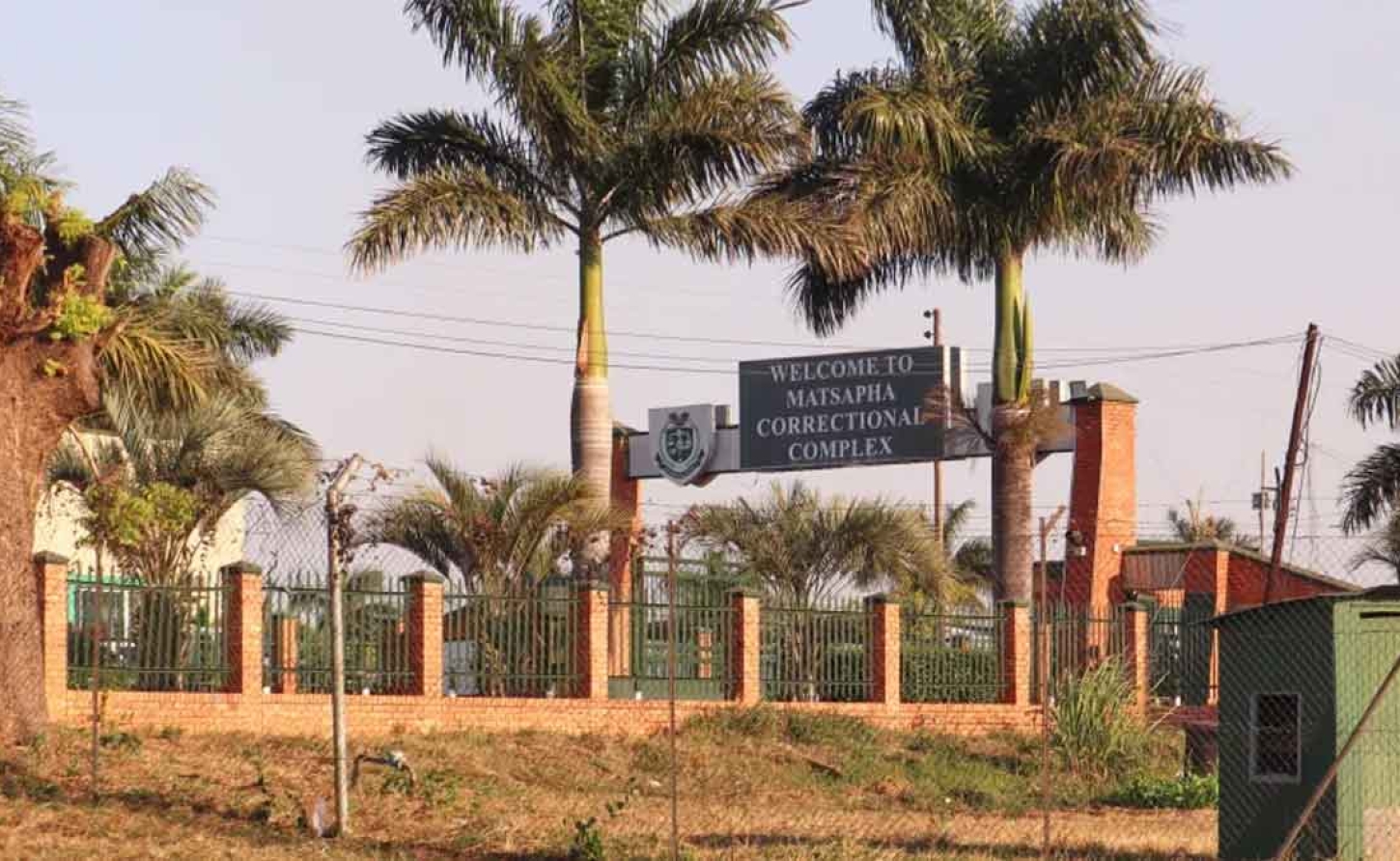
The Matsapha Correctional Complex in Matsapha, near Mbabane, Eswatini, July 17, 2025. (AP Photo, File)
Kingston offered a flight home. The men in Eswatini's custody want the only home they know — the United States — and the Government of Jamaica has admitted it cannot deliver it.
KINGSTON, Jamaica | Friday, July 17, 2026| By Calvin G. Brown | — Two Jamaican men held in the Kingdom of Eswatini have told their own government, in effect, to stand down. Offered consular assistance and a facilitated passage back to the island of their birth, both declined.
They do not want Jamaica. They want America — the country that expelled them to a landlocked African monarchy neither man had ever seen.
The Ministry of Foreign Affairs and Foreign Trade disclosed the exchange late Thursday, confirming that two of the three Jamaican nationals recently deported by the United States to Eswatini under Washington's third-country nationals (TCN) programme have formally rejected repatriation. Officials are still attempting to reach the third.
What the Ministry Said
Contact was established through the Consulate General of Jamaica in Miami after one of the men telephoned the office accompanied by his attorney. A second Jamaican national subsequently joined the call. “During the discussion, the men were advised of the consular assistance available to them and of the government's readiness to facilitate their return to Jamaica,” the ministry said.
The men's answer was unambiguous — and so was Kingston's concession of impotence. The Government advised the pair that it “could not determine their immigration status in the United States or secure their return there. Both men maintained that they did not wish to return to Jamaica.”
The ministry's outreach followed diplomatic inquiries by Jamaica's Embassy in Washington seeking information on the circumstances of the men's removal, alongside formal representations by the High Commission in Pretoria to the Government of Eswatini. Consular support, the ministry added, remains available to Jamaican nationals overseas whose circumstances require intervention.
The Choice That Is No Choice
Strip away the diplomatic language and the men's dilemma is brutal. Accept repatriation, and they abandon whatever legal fight remains for a return to the United States — where, for men of the deportee profile Washington has been shipping to southern Africa, entire adult lives, families, and livelihoods were built.
Refuse, and they remain warehoused without charge in the custody of Africa's last absolute monarchy, a kingdom paid to hold them.
Their answer says everything: indefinite detention with a sliver of hope beats a free flight to a country that stopped being home decades ago.
That calculation is not madness. It is the arithmetic of the Caribbean diaspora — men taken from Jamaica as children or young adults, whose parents, partners, children and grandchildren are American, and for whom “repatriation” means exile dressed up as rescue.
A Widening Pattern
The two unnamed men are not the only Jamaicans caught in Washington's third-country machinery. In a separate case, 64-year-old Pastor Junior Alves was among 11 people flown to Eswatini on July 9 — the second Jamaican consigned there in under a year.
Alves had lived in the United States for 44 years, held protection under the Convention Against Torture since 2016, and was seized by ICE agents in Florida on January 11. His eight children and 11 grandchildren were all born on American soil.
Before him came Orville Etoria, the first Jamaican deposited in Eswatini in July 2025. He spent more than seven weeks in the maximum-security Matsapha prison without charge before being repatriated in September with the assistance of the UN's International Organization for Migration.
His lawyers insisted the United States had removed him unlawfully — Jamaica, they said, had been willing to take him back all along, puncturing the US Department of Homeland Security's claim that these were men whose home countries refused them.
Kingston has consistently maintained that it has never refused the return of any of its citizens.
Eswatini, for its part, has confirmed receiving roughly US$5.1 million from Washington to accept up to 160 deportees, nominally for border management. The kingdom insists the men are held only temporarily, pending return to their countries of origin.
Thursday’s disclosure exposes the fiction: “temporarily” has no endpoint when the deportee will not go home and the deporter will not take him back.
Sovereignty Reduced to Message-Relaying
The deeper indictment in Thursday's statement is what it reveals about Caribbean sovereignty in the age of transactional deportation. Kingston's diplomacy has been reduced to relaying messages between Washington, Pretoria and Mbabane.
It cannot determine its own citizens' immigration status in the United States. It cannot secure their return there. It cannot compel answers about why they were flown to southern Africa in the first place.
And CARICOM, which welcomed Interpol's Secretary General to Montego Bay with warm words about regional security cooperation, has yet to utter a collective syllable about member-state nationals being warehoused in a rented African prison.
The men's refusal is an indictment in both directions — of an American system that discards human beings into paid third-country cells, and of a region whose passports promise a protection its governments cannot enforce.
Home, for these men, is where their children are. No government on either side of the Atlantic is offering them that.
— 30 —
