
DIASPORA | UNITED STATES | Trump Claims Birthright Citizenship “Was for Babies of Slaves”
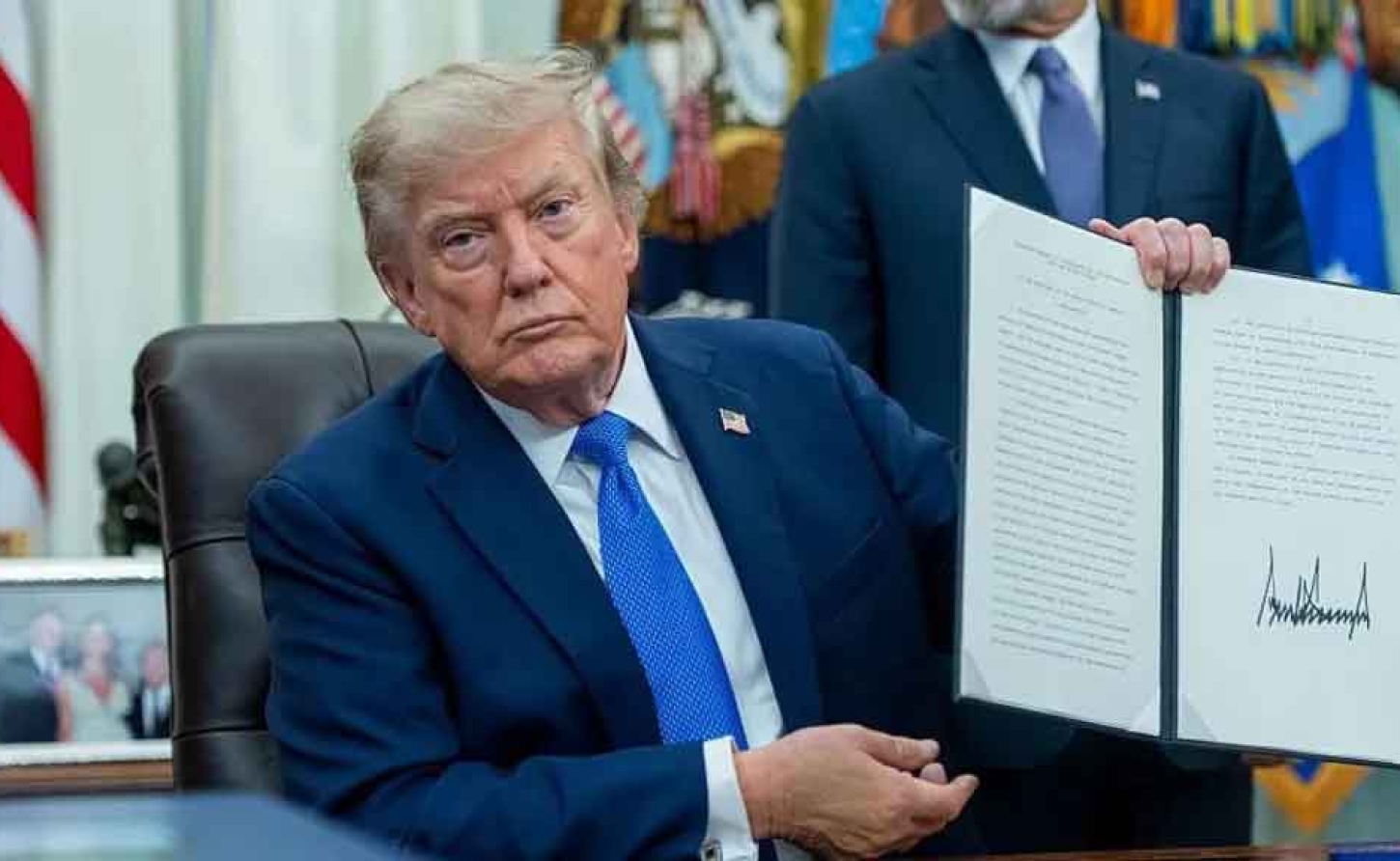
Donald Trump is trying again to scale back birthright citizenship in the US, by signing two executive orders
US president Donald Trump reaches into the Fourteenth Amendment’s emancipation origins in order to narrow it — and Caribbean families are caught in the machinery again.
WASHINGTON DC, Calvin G. Brown August 6, 2026 - Five weeks after the United States Supreme Court struck down his signature immigration ambition, Donald Trump signed two executive orders on Thursday designed to reach the same destination by a narrower road.
Neither attempts the frontal assault the Court rejected on June 30. Both take aim at the same principle — and, whatever Washington says, at families whose lines run back to Kingston, Port-au-Prince, Georgetown and Santo Domingo.
The first order targets what the administration calls commercial “birth tourism”, tightening visa scrutiny of visitors suspected of travelling to the United States to give birth. The second widens the categories of newborns excluded from automatic citizenship: children tied to foreign embassies or organisations, children of persons designated enemy aliens, children of foreign nationals lobbying for foreign governments, and children of parents said to have obtained status by fraud. The White House had not released either text by Thursday evening.
Trump called the June ruling unfair and said his administration would end birthright citizenship a different way. Then came the sentence that ought to arrest every Caribbean reader.
Defending the claim that the Fourteenth Amendment was never meant to be universal, the president reached for history: the guarantee was written just after the Civil War, he said, and it was for “the babies of slaves.”
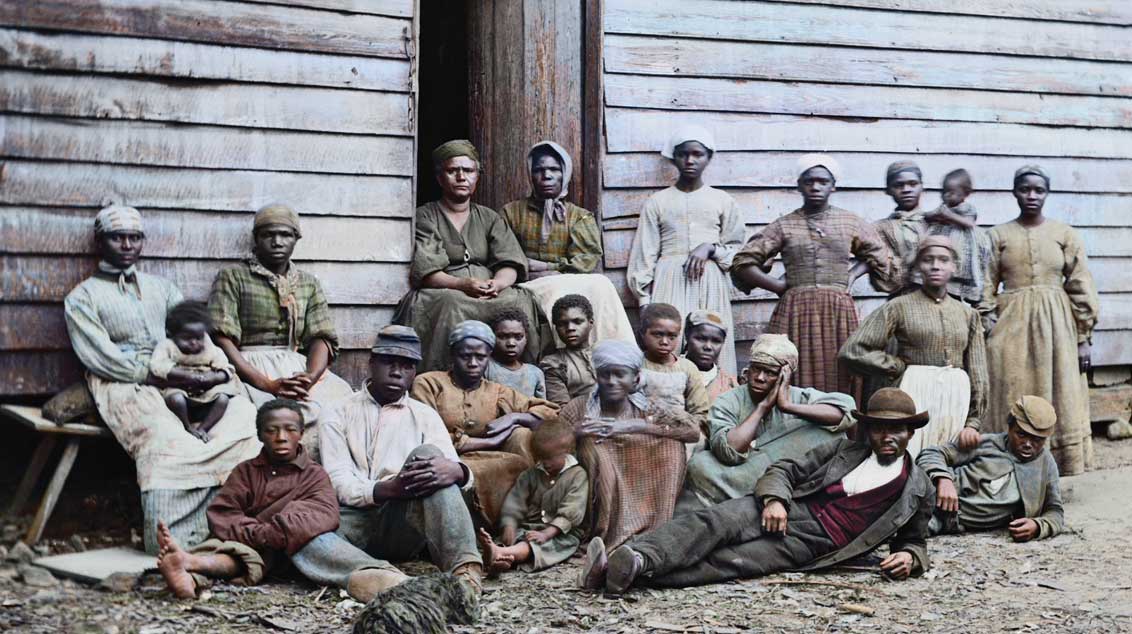 Slavery in AmericaThe clause emancipation built
Slavery in America
He is not wrong about the origin. He is wrong about everything that follows from it. The amendment was ratified in 1868 to make citizens of people the republic had owned. Thirty years later, in United States v. Wong Kim Ark, the Court applied it to the American-born son of Chinese labourers, holding that citizenship follows the soil rather than the bloodline.
The door emancipation forced open was never a private inheritance. To invoke the babies of slaves as a ceiling rather than a floor is to conscript Black liberation into the argument for a smaller republic.
To invoke the babies of slaves as a ceiling rather than a floor is to conscript Black liberation into the argument for a smaller republic.
The arithmetic for the region
For the Caribbean this is anything but abstract. The Migration Policy Institute estimated some 575,000 unauthorised immigrants from the region in the United States as of mid-2023 — Dominicans the largest share at roughly 37 per cent, Haitians 31 per cent, Cubans 15 per cent, Jamaicans 10 per cent.
Days before it defended birthright citizenship, the same Court cleared Washington to terminate Temporary Protected Status for Haiti, a designation covering upwards of 330,000 people. The result is a cruelty the region knows well: parents losing their footing while their children hold citizenship, households living on two sides of a legal line drawn through the kitchen table.
A film the region has seen
The Caribbean is not a bystander lecturing from a distance. It is a witness with scar tissue. In 2013 the Dominican Republic’s Constitutional Court, in ruling 168-13, retroactively stripped citizenship from Dominicans of Haitian descent going back to 1929, rendering tens of thousands stateless in the only country they had known. CARICOM suspended consideration of the Dominican Republic’s membership bid in response. The region has watched what happens when a state decides that being born somewhere is not quite enough.
The other side of the ledger
The administration’s case deserves argument rather than a sneer. Deputy chief of staff Stephen Miller described a trade in which visitors declare a holiday and deliver a citizen — an industry that does exist, is commercialised, and which no state is obliged to underwrite. Unrestricted birthright citizenship is not a universal norm either; the Dominican Republic, The Bahamas and Suriname all qualify it.
More consequentially, Justice Brett Kavanaugh agreed in June that the first order was invalid while insisting it offended a federal statute rather than the Constitution, and noted that Congress could legislate exceptions if it chose. That concurrence was less a footnote than a blueprint.
Which is why the narrower drafting matters. An order confined to diplomats, foreign agents and proven fraud sits closer to the exceptions American courts have always recognised than the sweeping January 2025 version did.
The coming litigation will test how far a term like “enemy alien” can be stretched before it swallows ordinary people. But the contest has shifted from whether the principle survives to how much can be shaved from its edges before anyone objects.
CARICOM capitals, meanwhile, have said almost nothing. Remittances from North America underwrite household consumption across the region. The status of those families’ children is not somebody else’s domestic affair.
The Fourteenth Amendment was indeed written for the babies of slaves. Their descendants — in Brooklyn, in Miami, in Kingston — are entitled to ask why that history is now being used to close a door it was drafted to open.
— 30 —
