
ENTERTAINMENT | Slinger Francisco, Sparrow Dead — And This Time, Nobody Is Laughing
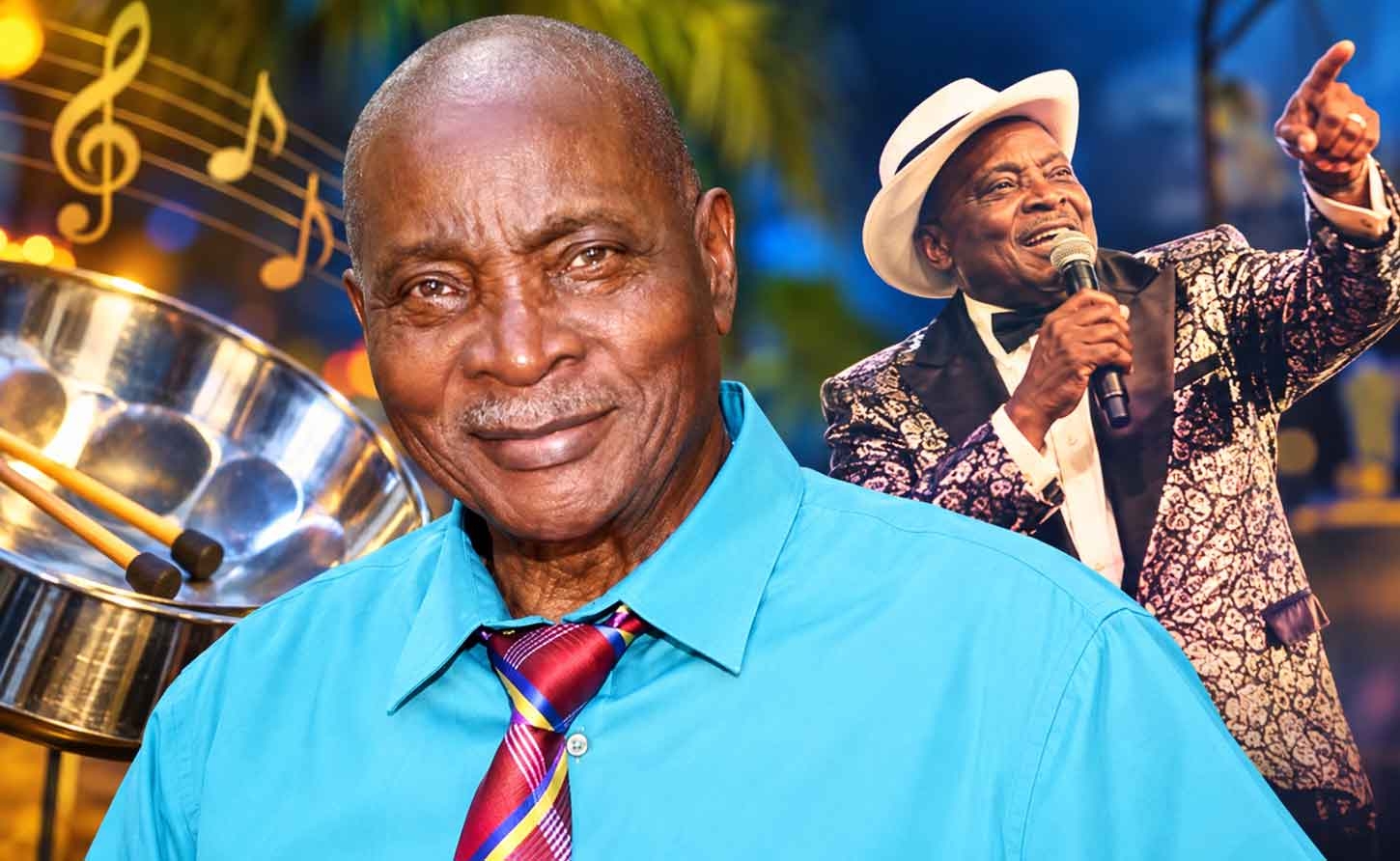
The Mighty Sparrow (Slinger Francisco) died on Sunday September 27, 2026 -
Slinger Francisco — Grenada’s son, Trinidad’s king and the Caribbean’s conscience in calypso — has died in New York at 91. He leaves behind a region that learned to laugh at itself, argue with itself and see itself through his songs.
PORT OF SPAIN, Trinidad and Tobago, September 28, 2026 - Calvin G. Brown | For seventy years, the Caribbean kept alive a rumour it could never quite retire. Sparrow dead, somebody would whisper, and in 1970 Sparrow himself turned the gossip into a hit, mocking the busybodies who had him buried before his time. On Sunday, September 27, the rumour finally caught up with the man. Slinger Francisco, the Mighty Sparrow, died peacefully in New York after a brief illness, surrounded by his family. He was 91.
The region is not simply mourning a singer. It is mourning a newspaper, a parliament, a rum-shop argument and a Carnival road all at once, because for three generations of West Indians that is what Sparrow was.
From Grand Roy to the Savannah
He was born on July 9, 1935, in Grand Roy, a fishing village in Grenada, and taken to Trinidad as a small child. He grew up in Laventille, sang in a Catholic school choir that frowned on calypso, and joined a neighbourhood steelband at 14. The old guard of the calypso tents, who sang flat-footed and pointed an accusing finger, laughed at the restless youngster darting about the stage like a little sparrow. The joke became a name, and the name became “Mighty”.
In 1956 he won both the Calypso King crown and the Road March with “Jean and Dinah”, a sly verdict on Trinidad after the American servicemen packed up and left. His prize was $40. The Carnival Queen took home $7,500. Sparrow answered with a song, “Carnival Boycott”, and led a walkout of calypsonians. It was the first great lesson he taught the region: the artist who carries a people’s culture deserves to be paid like it.
The people’s newspaper
Long before talk radio and social media, calypso was how the Caribbean read the news, and Sparrow was its editor-in-chief. He championed Eric Williams and the independence project in “William the Conqueror” and “Model Nation”, and defended pay-as-you-earn taxation in “P.A.Y.E.”. Later he turned his pen outward: on the tyrants of the 1970s in “Dead or Alive”, on greed in “Capitalism Gone Mad”, and on racial strife in his adopted New York with “Crown Heights Justice”.
Jamaicans have particular reason to smile ruefully. His 1962 “Federation” laid the collapse of the West Indies Federation squarely at Kingston’s door. Yet Jamaica never held it against him. He recorded “Sparrow Meets the Dragon” here with Byron Lee in 1968, producing the international hit “Only a Fool”, and he graced Reggae Sunsplash in 1993. Prime Minister Andrew Holness spoke for many on Sunday: “Growing up, I enjoyed his music, humour and sharp social commentary.”
“His songs became part of the soundtrack of Caribbean life and culture, beloved by generations of Jamaicans and people across the region.”— Prime Minister Andrew Holness
The rascal and the record
A tribute that left out the complications would insult a man who never spared anyone. Sparrow’s humour could be ribald to the point of offence. “Congo Man” (1965) was kept off the radio until 1989 over its treatment of women and Africans. The songwriter Winsford Devine, who wrote for him for 17 years, penned many of his later hits, and the two disputed authorship of some. None of this dims the voice. It simply reminds us that the king was human.
He belonged to all of us
The ledger is staggering: eight Calypso King titles, eight Road Marches, two King of Kings crowns and hundreds of songs across dozens of albums. The honours followed. He received an honorary doctorate from the University of the West Indies in 1987, the Order of the Caribbean Community in 2001, the Order of the Republic of Trinidad and Tobago in 2014 and an OBE in 2015. Prime Minister Kamla Persad-Bissessar titled her tribute simply “Goodbye to the Greatest”. Barbados Prime Minister Mia Mottley said he belonged to the entire Caribbean.
That is the heart of it. Sparrow was born Grenadian, crowned Trinidadian and spent his later decades in Jamaica, Queens. He was a one-man federation that actually worked. Where politicians failed to hold the islands together, a calypsonian did it with a chorus and a wicked grin.
So let the young ones do as Mottley urged and go and listen. The records hold our history in four-minute verses. And this time, when somebody says Sparrow dead, nobody is laughing.
— 30 —
