
GUYANA | Who Judges the Judges? GTUC Drags the CCJ Crisis Into the Open
GUYANA | Who Judges the Judges? GTUC Drags the CCJ Crisis Into the Open
Guyana's trade union movement has demanded a regional investigation into the Caribbean Court of Justice. The uncomfortable question it exposes is who, exactly, is supposed to conduct one.
GEORGETOWN, GUYANA — The letters left Georgetown on Wednesday, addressed to three of the most consequential offices in the Caribbean Community: the CARICOM Secretary-General, the Chairman of the Conference of Heads of Government, and the Regional Judicial and Legal Services Commission. The demand was blunt. Investigate the Caribbean Court of Justice — and publish what you find.
The Guyana Trades Union Congress was scrupulous about what it was not saying. The leaked correspondence contains allegations not independently established, and it is not prejudging anyone. But their seriousness, it holds, demands examination rather than institutional silence.
Five Against One
That correspondence, first reported by Trinidad's Sunday Express on August 9, showed five of the Court's six sitting judges — Justices Chile Eboe-Osuji, Chantal Ononaiwu, Arif Bulkan, Maureen Rajnauth-Lee and Peter Jamadar — challenging the administration of CCJ President Justice Winston Anderson.
The complaints ran from the unilateral imposition of a judicial dress code to allegations of panel fixing and attempts to influence case outcomes. Justice Jamadar described a toxic environment. Justice Eboe-Osuji, a former President of the International Criminal Court, wrote that he had never encountered that level of dictatorship in the administration of a judiciary.
The proximate trigger was almost trivial: what judges should wear. The consequence was not. Justice Eboe-Osuji was removed from the interlocutory panel in D'Almada v Trinidad and Tobago — a removal he reportedly links to a disagreement with the President over a point of law.
Justice Anderson broke his silence on Friday. He condemned the unauthorised disclosure in the strongest possible terms, confirmed the panel change but insisted it arose solely from the attire dispute, and rejected panel fixing outright, calling it perhaps the most serious wound. Every judge, he announced, will now sit on every panel unless formally excused.
“The credibility of the CCJ is a regional asset; its integrity is a regional responsibility.” - GUYANA TRADES UNION CONGRESS
The Trap Nobody Wants to Name
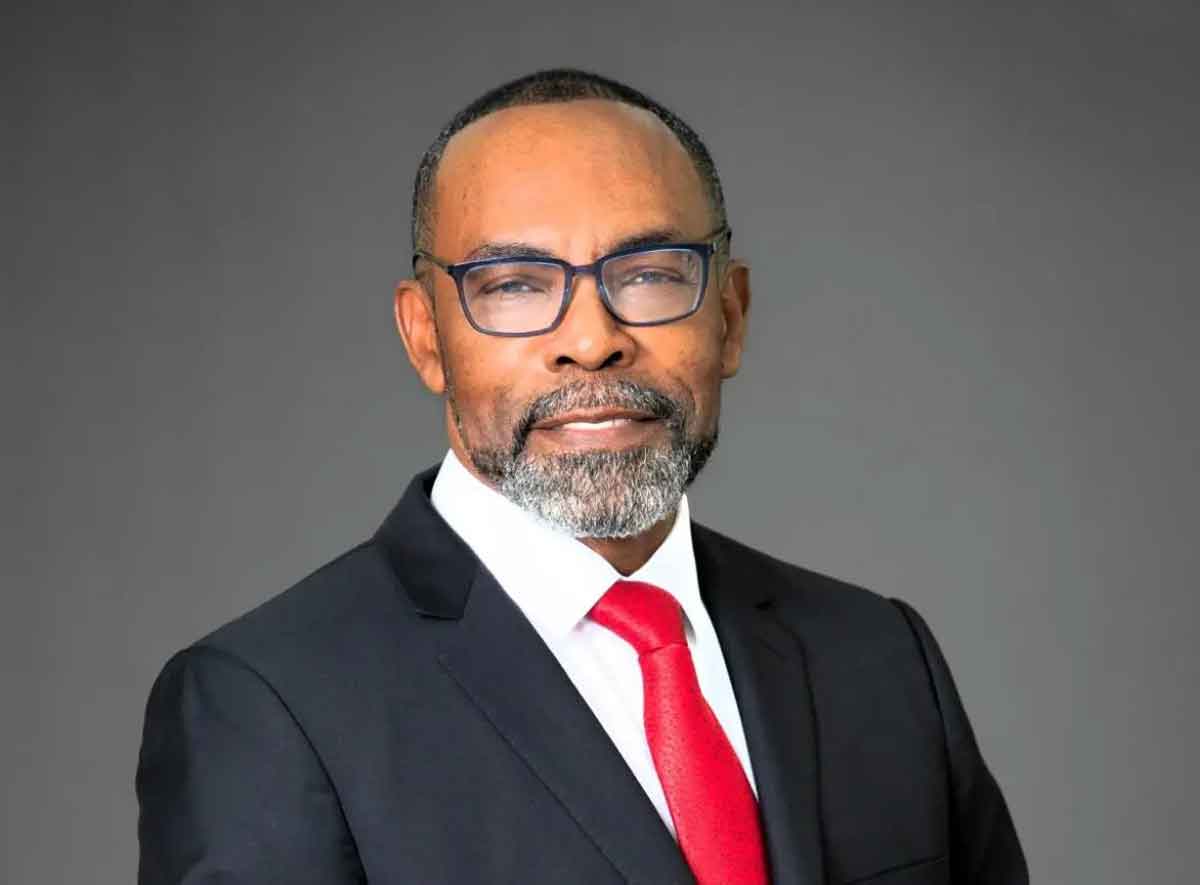
President of the CCJ, Justice Winston Anderson
The escape hatch is no better. Removing a CCJ President requires an RJLSC recommendation and a three-quarters majority of CARICOM Heads. That is the same qualified-majority machinery currently jammed over Secretary-General Carla Barnett's reappointment — a dispute CARICOM has referred, under Article 212 of the Revised Treaty, to the CCJ itself.
One of the offices the GTUC wrote to is a litigant before the court it is being asked to examine.
Five Out of Fifteen
The arithmetic is the whole argument — and it is smaller than the region pretends. The Agreement establishing the Court is open to CARICOM's 15 Member States. It is not open to the five Associate Members, which are British Overseas Territories with no constitutional power to abolish appeals to London; that authority is not theirs to exercise.
Twenty-one years after the Court opened its doors, five Member States have accepted its appellate jurisdiction: Barbados, Belize, Dominica, Guyana and Saint Lucia. Haiti and Suriname sit outside the common-law tradition and keep their own apex courts. Montserrat, still a colony, has no say in the matter.
That leaves seven sovereign common-law states — Antigua and Barbuda, The Bahamas, Grenada, Jamaica, St Kitts and Nevis, St Vincent and the Grenadines, and Trinidad and Tobago — which could accede tomorrow and have chosen not to.
Every argument they have made against doing so rests on a single insinuation: that a Caribbean court could not be trusted to stay independent of Caribbean politics. For two decades the Court's record was the answer. This month, five of its own judges handed the other side a document.
The Court Jamaica Built
And there is the ledger. The Court is financed not by annual subventions but by the income of a US$100 million Trust Fund, seeded in 2005 through Caribbean Development Bank loans to Member States and deliberately structured so that no government could ever put the bench on rations.
Trinidad and Tobago carries 29.73 per cent of that capital. Jamaica carries 27.09 per cent — some US$27 million, a debt Kingston is still servicing. The Court's two largest funders are both non-acceding states. Jamaica helped draft the Agreement and signed it at St Michael in February 2001, pays more than a quarter of the cost of the bench, and sends its final appeals to London regardless.
Jamaica's stake is older than its hesitation. The proposal for a Caribbean final court emerged from the Organisation of Commonwealth Caribbean Bar Associations in 1970, at a meeting chaired by a Jamaican Prime Minister, Hugh Shearer. P.J. Patterson signed the Agreement for Jamaica at St Michael in February 2001.
In 2003 his PNP government laid three Bills before Parliament to abolish Privy Council appeals and install the CCJ as the final court. In 2005 the Privy Council struck all three down as non-severable — having first conceded that the CCJ Agreement was “a serious or conscientious endeavour” to create an independent regional court. The tribunal Jamaica sought to leave is the one that stopped it leaving.
For Guyana this is not abstract. The CCJ is its final court, and the row surfaced alongside the Court's handling of extradition proceedings involving Opposition Leader Azruddin Mohamed and his father, Nazar Mohamed.
The GTUC does not allege that ruling was improperly reached, and Justice Anderson notes it was unanimous. But where questions of judicial administration arise in politically charged litigation, the appearance of impartiality is the entire asset.
Statements Are Not Findings
The heads of judiciary of seven jurisdictions have issued a joint statement of confidence in the Court. Decent instinct, inadequate response. Confidence is an output, not an input — produced by findings, not by communiqués regretting that findings became public.
Much of the regional legal establishment has spent the week exercised chiefly by the leak, a revealing choice of grievance. The sharper question is what conditions leave a judge of a final appellate court convinced that disclosure to a newspaper was the only avenue left.
The GTUC wants an investigation into the correspondence, an examination of panel assignments including D'Almada, an assessment of safeguards against partisan influence, a governance review, and publication of the findings. None of it is unreasonable. All of it is overdue.
That it took a trade union in Georgetown, rather than a single CARICOM Head of Government, to put the demand in writing tells the region something about who defends its institutions when defending them is inconvenient.
— 30 —
