
JAMAICA | Cornwall Regional in Crisis: When There Are No Beds, Patients Die in Chairs

People's National Party Caretaker for St. James Central, former Senator Janice Allen Laments the state of the Cornwall Regional Hospital
Eight years of renovation, broken promises, and bureaucratic silence have turned Jamaica’s flagship western hospital into something far more sinister than a symbol of institutional failure — for too many patients, Cornwall Regional Hospital has become a death sentence.
MONTEGO BAY, Jamaica, April 25, 2026 - She had no bed. Three days she sat in a chair, inside the walls of a hospital that was supposed to heal her, and no one gave her a bed. Now, if the reports hold, she is dead — not from a disease that could not be treated, but from a system that could not be bothered.
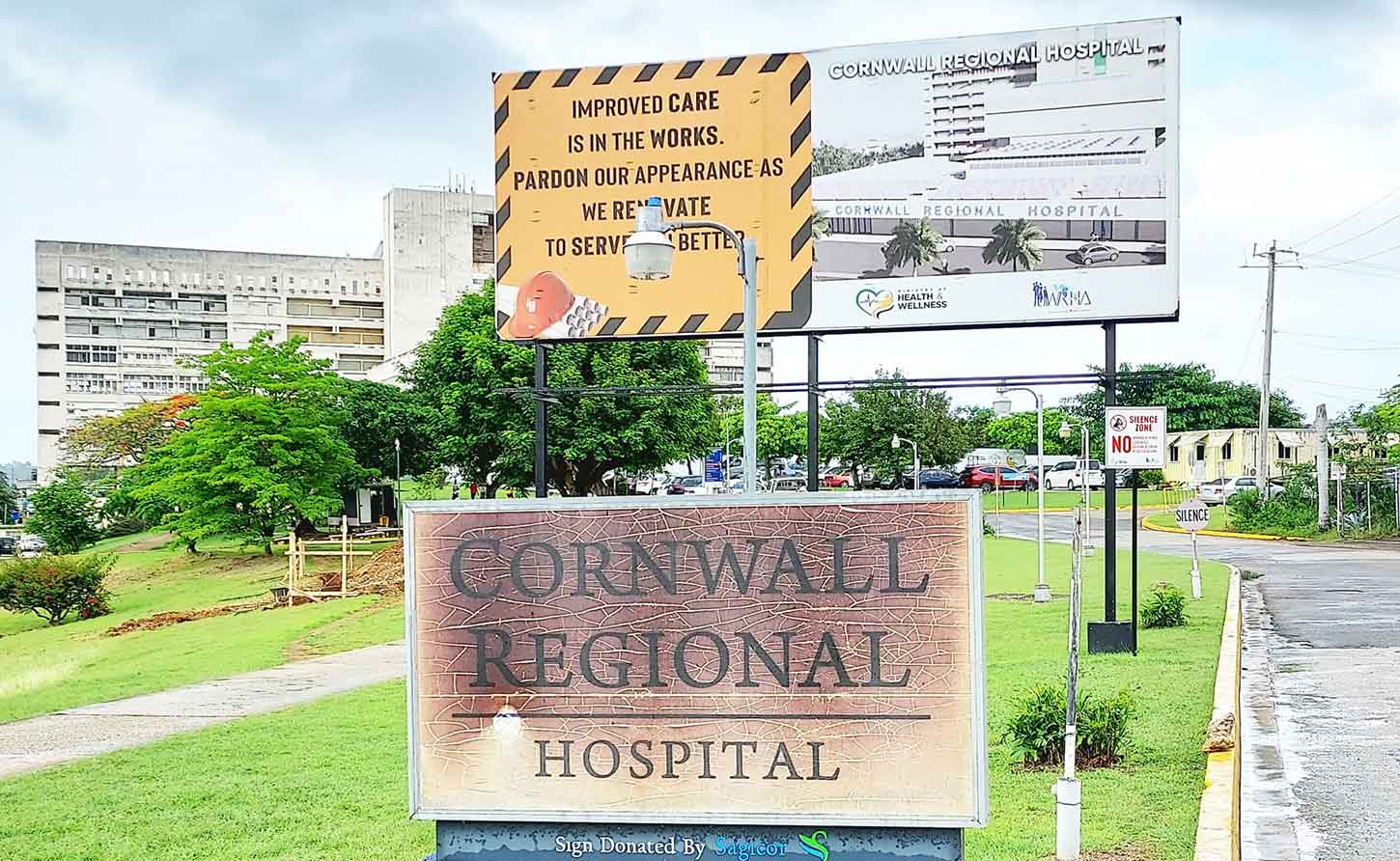
That, in its most brutal distillation, is the state of Cornwall Regional Hospital in 2026 — nearly eight years into a renovation that was supposed to transform the institution into a beacon of western Jamaica’s healthcare ambitions. Instead, CRH has become something else entirely: a monument to managed neglect, a place where patients wait in chairs while officials offer “assessments,” and accountability remains perpetually deferred.
Eight Years and Counting
When the renovations began, the public was told this was necessary disruption in service of something better. Patients would be inconvenienced now so they could be served more effectively later. Wards would be shifted, services consolidated, capacity temporarily reduced — all in pursuit of a hospital fit for the twenty-first century. The people of St. James and the western region accepted that bargain.
What they were not told is that “later” would become a moving target. That the disruption would stretch into a near-decade. That the promised transformation would give way to a grinding, exhausting cycle of delays, reassurances, and fresh rounds of patience being demanded of people who have every right to be out of patience entirely.
Janice Allen, PNP Caretaker for St. James Central — the constituency in which CRH sits — has had enough. Stepping forward with the kind of directness that the situation demands, Allen is calling for answers from the Chief Medical Officer, the Minister of Health, and the leadership of the Western Regional Health Authority. Not platitudes. Not process. Answers.
“This cannot be another matter buried under bureaucracy and silence. The public deserves transparency, accountability, and decisive action.”
— Janice Allen, PNP Caretaker, St. James Central
A Moral Failure, Not Just a System Failure
The language Allen uses is deliberately unsparing. She calls the reported death of a woman who spent three days without a bed “not only a system failure, but a grave moral failure.” That distinction matters. System failures are fixable — they speak to capacity, logistics, and resource allocation.
Moral failures speak to something deeper: the quiet, institutional decision that some people’s suffering is tolerable, that the wait is acceptable, that dignity is a luxury rather than a right.
When a public hospital cannot provide a bed to a patient in distress — not for an hour, not for a day, but for three days — the question is no longer about whether the system is under strain. The question is whether the people entrusted to manage that system have treated the strain as an emergency, or as background noise.
Not the Exception. The Norm.
 Here is what must be said clearly, and said outside the frame of any single politician’s statement: the woman who died in that chair was not an anomaly. She was not the victim of one bad night, one overwhelmed shift, one unfortunate alignment of circumstances.
She was the latest casualty of a pattern — a grinding, documented, institutionally tolerated pattern — in which patients at Cornwall Regional Hospital sit in chairs because no bed is coming, and some of them die there.
This has become the norm at CRH. Not the exception. Healthcare workers know it. The families of patients know it. The people of western Jamaica, who have watched this deterioration unfold across nearly a decade, know it in their bones.
What remains to be established is whether the people in authority — the Minister of Health, the Chief Medical Officer, the Western Regional Health Authority — will continue the fiction that these are isolated incidents rather than the predictable consequences of chronic mismanagement and deferred accountability.
A hospital’s purpose is to preserve life. When it consistently fails that purpose — when the chair becomes a substitute for the bed, when the waiting becomes the treatment, when death becomes an administrative outcome rather than a medical tragedy — it has ceased to function as a center for healing.
Cornwall Regional Hospital has not merely failed its patients. For too many of them, it has become the last institution they will ever enter: not as a place of care, but as a place where they are left to wait out the worst. A death sentence dressed in hospital whites.
Questions That Cannot Go Unanswered
Allen’s demands are precise and they deserve to be treated as the minimum, not the ceiling. She wants to know exactly what happened to this patient. She wants the current staffing numbers, bed capacity, and emergency response capability laid bare, not softened for public consumption.
She wants to know — and Jamaica deserves to know — why after eight years of renovation, Cornwall Regional is still producing conditions in which people die in chairs.
These are not opposition political points. They are human questions. Any health minister who cannot answer them with clarity and urgency has failed the people of western Jamaica — and by extension, failed the nation’s most basic covenant with its citizens: that public institutions will not abandon them in their most vulnerable moments.
The Wider Stakes
Cornwall Regional Hospital is not merely a building. It is the frontline of healthcare for hundreds of thousands of Jamaicans across St. James, Hanover, Westmoreland, and Trelawny. When it falters, there is no credible fallback. Patients do not have the option of driving to a better-resourced institution. For too many of them, CRH is the institution — the first resort, the last resort, and everything in between.
That weight makes the present state of affairs not just regrettable, but unconscionable. Healthcare workers at CRH are trying to serve a community with inadequate resources in an environment that has been “under renovation” for the better part of a decade. Their endurance and professionalism deserve recognition — but more urgently, they deserve a Ministry that matches their dedication with real support, not more managed silence.
Allen is right: the time for excuses has passed. If a woman can spend three days in a chair at a major regional hospital and die without receiving a bed, then the crisis at Cornwall Regional Hospital is not approaching — it has already arrived. The only question is whether those in authority will finally act as though they understand that.
— 30 —
