
JAMAICA Holds the Line: BOJ Keeps Rate at 5.50% as Middle East War Drives Oil Shock and Inflation Storm
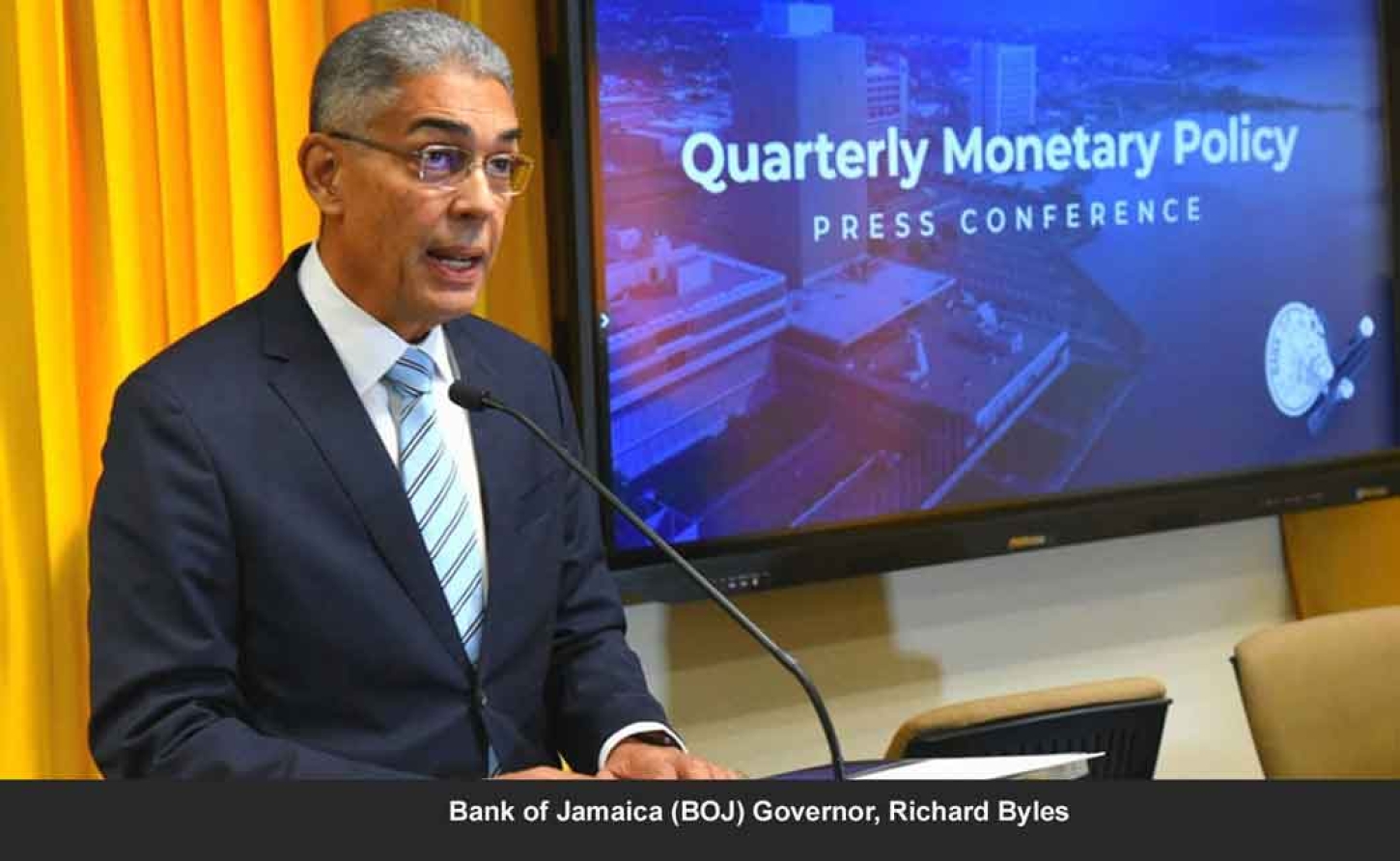
Governor of the Bank of Jamaioca Richard Byles says MPC has held the policy rate at 5.50 percent.
With crude prices surging, inflation forecast to breach its target, and GDP growth fragile, the Bank of Jamaica's Monetary Policy Committee chose stability over manoeuvre — but the hard arithmetic for ordinary Jamaicans grows harder by the quarter.
KINGSTON, Jamaica, May 21, 20267 - The Bank of Jamaica is not blinking. Meeting on May 19 and 20, the Monetary Policy Committee unanimously voted to hold the policy interest rate at 5.50 percent per year — a decision that lands with the weight of a full war chest behind it and a forecast in front of it that offers precious little comfort.
The enemy is not domestic. It is not a government that overspent. It is a conflict seven thousand miles away, carving through oil infrastructure in the Middle East and sending shockwaves through every Jamaican gas pump, electricity bill, and supermarket shelf.
The BOJ's message, delivered without ceremony, is stark: inflation is rising, it will likely breach its own target range, and the risks are overwhelmingly skewed upward. Jamaica is caught in the slipstream of a geopolitical catastrophe it had no hand in creating — and is now forced to absorb.
The Oil Shock Jamaica Cannot Escape
Since the Bank's last assessment in March 2026, the Middle East conflict has deepened materially. Critical oil infrastructure has sustained extensive damage. Supply chains remain fractured. West Texas Intermediate crude oil prices for the first quarter of 2026 surged 21.5 percent relative to the previous quarter — and the BOJ projects those prices will remain elevated for the next two years. That is not a blip. That is a sustained structural cost that Jamaicans will carry well into the decade.
The transmission mechanisms into the Jamaican economy are already operating with grim efficiency. Domestic gas prices have already risen. Electricity costs face upward pressure as fuel import bills climb. Higher energy costs, in turn, drive up the price of transport — which in a trade-dependent island economy means the price of almost everything else follows. The Committee's formal language is measured; the real-world consequence is inflation on inflation.
The Target That Will Be Breached
Jamaica's headline inflation stood at 4.3 percent in April 2026 — inside the Bank's target band of 4.0 to 6.0 percent, but barely, and already above the BOJ's own projections for the period. Core inflation — which strips out volatile food and energy prices — crept from 4.0 percent in March to 4.1 percent in April. The direction of travel is unmistakable.
The MPC now projects that inflation will trend upward through both the June and September 2026 quarters, breaching the upper boundary of the target range. The honest question the Bank is answering in advance — 'will this get worse before it gets better?' — has a dispiriting answer: yes. The moderation in inflation is expected only as geopolitical tensions ease and global oil supplies normalize. That is a timeline no central banker controls.
Compounding matters, the business community is already pricing in the deterioration. In the BOJ's April 2026 survey, business respondents raised their inflation expectations for the next 12 months to 7.1 percent — up from 6.5 percent in the previous survey. Expectations, once unmoored, have a way of becoming self-fulfilling. When businesses expect higher prices, they charge higher prices. The psychological contagion is as real as the commodity shock.
Hurricane Melissa Adds Domestic Fire
The Middle East is not the only pressure cooker. The MPC explicitly acknowledged that Hurricane Melissa's aftermath is generating its own inflationary impulse from within. Fiscal spending directed at post-hurricane rebuilding will stimulate domestic demand — which in an import-dependent economy means further pressure on prices and on the exchange rate. The BOJ is, in effect, managing a collision between an external supply shock and a domestic demand stimulus — a policy environment that offers no clean exits.
Average grains prices — wheat, corn, soybeans — rose 5.2 percent in the first quarter of 2026 compared to the December 2025 quarter. Shipping prices climbed 13.0 percent in the same period. For a country that imports the bulk of its food and manufactured goods, these are not abstractions. They are grocery prices. They are school supplies. They are the quiet arithmetic of hardship that unfolds in kitchens across the island.
Growth Fragile, Reserves Robust
Real GDP growth for fiscal year 2026/27 is projected within a range of 1.0 to 3.0 percent — and the risks are skewed to the downside. The conflict in the Middle East threatens the services sector directly, with tourism and related industries particularly exposed to travel deterrence, airline disruptions, and reduced consumer confidence in source markets. Higher imported inflation will also weigh on productive capacity across the economy.
Private sector credit growth continued to moderate, slowing to 6.5 percent in the March 2026 quarter from 7.8 percent the quarter before. Both lending to individuals and businesses decelerated. Whether that reflects rational caution or constrained demand, the pattern signals an economy that is not expanding with confidence. The Federal Reserve, meanwhile, held its policy rate steady in the 3.50 to 3.75 percent range in April 2026, with the Fed Chair flagging elevated inflation and Middle East-driven uncertainty — underlining that Jamaica is navigating an environment in which even the world's largest economy is moving cautiously.
The one bright line in this landscape is the BOJ's foreign reserves position, which the Committee described as strong — providing what it called an 'important buffer' against external shocks. The Bank continued its special interventions: directly supplying foreign exchange to selected energy sector entities and conducting pre-announced forex sales to steady the market. The dollarisation ratio for bank deposits remained relatively stable — suggesting that, for now, Jamaicans have not panicked into mass currency substitution. But confidence is not inexhaustible.
A Watching Brief — With a Trigger Ready
The MPC was direct about its contingency posture: if the conflict in the Middle East proves protracted, producing sustained price increases, it stands prepared to adjust its monetary policy stance. That is the language of a central bank that has held its nerve for now but is not naive about what could force its hand. The next policy decision is scheduled for June 29, 2026.
For ordinary Jamaicans, the five-and-a-half percent rate is both a technical signal and a lived reality. It signals that the BOJ will not sacrifice price stability on the altar of growth — that fighting inflation remains the priority, even when growth is tepid and household balance sheets are strained. It reflects a considered, defensible judgement.
But the policy rate is not a shield against the cost of bread, fuel, or school fees. It cannot rebuild what Hurricane Melissa destroyed. It cannot extinguish a war in the Middle East. What it can do — and what the BOJ is explicitly trying to do — is prevent a supply-side price shock from metastasising into a wage-price spiral that would leave Jamaicans paying for this crisis for years. That is the wager being made on Nethersole Place. Whether it pays off depends largely on decisions being made in capitals far beyond Kingston's reach.
— 30 —
