
JAMAICA | The BOJ's J$6.9 Billion That Isn't a Loss — It's the Price of Stability
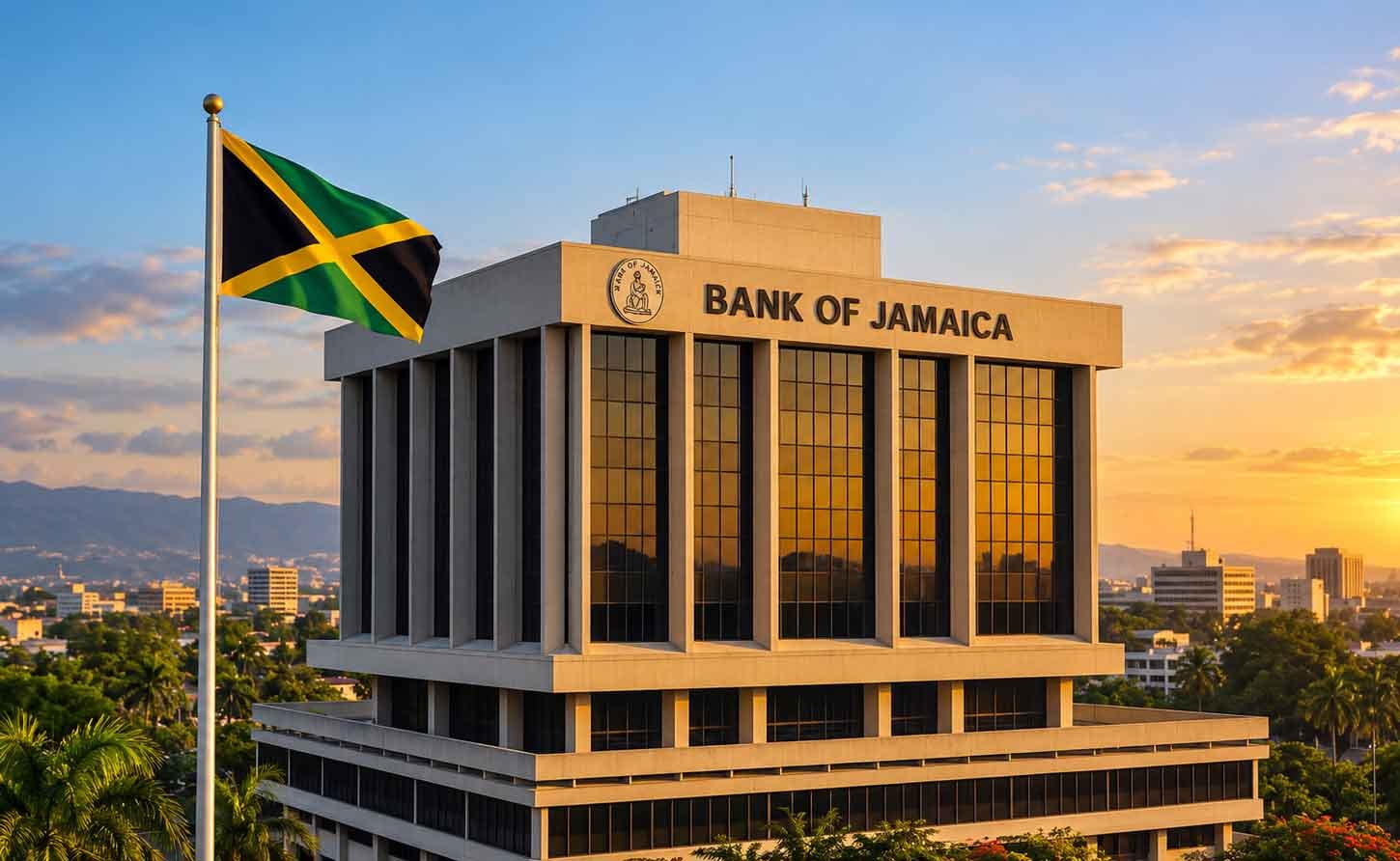
JAMAICA | The BOJ's J$6.9 Billion That Isn't a Loss — It's the Price of Stability
A central bank's income statement records what its mandate cost, not how well it performed. Jamaica's business pages need a different scoreboard — and Jamaica's own law already supplies one.
MONTEGO BAY, September 13, 2026 - On 11 September the Financial Gleaner published a headline that travelled considerably further than the story beneath it: “Bank of Jamaica runs $6.9b loss.” Within hours it was moving through WhatsApp stripped of its article, carrying the only meaning a headline of that construction can carry — that somebody at Nethersole Place has been losing the nation's money.
Read down to the sixth paragraph and the correction is already written. The Gleaner notes, accurately, that central banks can post losses without any threat to their operations, since they are not run for profit and can create the currency their domestic obligations are denominated in, and that such losses typically arise when the interest paid to drain liquidity from the banking system exceeds what the bank earns on its foreign reserves, or when currency movements revalue its assets.
The reporting is sound. The framing is the problem, and the framing is what the public consumes.
What the balance sheet actually says
The figures, as published for 26 August: a loss of $6.9 billion appearing as negative retained earnings, confirmed in a footnote as the year-to-date position. A year earlier, retained earnings stood at a positive $19.12 billion — a swing of roughly $26 billion. No distributable profits for Government, against $401 million a year earlier. Capital down 10.5 per cent, to $56.9 billion from $63.6 billion.
Now the part that did not make the headline. Total assets reached $1.310 trillion, up 6.5 per cent, with foreign assets of $1.06 trillion — just over four-fifths of the total. Notes and coins in circulation rose 12.3 per cent to $313.5 billion. Open market instruments, the paper the Bank issues to absorb Jamaican-dollar liquidity, fell 25 per cent to $254.7 billion. Public-sector deposits at the central bank rose 82.5 per cent to $244.58 billion.
Those last two lines are the actual story. Some $85 billion less liquidity absorbed through open market paper; some $110 billion more parked at the central bank by the public sector. That is the machinery of liquidity management shifting its centre of gravity — the Bank's core work, in a country still absorbing the shock of Hurricane Melissa. The $6.9 billion is the invoice for that work, not evidence of mismanagement.

The New Governor of Bank of Jamaica, Dr. R. Brian Langrin was appointed as the 12th Governor of the Bank of Jamaica, effective August 19, 2026. He succeedes Richard Byles, whose seven-year term concluded on August 18, 2026.
Parliament wrote it down
Here is the point that has gone unmade, and it is decisive.
Section 5 of the Bank of Jamaica Act, as replaced by the 2020 Amendment Act, states that the principal objectives of the Bank are the maintenance of price stability and financial system stability, with price stability primary. It then lists the Bank's functions: monetary policy, prudential and macroprudential policy, issuing and redeeming notes and coins, managing the external reserves, developing the money and capital markets, and acting as banker to the Government and to deposit-taking institutions.
Profit does not appear. Not as an objective, not as a function, not as a consideration.
The Act goes further. Section 2B expressly disapplies the Public Bodies Management and Accountability Act to the Bank of Jamaica — removing the central bank from the very statute by which Jamaica measures the financial performance of its public bodies. Parliament did not forget the BOJ. Parliament exempted it.
And section 9 contemplates losses in terms. The General Reserve Fund is credited with net profits at the end of each financial year and, in the Act's own words, upon it “shall be charged any net losses of the Bank at the end of any financial year.”
Parliament wrote the possibility of loss into the Bank of Jamaica Act, then built a mechanism to absorb it. You do not draft a shock absorber for an event you consider a scandal.
The statute is also more sophisticated than the headline. Section 9(5) defines distributable earnings as the Bank's profits excluding unrealised foreign exchange gains and other unrealised gains, folding them in only once realised. The law already knows what the front page does not: much of what moves the BOJ's bottom line is revaluation, not income. When the Jamaican dollar shifts against a reserve portfolio of $1.06 trillion in foreign assets, the accounts move with it — in both directions, without a single transaction taking place.
The recapitalisation architecture follows the same logic. Under section 9(2), if audited year-end statements show statutory capital below three per cent of monetary liabilities, the Government shall within six months issue marketable securities to cover the shortfall, charged on the Consolidated Fund. Should it fail, the Board must notify the Minister and copy the Speaker for tabling in the House. Loss is not a crisis in this design. It is a contingency with a procedure attached.
Distribution runs on a formula too: full distributable earnings go to the Consolidated Fund where statutory capital exceeds eight per cent of monetary liabilities, a quarter between five and eight per cent, nothing below five. So “no distributable profits” may simply be the formula operating as drafted. The published summary gives no clean monetary-liabilities figure against which to test which limb applies, and the audited year-end accounts — not an interim snapshot five months into a year that ends in March — will settle it.
Jamaica is neither alone nor unusual
The Swiss National Bank lost roughly US$143 billion in 2022, close to 18 per cent of Swiss GDP, possibly the largest single-year loss any central bank has recorded. The Federal Reserve booked its shortfall as a deferred asset and stopped remitting to the US Treasury. The Bank of England, the Bank of Japan, the Reserve Bank of Australia and the Riksbank all went into the red in the same tightening cycle.
The Bank for International Settlements addressed it directly in February 2023: losses and negative equity do not directly affect the ability of central banks to operate effectively, and central banks should be judged on whether they fulfil their mandates. The OECD is blunter — losses are a by-product of policy actions designed to achieve the mandate, not an indication of policy error. The Czech National Bank ran negative equity from 1998 to 2013 and hit its inflation targets throughout. Chile, Israel and Mexico have done the same.
The BOJ's capital remains positive at $56.9 billion. This is not even the difficult case.
The honest counter-argument
None of which makes central bank losses costless, and the case deserves its hearing.
The $401 million not transferred to the Consolidated Fund is real money, however modest against a J$1.3 trillion balance sheet. More seriously, Jamaica has its own history here. The quasi-fiscal losses of the 1990s were structural rather than cyclical, and this country paid for them in ways still argued over. The distinction that matters is between losses that are self-correcting and losses that compound. On the published evidence — positive capital, reserves at four-fifths of assets, a policy rate steady at 5.75 per cent — Jamaica's are the first kind. That conclusion is provisional, and only sustained disclosure keeps it honest.
Which is where the Bank carries some responsibility. An institution publishing a figure guaranteed to be misread should publish the paragraph explaining it in the same breath. Two plain sentences attached to the interim statement would have made this coverage impossible to write the way it was written.
What the press owes
Caribbean financial desks should retire the corporate grammar when reporting central bank results. “Loss” is imported from the profit-and-loss account of a firm that can be wound up. The Bank of Jamaica cannot be wound up, has no shareholders to disappoint, faces no capital adequacy requirement, and issues the currency its domestic obligations are denominated in. “Liquidity operations cost BOJ $6.9b” is the same length and carries the same facts without the false accusation.
Because the $6.9 billion bought something. It bought inflation held near the target the Minister sets under section 34FF, an exchange rate that has not broken, and a banking system that absorbed the most destructive storm in Jamaica's modern history without seizing up. Set against what monetary disorder has cost this country before, it is cheap.
— 30 —
