
JAMAICA| The Reparations Gambit: Babsy Asks the King to Put Slavery on Trial
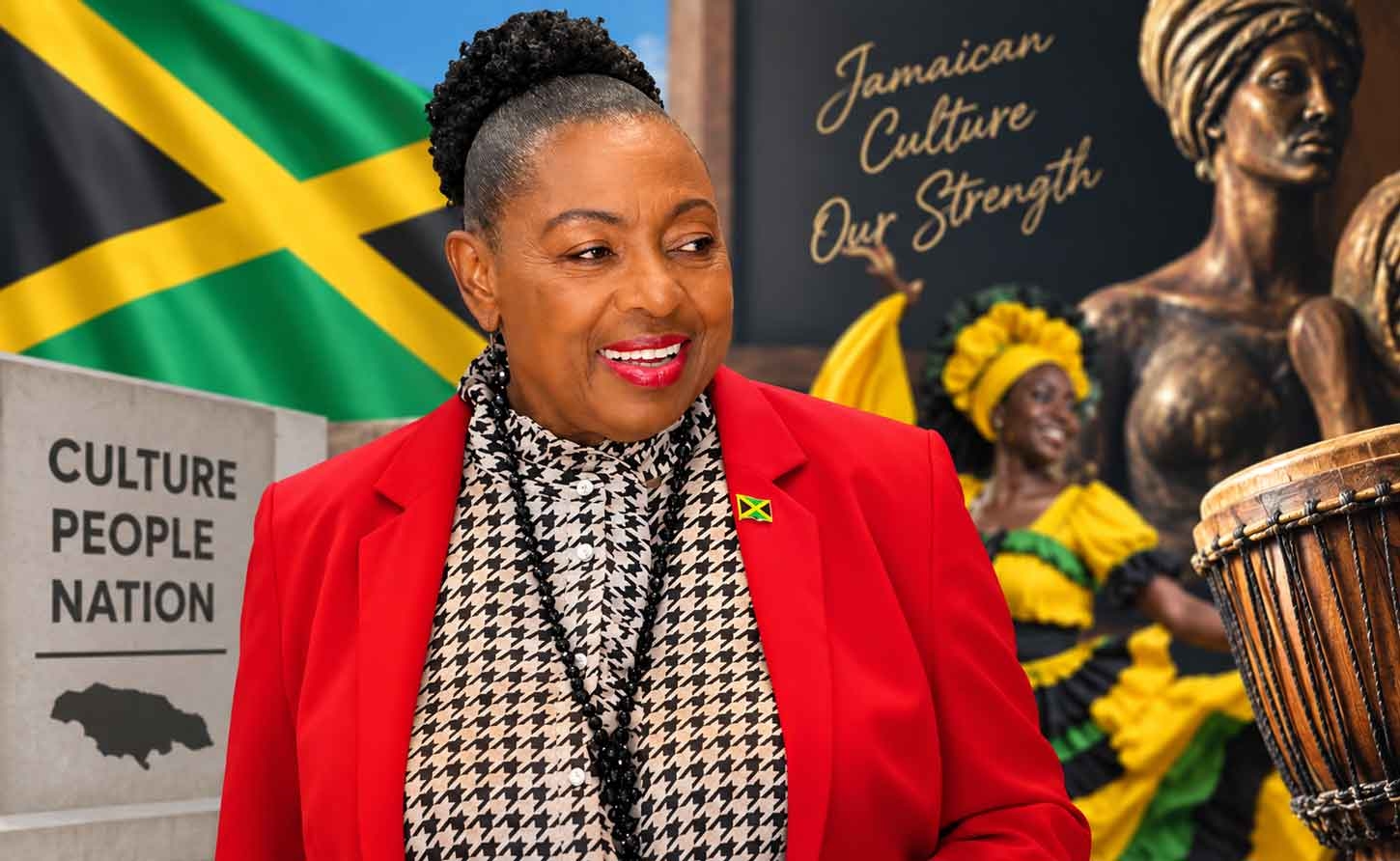
Jamaica's Minister of Culture Olivia "Babsy" Grange to lodge a reparations petition to King Charles lll
Olivia Grange carries a petition to King Charles III that does not ask for money — it asks whether slavery was ever lawful
For 244 years the drowned of the Zong have had no court. On Monday, Jamaica will ask the man who wears the Crown to give them one.
CALVIN G. BROWN | CARIBBEAN AFFAIRS | WIREDJA
MONTEGO BAY, Jamaica September 5, 2026 - Calvin G Brown - There is a particular audacity in lifting a statute from the coloniser’s own shelf and handing it back as an indictment. That, stripped of ceremony, is what Culture Minister Olivia Grange carried onto a London-bound flight this week — not an invoice, not a placard, but Section 4 of the Judicial Committee Act of 1833.
On Monday, 7 September, Grange and a delegation of state lawyers and reparations commissioners will lodge a petition asking King Charles III — in his capacity as Head of State of Jamaica, not as sovereign of the United Kingdom — to refer three questions to the Judicial Committee of the Privy Council. No Commonwealth state has taken this route before.
The Weapon Is the Empire’s Own
The choice of instrument is not decoration. It is the argument.
1833 was the year Westminster passed the Slavery Abolition Act. It was also the season in which Britain borrowed £20 million to compensate the people who had owned human beings — a debt the Treasury did not retire until 1 February 2015 — and paid not a farthing to the owned. From that same year Jamaica has retrieved the Judicial Committee Act, which lets the monarch place before the Privy Council any matter of constitutional importance that cannot be heard in local courts.
The enslavers’ Parliament forged the tool. Jamaica proposes to swing it.
Three Questions, No Invoice
Note what the petition does not do. It does not ask for money. For decades Caribbean claims were framed as demands for compensation — most famously Mike Henry’s £7.6 billion figure. These three questions are colder.
They ask whether the forced transport of Africans to Jamaica and their enslavement up to 1833 were lawful at all, given that colonial legislation purporting to authorise slavery may have been void as repugnant to the fundamental principles of English common law; whether that conduct, up to 1838, amounted to crimes against humanity under international law for which Britain bears responsibility; and whether Britain is therefore obliged to provide a remedy for those acts and their continuing consequences.
Britain has spent years treating reparations as a moral conversation it would rather not have; Sir Keir Starmer told Commonwealth leaders in Samoa he preferred to look forward. A moral appeal can be declined without embarrassment. A filed question of law cannot.
The Zong Sails Again
Grange has anchored the mission in memory rather than accountancy. On 6 September 1781 the slave ship Zong left West Africa bound for Black River. Its crew threw at least 132 Africans into the Atlantic; the owners then sued their underwriters for the loss of cargo. The first time the Zong reached an English courtroom, the dead were an insurance claim.
Before the filing, Grange attends an ecumenical service at New Park Road Baptist Church in South London and lays a floral tribute. Jamaica now asks an English court to say the drowned were people, unlawfully taken. She will also press the British Museum on artefacts removed during the colonial era — objects the Minister insists belong to Jamaica.
The Objections Are Serious
The case has critics inside the movement. Pan-African advocates warn that Jamaica is walking voluntarily into the judicial vestiges of empire, inviting the Privy Council — the colonial relic Kingston has spent years trying to leave for the Caribbean Court of Justice — to judge the empire that created it. A memorandum circulated this year to Grange and Attorney General Derrick McKoy urged relocating the claim to the African Court on Human and Peoples’ Rights.
There is a constitutional puzzle, too. The King acts on advice — and whose advice governs here, Kingston’s or Whitehall’s, is precisely the contested ground. Any opinion is advisory. It obliges no British minister to write a cheque. Grange has told Parliament the petition must be filed before Jamaica becomes a republic: an acknowledgment that this window is narrow, and closing.
What Britain Cannot Say
Successive British governments, Conservative and Labour alike, have ruled out apology and payment. The likeliest response to Monday’s filing is silence. But silence is an answer, and it will be recorded. Bert Samuels, KC, who helped shape the petition, points to the UN General Assembly’s recognition in March of the transatlantic trafficking of enslaved Africans as a crime against humanity as evidence the ground has shifted.
Jamaica is no longer asking Britain to feel something. It is asking Britain to say, in its own court and under its own law, whether what it did was legal. Two hundred and forty-four years after the Zong, that is the question — and there is no comfortable way to answer it.
— 30 —
