
SPORTS | The World Cup Is Not For Sale — But Somebody Forgot To Tell Infantino
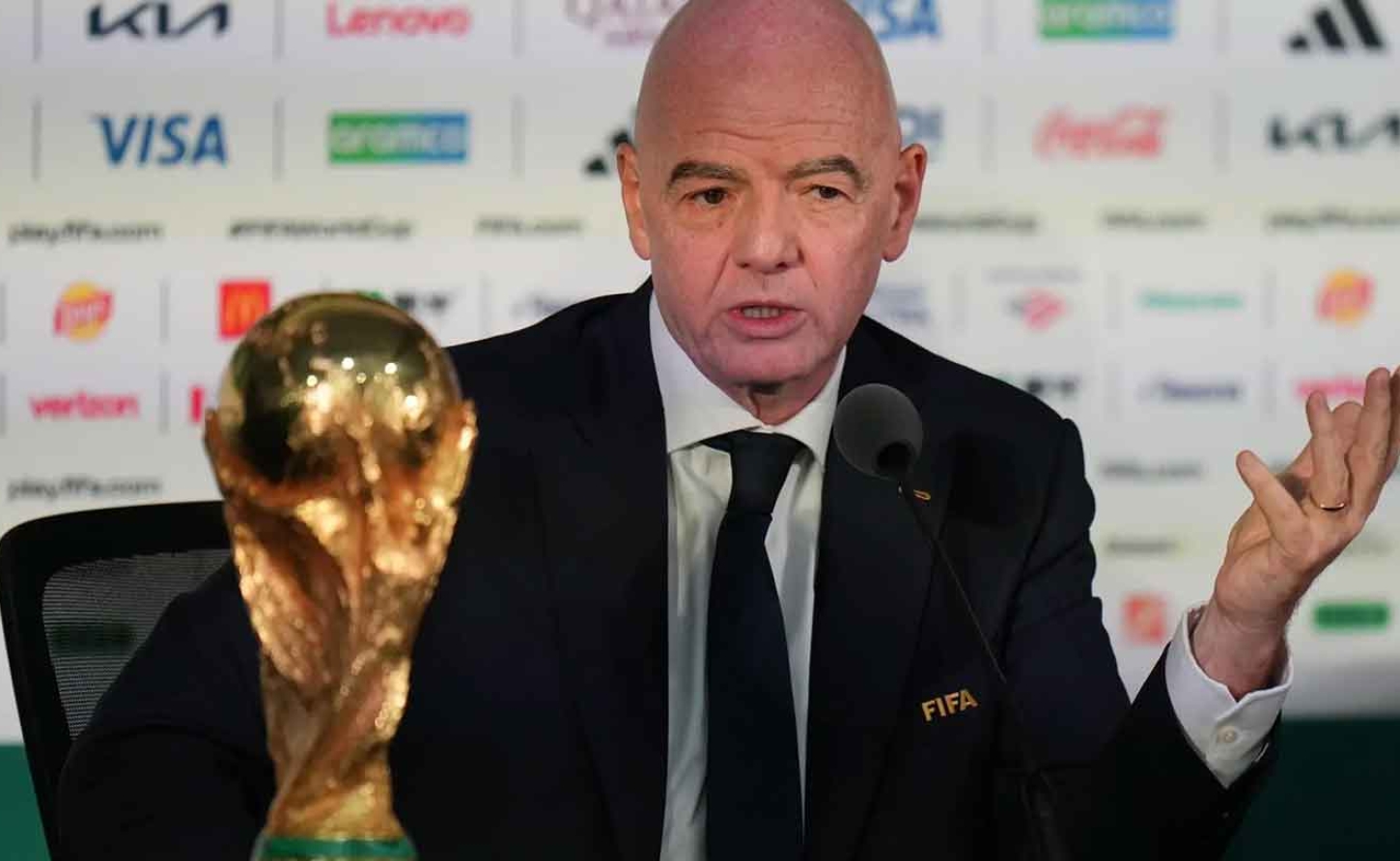
FIFA president Gianni Infantino set a Sept. 19 deadline for the 211 member federations to approve his proposed private investment plan, which would give each association access to up to $40 million in funding.
Europe has walked out. Asia has objected. CONCACAF has said no. And the Caribbean’s small federations are being offered twenty million reasons to look the other way.
MONTEGO BAY, Jamaica, Calvin G. Brown July 31, 2026 - Nine days after Donald Trump handed the World Cup trophy to Spain at MetLife Stadium, the tournament went on the market. Did the World Cup competition get corrupted in the United States?
FIFA announced on Tuesday that it will create FIFA Forward Enterprise — a US$20 billion subsidiary to house the commercial engine of world football: broadcasting, sponsorship, ticketing, licensing and the operational delivery of the tournaments.
Up to 20 per cent would be sold to outside investors, raising as much as US$4.2 billion. Leading the investor group is Thrive Eternal, the holding company launched this year by Joshua Kushner, brother of Jared Kushner, President Trump’s son-in-law. J.P. Morgan is the strategic partner. Bloomberg reports the scheme was conceived in private conversations between Gianni Infantino and Kushner last year.
Note the word Eternal. Private equity buys to exit within a decade. Permanent capital buys to hold indefinitely. Whatever FIFA sells here, it does not get back.
Three Confederations, One Answer
The response has been the most serious institutional revolt of Infantino’s eleven-year presidency. UEFA’s 55 member associations met in emergency session on Thursday and voted 55–0 to withdraw from every FIFA competition — the men’s and women’s World Cups, the Club World Cup — for as long as the proposal remains alive. “The World Cup is not for sale,” the European body said, adding that nobody may sell what is merely held in trust for the next generation.
CONCACAF’s 41 members met hours later and rejected the proposal outright, though they stopped short of a boycott. The Asian Football Confederation followed on Friday. Those three confederations account for 143 of FIFA’s 211 members — comfortably more than the majority Infantino requires.
Whether every association votes with its confederation is another matter; the AFC has been explicit that its members are not bound. CAF and Oceania deliberate in August. CONMEBOL has said nothing.
Then Infantino’s own house began to empty. Carlos Cordeiro — his senior adviser, a former Goldman Sachs banker and FIFA’s representative on the White House task force for the tournament — resigned on Friday, saying he had no part in the proposal and opposed it outright.
FIFA, he noted, sits on billions in reserves with no debt, having generated US$15 billion between 2022 and 2026. Kevin Lamour, FIFA’s chief operating officer, told the Associated Press staff had been deceived, calling the scheme “the project of one person”.
The Most Profitable World Cup In History
CONCACAF’s statement contains the sentence that dismantles the entire case. Its members questioned the need for private equity “following the most profitable FIFA World Cup in history”.
That is the confederation that hosted the tournament, in its own words. FIFA carries no debt. And yet associations have until 19 September to approve the permanent alienation of a fifth of the game’s commercial rights — a proposal never reviewed by the FIFA Council, developed in secret and presented as an ultimatum.
The sweetener is precisely calibrated: US$20 million per association for the coming cycle, against the US$8 million previously planned, and upwards of US$80 million through 2037. For the football federations of Jamaica, Curaçao or Haiti, that is not pocket change. It is a stadium. It is a decade of youth development. It is the difference between a functioning association and a struggling one.
Which is exactly the point. The offer was never designed to persuade Germany or England. It is designed to buy the small associations — and a great many of them are Caribbean.
What The Region Is Being Asked To Sell
The Caribbean is the largest bloc within CONCACAF and the most FIFA-dependent. It is also, this year, the most successful it has ever been. Curaçao became the smallest nation ever to reach a World Cup.
Haiti returned after 52 years, having played its home qualifiers in Willemstad because gangs made home impossible — then watched most of its supporters locked out of the United States by a travel ban, after Washington ended Temporary Protected Status for some 340,000 Haitians living there.
The offer was never designed to persuade Germany or England. It is designed to buy the small associations — and a great many of them are Caribbean.
That is the tournament FIFA now calls its most profitable. A Somali referee was refused entry at the border. Ticket-holding Moroccan supporters were denied visas. Immigration agents patrolled stadiums.
And when the President of the United States telephoned Infantino to complain about a red card shown to the American striker Folarin Balogun, FIFA invoked Article 27 of its disciplinary code and lifted the suspension — the first such reversal at a World Cup since 1962. Belgium’s appeal was rejected. Trump then publicly questioned the integrity of the Brazilian referee.
The lesson Caribbean federations should draw from June and July is not that FIFA needs money. It is that FIFA already bends. The question before them by 19 September is whether to hand a permanent stake to investors with no obligation to the game and no exit date — while Infantino faces re-election in Rabat next March.
Twenty million dollars is a great deal of money. It is not, however, a share of the World Cup. That is what is being asked in return.
— 30 —
