
GUYANA | Door Closed, Not Locked: Guyana High Court Keeps Opposition Leader Mohamed Behind Bars
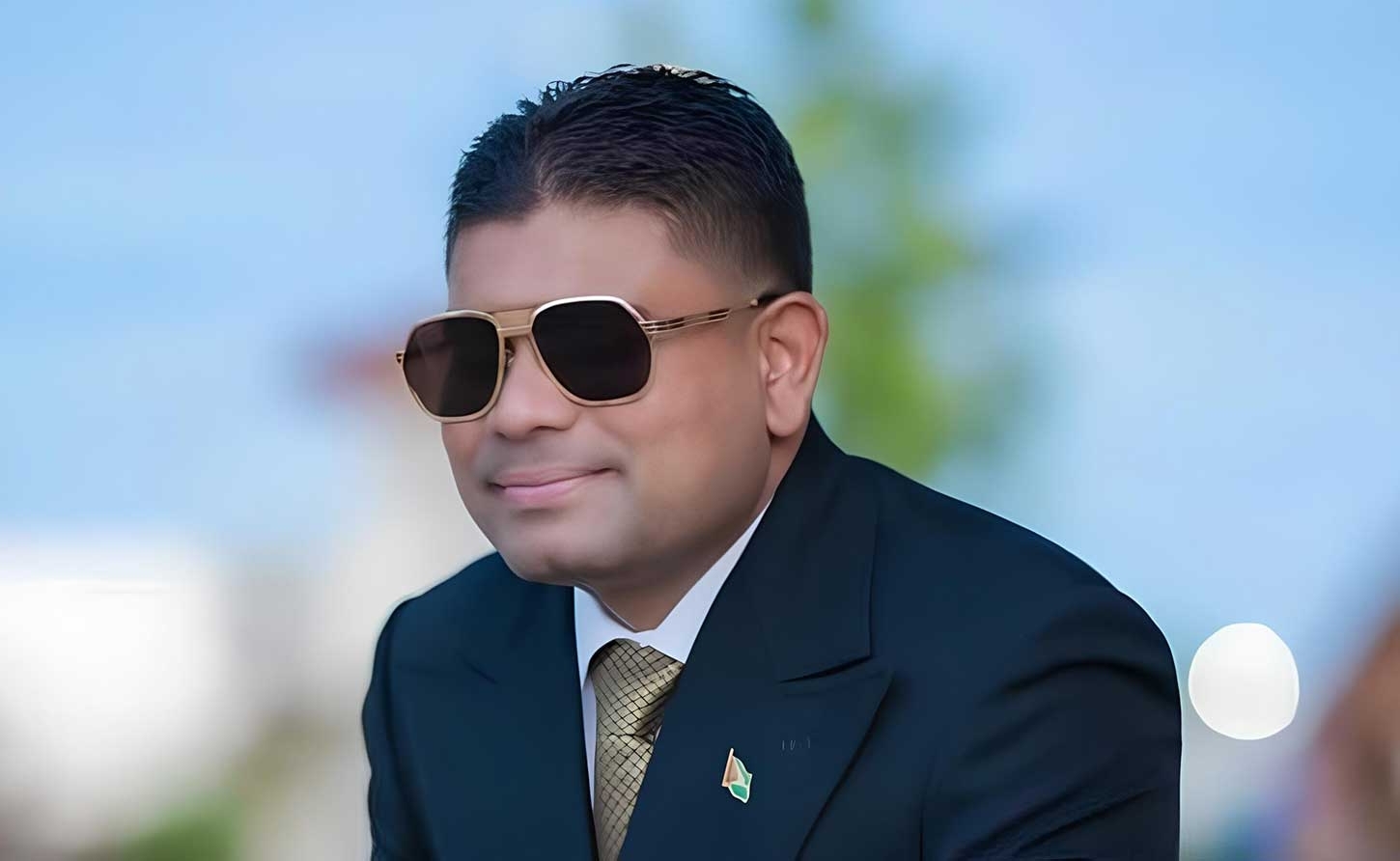
High Court dismisses Azruddin Mohamed’s application for bail Says he can apply again
Nearly three weeks into his remand, the man who leads Guyana’s parliamentary opposition has lost his High Court fight for freedom. The judge backed the magistrate, then told him he is free to go back and ask again.
MONTEGO BAY, Jamaica, November 18, 2026 | Calvin G Brown| Caribbean News| — Guyana’s Leader of the Opposition is staying in jail. The High Court in Demerara on Wednesday threw out Azruddin Mohamed’s challenge to a magistrate’s refusal of bail, leaving the head of the country’s parliamentary opposition in a Lusignan Prison cell nearly three weeks after he was remanded on a charge for which he has not been tried.
Justice Priscilla Chandra-Hanif dismissed the fixed date application, filed on November 2, which had asked the court to quash the October 30 decision of Sparendaam Magistrate Abigail Gibbs. The judge held that Mr Mohamed had failed to make out any of the judicial review grounds on which he relied, and that the magistrate had been justified in refusing bail, Demerara Waves reported from the hearing.
Then came the caveat. According to the Demerara Waves account, the judge said Mr Mohamed remains entitled to renew his bail application before the magistrate at any stage, particularly if disclosure of the prosecution’s evidence, or later developments, show that the feared risk is unfounded, has diminished, or can be adequately managed. The door is closed. It is not locked.
What the judge found
Strip away the procedure and the ruling answers a blunt question: can a court lock up an unconvicted man for what he might do next? On the material placed before the Sparendaam magistrate, the High Court’s answer is yes.
Justice Chandra-Hanif, as reported by Demerara Waves, said the law does not ordinarily oblige a court to wait for another offence to be committed before it recognises a sufficiently evidenced risk of one. She added a caution in the same breath: the mere existence of an accusation must not be converted into proof of a propensity to offend.
In this case, she found, the prosecution had gone beyond the bare fact that Mr Mohamed faces other charges. It relied on what it said was a discernible connection between the conduct alleged across the different matters, including allegations of obstructing justice and interfering with witnesses. The magistrate’s task was therefore to decide whether the material before her gave a reliable and rational basis for concluding that his release presented a real risk.
On witnesses, the judge said the administration of criminal justice depends on their being able to testify freely. Where grounded information points to a real risk of interference, a magistrate may give that concern substantial weight even at a preliminary stage. Proof beyond reasonable doubt is not required, she said, but nor will unsubstantiated assertion do.
The mere existence of an accusation, the judge cautioned, must not be converted into proof of a propensity to offend.
The charge and the command centre
Mr Mohamed, a businessman who leads the We Invest in Nationhood (WIN) party and has been Leader of the Opposition since January, was remanded on October 30 alongside Police Constable Ryan Greene. Both are charged under Section 9(2)(b) of the Cybercrime Act, which makes it an offence to obtain electronic data that relates to national security or is protected against unauthorised access, and to pass it to another person without lawful excuse. Conviction on indictment carries a fine of GY$8 million and five years’ imprisonment.
The charge concerns alleged access to the Guyana Police Force command centre at Liliendaal, Greater Georgetown, which monitors about 3,000 cameras recording vehicles and people in real time. iNews Guyana reports that prosecutors link the footage to an October 12 shooting outside the Kitty home of Senior Superintendent Prem Narine, a witness in the United States’ extradition request for Mr Mohamed and his father, Nazar Mohamed, and that they allege the footage changed hands for $800,000. These are allegations. None has been tested at trial.
In an affidavit cited by Demerara Waves, Magistrate Gibbs said she refused bail under the Bail Act 2022 after weighing the interests of society against Mr Mohamed’s right to liberty. She pointed to the gravity of an alleged breach of a protected police system, which she said goes to the integrity of the State’s security apparatus and public confidence in it, and to what she described as a pattern suggesting he was likely to commit a further offence.
When he appeared before her, Mr Mohamed was already on bail in the extradition matter and on three charges arising from the Kitty incident: illegal possession of a firearm, illegal possession of ammunition, and attempting to obstruct the course of justice. The magistrate said she set aside the defence argument about his constitutional post, and that her concerns stemmed from the nature of the allegation and “not from the accused’s political office”.
How it reached the High Court
Following the remand, Mr Mohamed’s mother, Bonita Mohamed, brought the judicial review as his next friend, Kaieteur News reported, and a separate application for interim bail followed on November 8.
Justice Chandra-Hanif refused interim bail last Friday. The Guyana Chronicle reported her reasoning that releasing him at that stage would hand him, in practice, much of what the full case was asking for before she had examined the magistrate’s decision. She did bring the full hearing forward to November 17.
Two readings of the Bail Act
Senior Counsel Roysdale Forde, for Mr Mohamed, argued that the magistrate treated seriousness as a ground for refusal when the Act does not classify the offence as serious. He submitted that the likelihood of further offending was stated merely as a view, without identified evidence, and was inferred from the fact that other courts had granted his client bail, on which no breach has been established. That, he said, turned the proper inference on its head. He further contended that the magistrate did not weigh the matters the Act requires, did not consider conditions, and gave reasons incapable of justifying detention.
Attorney General Anil Nandlall, SC, answered that the High Court’s role in judicial review is supervisory and narrow, and that the proceedings could not be treated as an appeal or as a fresh bail application, according to Kaieteur News. He had earlier dismissed the interim bail request as a “jurisprudential error”.
A wider test
The politics are impossible to ignore. Mr Mohamed is sanctioned and indicted by the United States, and his detention has kept the head of the opposition out of the National Assembly. His lawyers have told the court he is being held in conditions amounting to solitary confinement for all but minutes of the day; the Guyana Prison Service has published an account of his regime that differs from his.
Nor have the courts spoken with one voice. Earlier this month Chief Magistrate Judy Latchman repeatedly refused prosecution requests to revoke his bail in the extradition matter, ruling, Kaieteur News reported, that past conduct without a conviction was not sufficient ground to do so. One court would not jail him on his history. Another did, and the High Court has now said it was entitled to.
For the wider Caribbean, where courts are regularly asked to weigh bail laws against constitutional guarantees of liberty, the stakes are plain. A State that jails its opposition leader before trial must be able to show its reasons, and a court that upholds the jailing must be able to defend them. The magistrate insists his office played no part. The judge insists the evidence, not the accusation, carried the day. Both claims will be tested when the prosecution’s file is disclosed.
What comes next
Mr Mohamed is due back before the Sparendaam court on November 24. Up to the time of writing there was no reported indication of whether his legal team would appeal or return to the magistrate with a renewed application, and no public reaction to the ruling from the WIN party or the Attorney General had been published. Until then, the Leader of the Opposition answers to a prison roll call, not a parliamentary one.
Reporting credit: This article draws on court reporting by Denis Chabrol of Demerara Waves, with additional reporting from Kaieteur News, iNews Guyana and the Guyana Chronicle.
-30-
