
JAMAICA | After Three Refusals, Buchanan's Challenge to Holness' Seat Gets a Trial
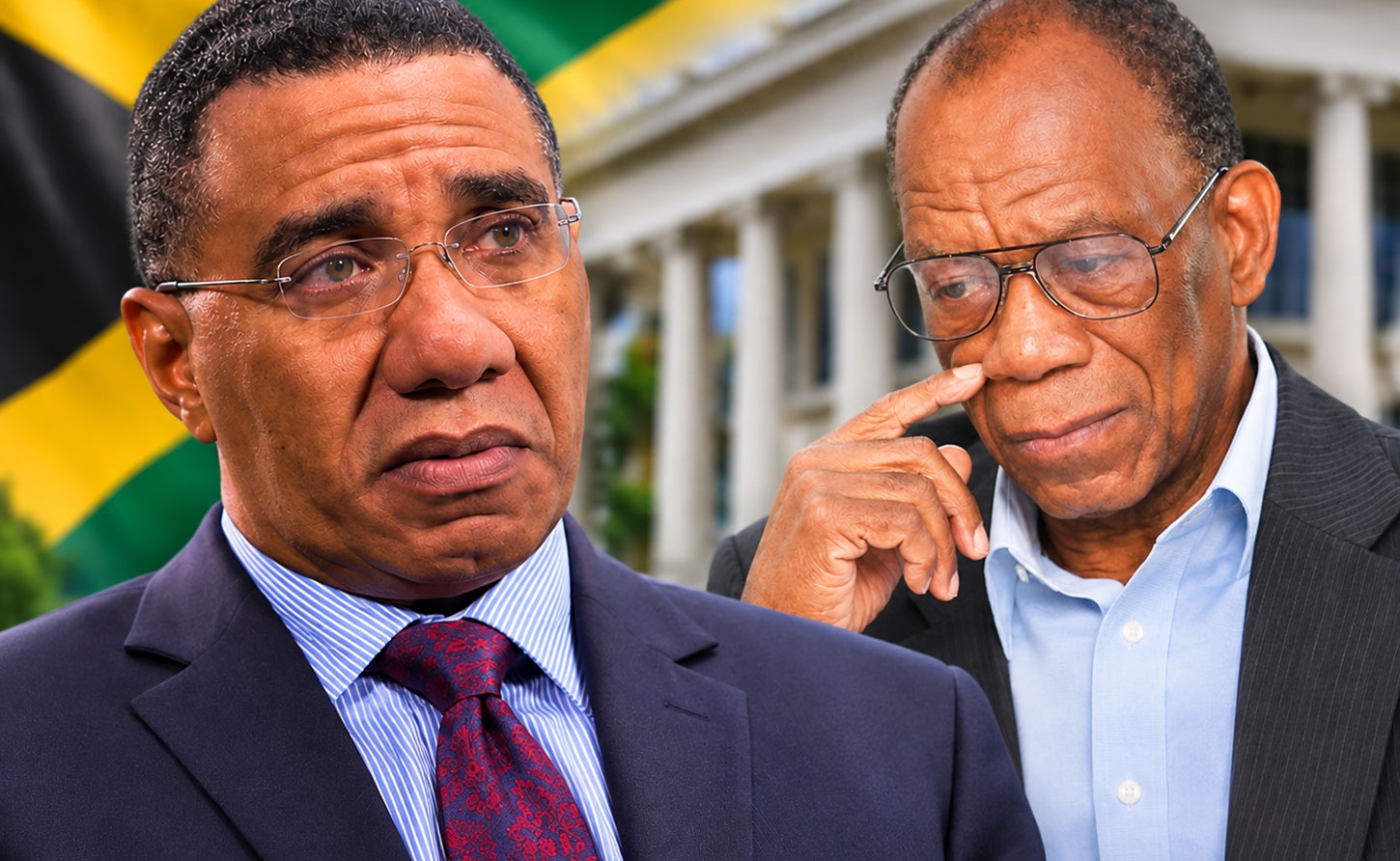
Prime Minister Andrew Holness and PNP Challenger Paul Buchanan
The Prime Minister’s 2025 win in St Andrew West Central will be tested in the Constitutional Court next February after a Supreme Court judge found the case raises issues that must be determined at a full hearing.
MONTEGO BAY, Jamaica, November 3, 2026 - Calvin G. Brown | Paul Buchanan’s bid to have Prime Minister Dr Andrew Holness’ election victory in St Andrew West Central declared void is going to trial.
Justice David Batts of the Supreme Court ruled on Tuesday that the constitutional claim brought by Buchanan, the People’s National Party candidate in the September 3, 2025 general election, raises issues that must be determined by a full hearing — accepting the submissions of Buchanan’s attorney, Hugh Wildman, on the point. The trial has been set down in the Constitutional Court for February 8, 9 and 10, 2027.
Holness retained the seat with 7,054 votes to Buchanan’s 4,953. The result drew wide public attention on election night: the Prime Minister had been trailing by close to 100 votes after 87 of the constituency’s 105 ballot boxes had been counted. The final 18 boxes, from the Seaward Gardens Primary and Infant School, shifted the outcome in his favour.
Three refusals, then a trial
Tuesday’s ruling is the first time one of Buchanan’s challenges has got past the threshold stage. The Constituted Authority, the Supreme Court and the Court of Appeal had each turned him away.
He went first to the Constituted Authority, the body empowered to apply to the Election Court to void a result, filing on September 16, 2025 and alleging irregularities including double voting, personation, voter intimidation and breaches of ballot security. The Authority rejected the application on September 30, finding that the evidence did not meet the threshold required under section 37(e) of the Election Petitions Act.
Buchanan then sought permission for judicial review of that decision. The Supreme Court refused leave in December 2025, and on July 31, 2026 the Court of Appeal refused him leave to appeal, finding that the Constituted Authority had a discretion it exercised reasonably and that the statutory time limits for challenging the election had in any case run out. Both courts noted that Buchanan could have petitioned the Election Court himself, and that he waited 13 days after the poll before going to the Authority.
Two weeks later, in August, Wildman filed the present claim. It names Buchanan as first claimant and Everton Sands, an outdoor agent and driver, as second, with the Director of Elections and the Attorney General as defendants.
It does not rely on the Election Petitions Act at all. It rests on section 13(3)(m)(ii) of the Charter of Fundamental Rights and Freedoms, which guarantees the right to free and fair elections, and seeks declarations that the election was illegal and void, an order for a fresh poll, damages for breaches of the claimants’ constitutional rights, and costs.
What the affidavits allege
The claim is supported by affidavits from Sands and from Marsha Powell, a cluster manager at Seaward Primary School — the station whose boxes decided the seat.
Powell alleges that some voters were issued additional ballots after reporting their original ballots as spoilt, that PNP agents were threatened by Jamaica Labour Party supporters, and that ballot boxes were left unattended during the count.
Sands alleges problems with the Electronic Voter Identification System: some electors were turned away when their names could not be found on the voters’ list, and presiding officers declined to use the system, citing malfunctions. He also alleges that ballot boxes were transported along routes other than those approved on election night.
The claim further contends that the irregularities were concentrated in areas of strong PNP support, and that overcrowding and loud music outside some polling stations intimidated voters.
None of it has been tested. The defendants will answer at trial.
The JLP has dismissed the renewed challenge. Senator Abka Fitz-Henley, chairman of its communications taskforce, called Buchanan’s continued challenge shameful in August, and the party hailed the Supreme Court’s December 2025 ruling as a victory for the rule of law.
A precedent from the same seat
No Jamaican election has been voided under the Charter of Fundamental Rights and Freedoms. The successful challenges have come through the Election Court — and the most notable of them concerns this seat and this Prime Minister.
In 1998 the Constituted Authority itself took Holness’ first victory in St Andrew West Central, in December 1997, to the Election Court, which voided the poll on evidence of ballot-box tampering, impersonation and open voting and ordered a fresh election. Holness won the seat back later that year. The test from that case — a “substantial distortion or subversion” of a free and fair election — is the one the same Authority applied when it rejected Buchanan’s application in September 2025.
But the Election Court route runs on strict statutory deadlines, which the courts found Buchanan had missed.
So the Constitutional Court must decide whether the Charter offers a separate avenue to challenge an election outside those time limits, and, if so, whether the evidence from St Andrew West Central meets the bar.
Holness is already in separate litigation against the Integrity Commission over its investigation into his financial affairs; he lost an appeal in that matter in July.
The Gleaner’s report of Tuesday’s ruling carried no response from Holness or the Jamaica Labour Party.
-30-
