
TRINIDAD | T&T Economy Shows Resilience But Structural Cracks Deepen, IMF Warns
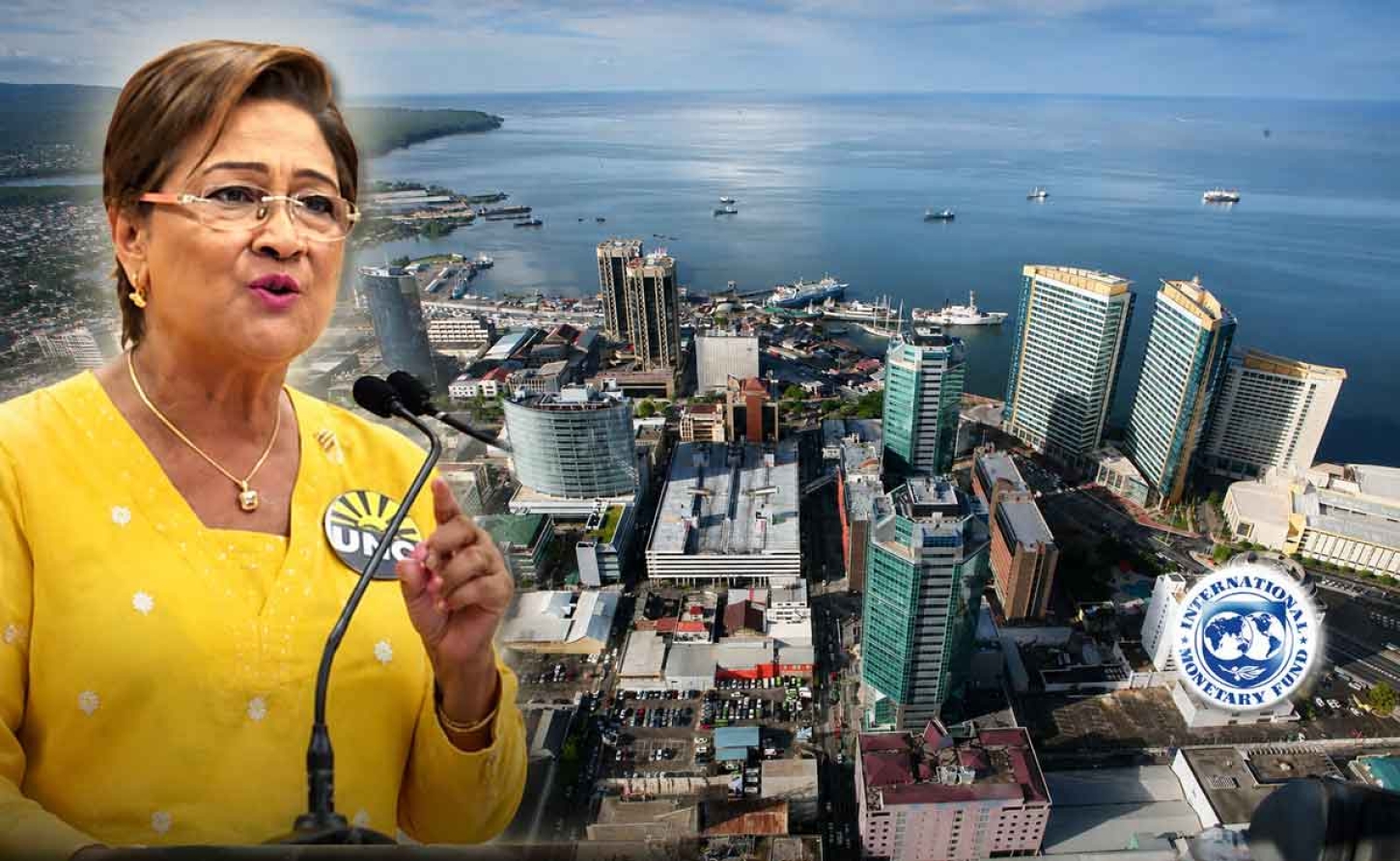
TRINIDAD | T&T Economy Shows Resilience But Structural Cracks Deepen, IMF Warns
The International Monetary Fund has praised Trinidad and Tobago's banking stability and current account surplus — but delivered a sobering verdict on rising public debt, declining reserves, and an energy sector whose best days may be behind it.
WASHINGTON, DC, June 7, 2026 - Calvin G. Brown - Trinidad and Tobago's economy continues its slow climb back from pandemic lows, but the International Monetary Fund is sounding alarm bells that should command the full attention of Port of Spain — and every CARICOM capital that watches the twin-island republic as a regional bellwether.
The IMF's 2026 Article IV Consultation, concluded by the Executive Board in May, presents a dual portrait: a financial system that is broadly sound, and a fiscal architecture increasingly straining under the weight of energy dependence and rising debt.
A Gradual Recovery, Not a Gallop
Real GDP growth moderated to 0.8 percent in 2025 and the same tepid pace is projected for 2026 — figures that reflect an economy inching forward rather than surging. The non-energy sector, which accounts for nearly 80 percent of output, has shown more life, but the energy sector — the historic engine of T&T prosperity — contracted by 0.5 percent in 2025 and faces a projected 4.5 percent decline in 2026 as mature fields underperform.
On the inflation front, there is genuine good news. Consumer prices, which spiked during the global commodity shock, have returned to pre-pandemic levels — with period-average inflation at just 1.0 percent in 2025. The IMF projects a temporary rise to around 3.1 percent in 2026, driven largely by global commodity price pressures and the downstream effects of the ongoing Middle East conflict, before stabilising at approximately 2 percent over the medium term.
Banking Strength Amid Fiscal Vulnerability
The IMF reserved its warmest language for Trinidad and Tobago's financial sector. The banking system remains well-capitalised and profitable, with adequate liquidity and notably low non-performing loans — a testament to the resilience built up over years of regulatory discipline. Credit growth held steady, and the current account balance remained in surplus, at 3.1 percent of GDP in 2025, with a projected improvement to 3.8 percent in 2026 as higher global energy prices boost export receipts.
The country also received recognition for its removal from the EU's list of non-cooperative tax jurisdictions — a development that should ease investor perceptions and support the business environment.
"Higher-than-budgeted energy revenues should be primarily used to rebuild buffers, including through resumed deposits into the Heritage and Stabilisation Fund."— IMF Executive Board, Article IV Consultation, May 2026
Debt, Deficits, and Declining Reserves
Here the picture darkens considerably. Public debt has climbed to an estimated 84.2 percent of GDP in 2025 — a figure that should focus the minds of economic managers. The central government's overall deficit stood at 5.5 percent of GDP in 2025, driven by a structural reliance on energy revenues that have proven volatile and insufficient. The Fund projects the deficit will narrow modestly to 4.6 percent in 2026, but only if revenue reforms and expenditure rationalisation proceed as planned.
International reserves, meanwhile, have been on a steady downward trajectory — falling from USD 6.88 billion in 2021 to an estimated USD 5.37 billion in 2025, with a further projected decline to USD 4.81 billion in 2026, representing roughly 5.5 months of import cover. The Fund notes this remains technically adequate, but the trend demands serious attention. The Heritage and Stabilisation Fund — T&T's sovereign wealth buffer — holds assets equivalent to around 24.5 percent of GDP, and the IMF explicitly urged that windfall energy revenues be channelled there rather than absorbed into current spending.
The Structural Reform Imperative
The IMF's prescription is not unfamiliar, but it carries added urgency given the convergence of challenges: meaningful fiscal consolidation to put debt on a credible downward path; closing the interest rate differential with the United States to stem capital outflows; and a gradual shift toward greater exchange rate flexibility. The fixed TT dollar, pegged at approximately TT$6.80 to US$1.00, has been a long-standing feature of economic policy — but Directors called for improved foreign exchange market functioning and incremental flexibility, with appropriate supporting measures.
On the structural side, the IMF commended reforms to the National Insurance System — described as "courageous" — while calling for further steps to improve public pension sustainability. Directors also emphasised the need to reduce red tape, foster investment, adopt more flexible labour market policies, and leverage digitalisation and artificial intelligence as drivers of future productivity.
New Energy Projects: A Lifeline, Not a Guarantee
The medium-term outlook is not without hope. New energy projects in the pipeline are expected to provide a growth boost and help improve external and fiscal positions once they come on stream. The IMF also highlighted the potential of T&T's Revitalization Blueprint — a government-led diversification agenda — to lift growth if implemented with discipline and speed.
But the Fund is clear-eyed about risks: delays to new energy projects or disruptions at aging production fields could derail even the modest 0.8 percent growth trajectory. And with the global war premium from the Middle East conflict introducing fresh uncertainty into commodity markets, the short-term energy windfall could prove fleeting.
A New Administration, an Old Challenge
Crucially, the backdrop to this consultation is political transition. Following the April 2025 general elections, the opposition United National Congress under Prime Minister Kamla Persad-Bissessar returned to power after defeating the People's National Movement. The new administration inherits an economy in the early stages of post-pandemic recovery but burdened by a deteriorating fiscal position built up during its predecessor's tenure. The IMF's consultation effectively hands the new government both a diagnosis and a reform agenda — and the region will be watching how Port of Spain responds.
For Trinidad and Tobago, the window to capitalise on near-term energy price support while executing structural reforms is real but narrow. The IMF has been explicit: rebuild buffers now, consolidate finances, and diversify. Whether the Persad-Bissessar administration has the political appetite to execute reforms that are fiscally painful but economically necessary will define the republic's economic trajectory well into the next decade.
— 30 —
