
CARIBBEAN | PM Terrance Drew: Basseterre Could Diagnose Him. It Could Not Treat Him.
CARIBBEAN | PM Terrance Drew: Basseterre Could Diagnose Him. It Could Not Treat Him.
When St Kitts and Nevis needed to save its own Prime Minister, the nearest world-class hospital was a French one. That should trouble every CARICOM capital.
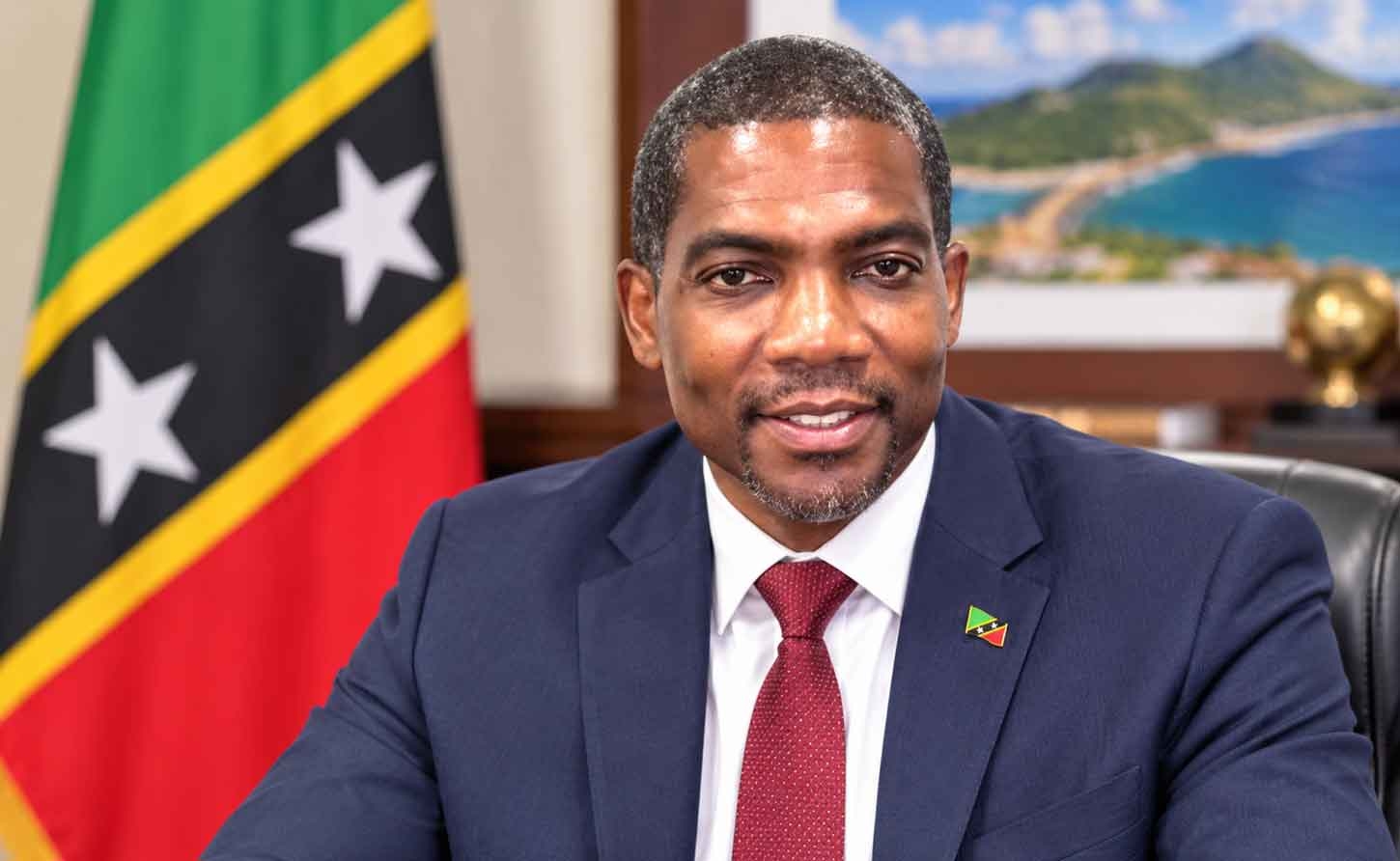
ST KITTS-NEVIS | September 6, 2026 | Prime Minister Dr. Terrance Drew has reassured citizens and residents of St. Kitts and Nevis that he is recovering well and remains in stable condition as medical evaluations continue in South Florida.
On 3 March 2025, Dr Terrance Drew stood at the Joseph N. France General Hospital and switched on the Federation’s new CT scanner. He spoke of its importance in diagnosing life-threatening conditions including strokes, which he described as very common in St Kitts and Nevis, and warned that without a CT scan you are sharply limited in how effectively you can treat stroke patients.
He was speaking as Prime Minister. He was also speaking as Minister of Health, the portfolio he holds himself. Eighteen months later, he was the patient.
Drew, 49, was admitted to JNF on the evening of Sunday 30 August with mild discomfort, nausea and headache, and was transferred abroad after roughly 18 hours of observation and diagnostic review failed to resolve his medical team’s concerns.
By Monday evening he was in the intensive care unit of the University Hospital of Martinique, where doctors reportedly determined he had suffered a stroke, and where an intensive-care team led by Professor Dabor Resière stabilised him.
That diagnosis has not been publicly confirmed by his government or his physicians. In a five-minute national address, Drew said he was in “good spirits” and stable. He disclosed no diagnosis.
The gap is not the machine
The instinct is to blame equipment. Resist it. The scanner exists. The diagnosis, by all accounts, was made.
Stroke care is not a photograph — it is a clock. Once imaging distinguishes a clot from a bleed, someone must decide within hours whether to give clot-busting drugs, and increasingly whether to physically retrieve the clot. That requires a neurologist on call at three in the morning, a stroke protocol, an interventional suite, and a neurological intensive care unit.
St Kitts and Nevis, like much of the region, faces a shortage of specialists precisely in fields such as cardiology and neurology. The Federation has four hospitals, two of them referral hospitals, and no private hospital on either island.
Diagnosis was never the bottleneck. Definitive treatment was. A scanner without a stroke unit behind it tells you accurately what you cannot fix.
Two hours, and a language barrier
Here is the fact that should be read into the record at the next CARICOM Heads meeting. Drew would ordinarily have been airlifted straight to the United States, as English-speaking Caribbean patients typically are.
His regional counterparts urged Martinique instead — and he left promising to tell fellow CARICOM leaders that world-class care sits available there, a fact they routinely overlook.
Anglophone Caribbean medicine has a Miami reflex. It is expensive, it exports scarce foreign exchange, and it costs hours that stroke patients do not have. Meanwhile a European-standard teaching hospital operates a short flight away, inside our own archipelago, separated from us by nothing but colonial linguistic habit.
If a head of government needed his own colleagues to point that out, the ordinary patient never had a chance.
The arithmetic for everyone else
Drew got a stabilisation team, a government aircraft, an expedited path through a storm system, and the prayers of prime ministers. A cane cutter in Sandy Point gets none of that. Heart disease, stroke, cancer and diabetes complications account for almost 60 per cent of deaths in the Federation.
For serious events, patients are referred onward to Trinidad, Puerto Rico or Miami — evacuations that can run into six figures.
And the promised fix keeps receding. The Federation’s first public MRI was pledged for 2025. In February 2026 Drew told the National Assembly it was “90%” complete. By late July 2026, officials were still awaiting electrical work, air-conditioning adjustments and a Faraday cage before the machine could even be shipped, with the centre now expected to open by year’s end.
Say the word
The Federation learned what happened to its Prime Minister from a French-language broadcaster in Fort-de-France. That is not a communications misstep; it is a governance question. Citizens are entitled to know whether the head of government has had a cerebrovascular event, because incapacity is a constitutional matter, not a private one.
Drew called the episode a wake-up call and urged citizens to listen when their bodies speak. He is right, and no one should begrudge a sick man his recovery. But he is uniquely placed to make the second admission: that the system he leads, and the ministry he personally holds, could diagnose him and could not treat him.
Sympathy is cheap. A stroke unit, a neurology roster, and a signed reciprocal-care agreement with Martinique are not. The Prime Minister survived. The policy question is whether the next Kittitian will.
— 30 —
