AFRICA | The US 'Dollar Wine': China's Payment System Opens New Front in Global Currency Wars
AFRICA | The US 'Dollar Wine': China's Payment System Opens New Front in Global Currency Wars
Standard Bank's CIPS integration signals accelerating de-dollarization across Africa, Caribbean, and Latin America
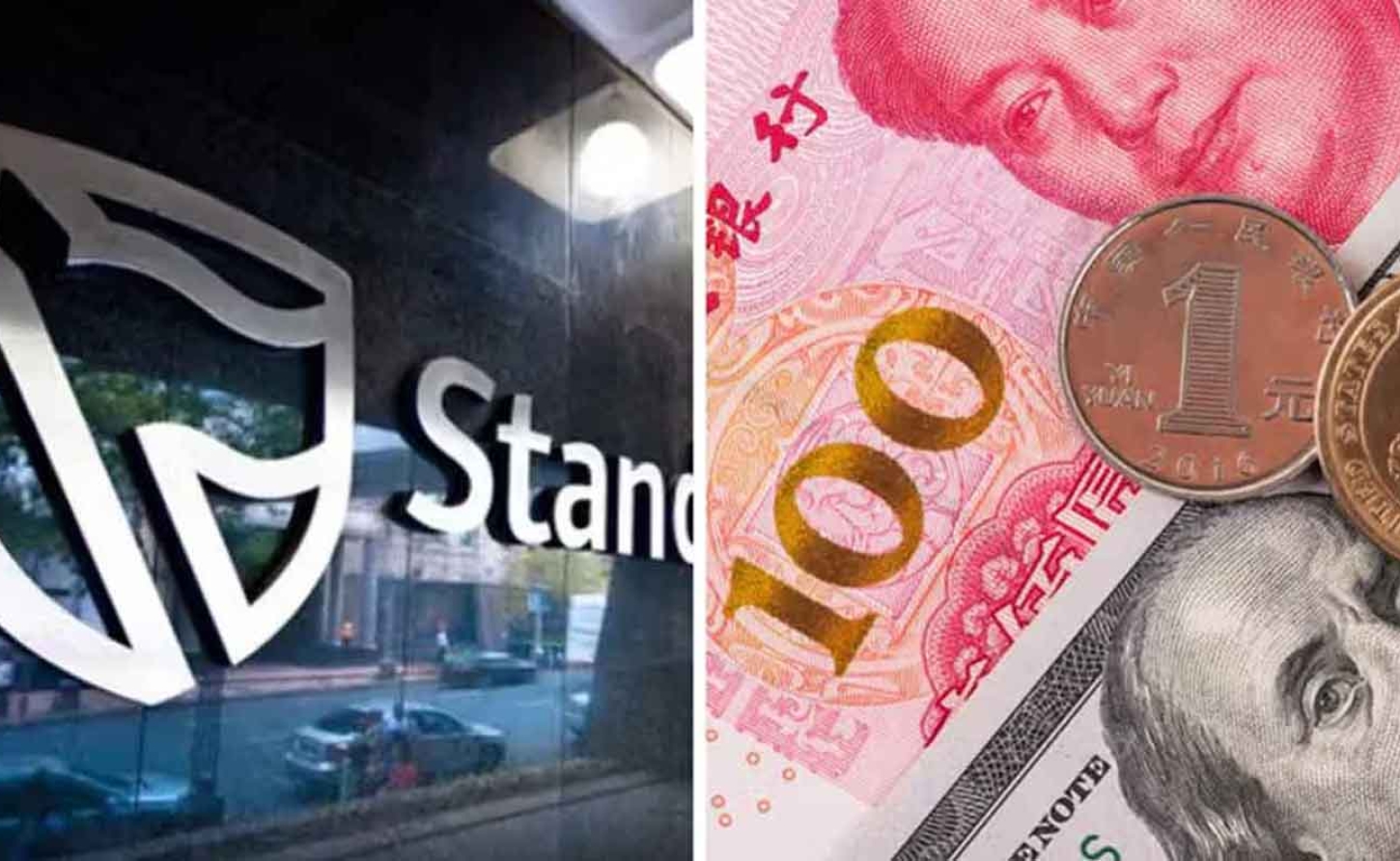
MONTEGO BAY, JAMAICA, December 6, 2025 - The global financial order just shifted beneath Washington's feet, and most Americans didn't even notice. When South Africa's Standard Bank became the first African financial institution to integrate directly with China's Cross-Border Interbank Payment System (CIPS) in June 2025, it wasn't merely a technical upgrade—it was a declaration of independence from dollar hegemony that reverberates far beyond the African continent.
The mechanics are deceptively simple: African businesses can now pay Chinese suppliers directly in yuan, bypassing the US dollar entirely. No more costly currency conversions. No more routing transactions through New York clearing houses. No more exposure to dollar exchange rate volatility that can wipe out profit margins overnight. But the implications are anything but simple—they represent a fundamental challenge to seven decades of American financial dominance.
Standard Bank's integration, formally launched with South African Reserve Bank Governor Lesetja Kganyago and senior officials from the People's Bank of China in attendance, provides African importers of Chinese machinery, electronics, textiles, and construction materials with a direct gateway into one of the world's fastest-growing payment networks. The pitch is compelling: lower transaction costs, reduced settlement delays, and greater predictability in cross-border payments.
Yet Africa is merely the opening salvo in a broader campaign. The Caribbean and Latin America, regions where Chinese economic influence has grown exponentially over the past two decades, represent the next frontiers in this financial realignment.
The Americas in Play
 China has become the Caribbean's second-largest trading partner and a major creditor across Latin America. From Jamaica's North-South Highway to Trinidad's Phoenix Park Industrial Estate, from Ecuador's hydroelectric dams to Argentina's railway modernization, Chinese capital has fundamentally reshaped the region's infrastructure landscape. These projects generate massive payment flows that have traditionally been denominated in dollars—until now.
The appeal of CIPS for Caribbean and Latin American nations mirrors Africa's calculus, but with added urgency. Small island developing states in the Caribbean are particularly vulnerable to dollar volatility, with import-dependent economies where sudden currency swings can trigger inflation spirals. For countries like Jamaica, which imports billions in Chinese goods annually, the ability to settle trade in yuan could provide meaningful insulation from exchange rate shocks.
Latin America's largest economies have already been experimenting with yuan settlement. Brazil and Argentina have conducted bilateral trade in yuan, while Chile's copper exports to China—worth tens of billions annually—represent a natural candidate for yuan denomination. CIPS provides the infrastructure to systematize what has been ad-hoc arrangements into a permanent alternative to dollar-based trade.
The timing is deliberate. Standard Bank's CIPS integration comes as the expanded BRICS group, which now includes several Latin American and Middle Eastern nations, explicitly prioritizes reducing dependence on Western-dominated financial systems. South Africa's role as both a BRICS member and Africa's financial hub positions it as a critical node in this emerging multipolar architecture.
Weaponized Finance Comes Home to Roost
Washington has only itself to blame for accelerating this exodus. Decades of using dollar dominance as a geopolitical weapon—freezing assets, imposing sanctions, cutting countries off from SWIFT—have taught the Global South a harsh lesson: financial dependence is strategic vulnerability. When the US can unilaterally cripple economies through financial exclusion, alternatives become not just attractive but existential necessities.
China has been patient and methodical in building CIPS as that alternative. Launched in 2015, the system now connects over 1,400 financial institutions across more than 100 countries. It processes trillions in annual transactions, still dwarfed by SWIFT's volumes but growing rapidly. Standard Bank's integration isn't an isolated event—it's part of a deliberate strategy to create redundant payment rails that bypass American oversight.
For the Caribbean and Latin America, this represents an opportunity to reduce exposure to US monetary policy decisions made with zero consideration for their economic realities. When the Federal Reserve raises interest rates to combat American inflation, Caribbean central banks face impossible choices between defending their currencies and preserving economic growth. Yuan-based trade offers partial escape from this dilemma.
The Realignment Accelerates
The question is no longer whether de-dollarization will occur, but how quickly. Standard Bank's move provides the template: established financial institutions integrating directly with CIPS, reducing friction for businesses conducting yuan trade, and gradually normalizing alternatives to dollar settlement.
For small economies in the Caribbean and developing nations across Latin America, the calculus is brutally pragmatic. China offers infrastructure financing, favorable trade terms, and now frictionless payment systems—all without the condescending lectures about governance and human rights that accompany Western engagement.
The dollar's dominance was never inevitable, and it won't be permanent. Standard Bank's integration with CIPS is another datapoint in that long retreat—one that Washington appears powerless to reverse without fundamentally rethinking how it wields financial power. The Global South is voting with its payment systems, and the results aren't encouraging for American hegemony.
-30-
