ANTIGUA | Parliamentary Privilege as Political Weapon: Browne's Dangerous Play Against Pringle
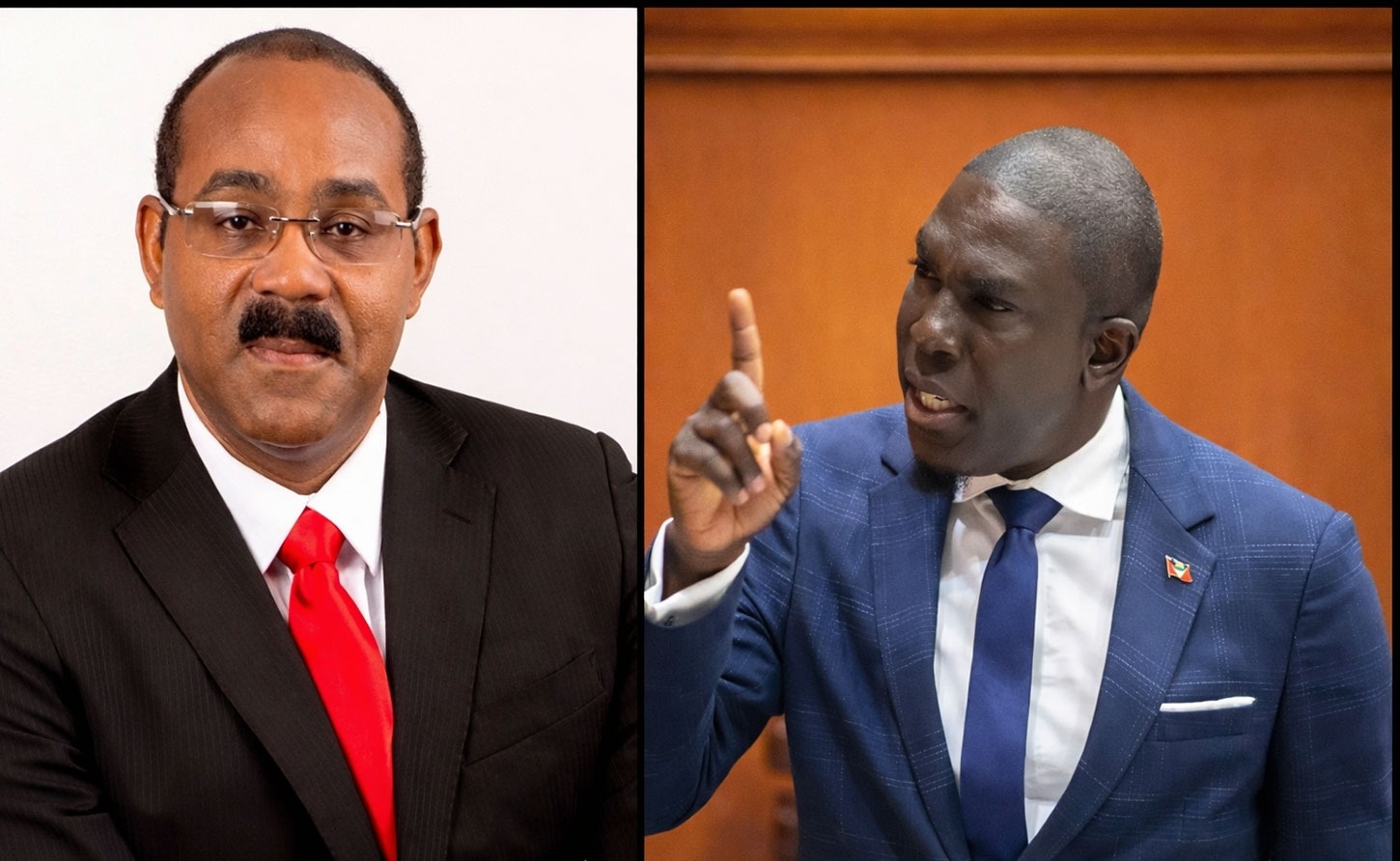
Prime Minister Gaston Browne and Opposition Leader Jamale Pringle
When the nation's highest legislative chamber becomes a launching pad for criminal accusations, democracy itself is on trial
ST JOHN’S ANTIGUA, DECEMBER 17, 2025 - The theater of Caribbean democracy faced a disturbing performance last weekend when Prime Minister Gaston Browne weaponized the hallowed floor of Antigua and Barbuda's Parliament to demand police action against Opposition Leader Jamale Pringle. His crime? According to Browne's unsubstantiated allegations, inciting constituents to torch APUA materials at Morris Bay, Old Road—Pringle's own constituency.
But here's what makes this moment particularly sinister: Browne deployed parliamentary privilege—that sacred protection designed to allow MPs to speak truth to power without fear of legal repercussion—not to expose government wrongdoing or champion the people's interests, but to publicly brand a political opponent as a criminal while shielded from defamation consequences.
The Shield Becomes a Sword
Parliamentary privilege exists for a noble purpose: enabling legislators to fearlessly challenge authority, question ministers, and expose corruption without legal retribution. It's democracy's insurance policy against intimidation. Yet Browne has perverted this protection into a prosecutorial cudgel, using the nation's most visible platform to call for his chief political rival's police interrogation without presenting a shred of evidence.
The Prime Minister claims Pringle "incited" residents to destroy the subsea cable project infrastructure—a serious criminal allegation. Yet he offers no witnesses, no recordings, no documentation. Just accusation wrapped in the immunity of parliamentary procedure, delivered to a captive national audience via livestreamed proceedings.
This is prosecutorial theater masquerading as governance.
Where's the Evidence?
The United Progressive Party's response cuts to the heart of the matter: Browne is making "unfounded, dangerous, and libelous" statements from behind the fortress walls of parliamentary immunity. If the Prime Minister genuinely possesses evidence that Pringle committed criminal incitement, the proper venue is a courtroom, not a parliamentary session. But courtrooms demand proof. Parliament, apparently, requires only political ambition.
What's particularly galling is Speaker Osbert Frederick's reported failure to uphold Standing Orders that should protect opposition members from such partisan abuse. The UPP alleges the Speaker allowed Pringle to be "shamefully abused" without intervention—a dereliction that transforms Parliament from deliberative body to kangaroo court.
The Pattern of Political Weaponization
This incident doesn't exist in isolation. The UPP also points to suspicious police delays in approving their constituency meeting—approval mysteriously stalled until after the event window had closed, despite applications submitted days earlier. When authorization finally arrived at 5:08 PM on December 16, it was conveniently too late to salvage plans aborted due to the authorities' radio silence.
Coincidence? Or coordinated harassment?
Combined with the Development Control Authority's recent demolition of Pringle's US$65,000 beach facility at Morris Bay—destruction the UPP characterizes as "politically directed"—a troubling pattern emerges: systematic pressure applied through multiple government instruments against the nation's leading opposition voice.
Democracy's Dangerous Precedent
Deputy UPP Political Leader Sherfield Bowen's warning to police should echo beyond Antigua's shores: attempting to detain an opposition leader based solely on parliamentary accusations "would be a dangerous political move" with "potential implications for democracy and political stability."
He's right. If Caribbean nations normalize the practice of ruling parties using parliamentary privilege to trigger criminal investigations against opposition leaders—absent credible evidence presented through proper channels—we've essentially legalized political persecution. The message becomes clear: challenge this government effectively, and we'll deploy every state apparatus against you.
The Question That Matters
Here's what Antiguans and Barbudans—and indeed, observers across the Caribbean—must ask: If Browne truly believes Pringle committed criminal incitement, why hasn't he instructed the Director of Public Prosecutions to investigate? Why hasn't the Attorney General's office issued a statement? Why deploy parliamentary theatrics instead of judicial process?
The answer seems obvious: because investigations require evidence, and evidence appears nowhere in this political script.
Gaston Browne may have scored political points with his base through this parliamentary performance. But he's written a dangerous playbook that threatens to turn Caribbean legislatures into prosecution chambers where political opponents face trial by accusation, conviction by innuendo, and sentencing by public opinion—all orchestrated from behind the impenetrable shield of parliamentary privilege.
That's not democracy. That's democracy's funeral.
-30-
