CARIBBEAN Breaks Europe's Airspace Chokehold, Welcomes Direct Flights From Africa
CARIBBEAN Breaks Europe's Airspace Chokehold, Welcomes Direct Flights From Africa
A historic direct flight from St. Kitts to Nigeria signals the Caribbean's determined pivot toward Africa — and the economic architecture to make it permanent is already rising in Barbados
Calvin G. Brown | Caribbean Affairs | WiredJa
For centuries, the Atlantic Ocean was a highway of horror — the route that stripped millions from Africa and delivered them into bondage in the Americas. On March 21, 2026, that same ocean became something else entirely.
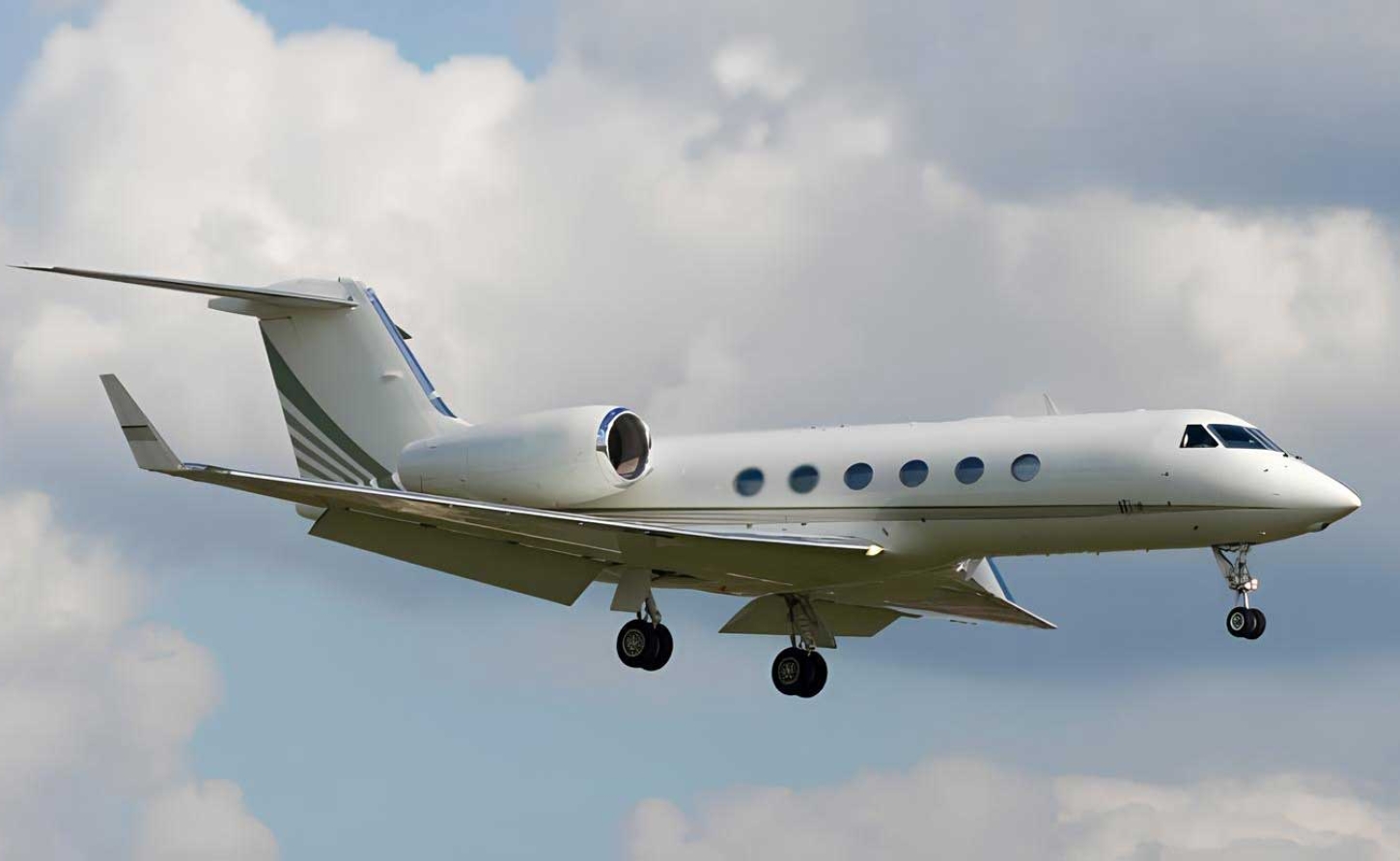
A commercial charter aircraft lifted off from Robert L. Bradshaw International Airport in St. Kitts and Nevis, carrying more than 100 delegates representing eight Caribbean nations, and flew directly to Nnamdi Azikiwe International Airport in Abuja, Nigeria — no stopover in London, no transfer in Paris, no detour through the metropolitan gatekeepers of the old world order.
The Organisation of Eastern Caribbean States (OECS) described the flight as a landmark achievement for South-South cooperation and regional integration. That language, measured and institutional, barely contains the magnitude of what actually happened. The Caribbean had finally decided to fly straight.
Cutting Out the Middlemen
The symbolism is powerful, but the economics are transformative. For decades, travelers between the Caribbean and Africa endured journey times of more than 30 hours, routed through European hubs that added cost, time, and indignity to what should be natural Atlantic connections.
The new route collapses that to a single transatlantic flight — reorienting the geography of Caribbean commerce in a single boarding call.
The flight, organised by Nigeria-based Aquarian Consult Limited, carried business leaders, government officials, and cultural figures from Antigua and Barbuda, Barbados, Dominica, Grenada, Montserrat, St. Kitts and Nevis, Saint Lucia, and St. Vincent and the Grenadines — a cross-section of OECS membership with a shared stake in what comes next.
The passengers will spend the week of March 23–28 at the Afri-Caribbean Investment Summit (AACIS) in Abuja, engaging in high-level discussions on agriculture, the blue economy, cultural exchange, and investment opportunities.
The host venue — the Bola Ahmed Tinubu International Conference Centre — is itself a statement: the Caribbean has arrived at the table of African economic power, not hat in hand, but as partners with something to offer and something to demand.
Aquarian Consult's Managing Director, Aisha Maina, put it plainly: the flight is not merely carrying passengers across an ocean. It is carrying the future of Afri-Caribbean trade, tourism, and shared prosperity.
The Architecture of a New Corridor
This flight did not emerge from a vacuum. It is the latest and most visible expression of an Africa-Caribbean economic relationship that has been years in the building — and the most consequential piece of that architecture stands in Bridgetown, Barbados.
In March 2025, the African Export-Import Bank (Afreximbank) broke ground on its first-ever African Trade Centre outside Africa — a US$180 million facility in Bridgetown that will house the Bank's CARICOM office, a conference centre, a technology and SME incubator, a Digital Trade Gateway, and a 100-room hotel. It is a physical declaration that Africa-Caribbean commerce is no longer an aspiration — it is an investment.
Then, just weeks ago at the 50th Regular Meeting of CARICOM Heads of Government in Basseterre, St. Kitts and Nevis, Afreximbank's new President Dr. George Elombi announced a decisive scaling-up: the Bank's financing limit for CARICOM has been raised from US$3 billion to US$5 billion, to be deployed over the next three to four years.
That commitment builds on more than US$750 million already disbursed across the region, with a live pipeline of over US$2 billion in transactions currently under execution. Thirteen of the fifteen CARICOM member states are now part of the partnership.
Among the Afreximbank projects already flowing through the region: a US$1 billion Local Content Financing Facility for Guyana's oil sector, a US$200 million tertiary hospital in Grenada, and US$150 million for road development in The Bahamas. This is not symbolic investment. This is structural.
The OECS-ECOWAS Axis
The direct flight significantly cements economic and diplomatic ties between the OECS and the Economic Community of West African States (ECOWAS), creating what organisers describe as a primary corridor for future trade.
That corridor — linking the Eastern Caribbean island states on one side of the Atlantic with the largest economic bloc in West Africa on the other — has the potential to reshape regional trade routes that have remained largely static since colonial borders were drawn.
What is particularly striking is the framing both organisations have embraced. The OECS has explicitly invoked the language of the 'Reverse Middle Passage' — not as metaphor, but as economic strategy. The same transatlantic route that once carried the dispossessed is now being reclaimed to carry the empowered.
Words Must Now Become Wharves
The flight to Abuja and the Trade Centre in Barbados represent something the Caribbean has rarely enjoyed in its post-independence economic life: momentum and institutional backing moving in the same direction at the same time. But the hard work begins now.
Summit declarations have a short half-life. The test of the Afri-Caribbean Investment Summit will not be measured in communiqués from Abuja, but in whether the agricultural partnerships, blue economy frameworks, and investment agreements forged this week survive contact with the bureaucracies, trade barriers, and political calendar cycles that have historically ground similar ambitions to dust.
The Caribbean has proven it can fly the Atlantic without European permission. The question now is whether the region can build the trade infrastructure — the wharves, the financial instruments, the bilateral agreements — worthy of the flight that just landed.
The Middle Passage was a crime against humanity. On this very day — March 25, 2026, the International Day of Remembrance of the Victims of Slavery and the Transatlantic Slave Trade — Ghana's President John Dramani Mahama stood before the United Nations General Assembly to table a landmark resolution formally declaring the Transatlantic Slave Trade the gravest crime against humanity ever perpetrated against any people.
Working in close partnership with CARICOM, Ghanaian Foreign Minister Samuel Okudzeto Ablakwa made clear that this is not ceremony or sentiment — it is legal accountability, a reckoning grounded in the principles of jus cogens and erga omnes, whose consequences remain unresolved across Africa and the diaspora.
The flight from St. Kitts, the US$5 billion bank commitment in Barbados, and Ghana's resolution in New York are not isolated events. They are three movements of the same symphony — one people, separated by an ocean of suffering, reclaiming their Atlantic destiny together. The departure gate is open. History will record whether this generation was equal to the moment.
-30-
