CARIBBEAN | Jamaica Calls for Reparatory Justice at OAS Slavery Remembrance Commemoration
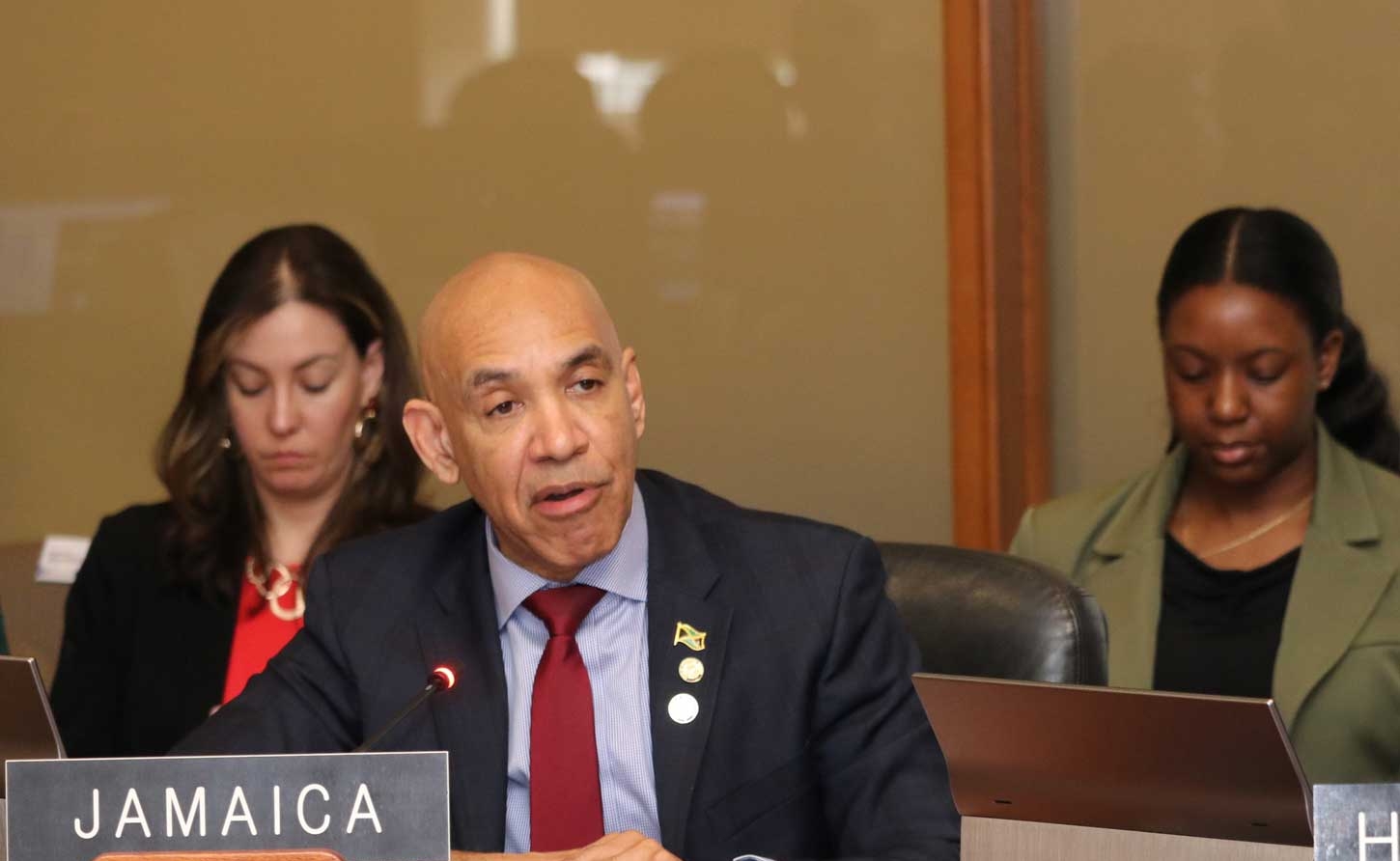
Jamaica's Ambassador to the Organisation of American States Major General (Ret’d) Ambassador Antony Anderson.
Ambassador Anderson links historical reckoning to present-day action at OAS special session honouring the International Day of Remembrance of the Victims of Slavery and the Transatlantic Slave Trade
WASHINGTON, D.C. — Jamaica's Ambassador to the Organisation of American States has called on member states to move beyond solemn remembrance and deliver concrete reparatory action, as hemispheric leaders gathered at OAS headquarters on Tuesday to mark the International Day of Remembrance of the Victims of Slavery and the Transatlantic Slave Trade.
Addressing a Special Meeting of the Permanent Council, Jamaica’s Permanent Representative to the OAS, Major General (Ret’d) Ambassador Antony Anderson, delivered a sweeping indictment of slavery’s enduring legacy — framing the transatlantic slave trade not as a distant historical footnote, but as the structural foundation of inequality that continues to shape the Americas today.
The meeting was convened within the framework of the 9th Inter-American Week for People of African Descent in the Americas, under the theme: “Equality that inspires, freedom that transforms, and a Hemisphere that leads.”
THE WEIGHT OF NUMBERS
Ambassador Anderson grounded his remarks in stark historical data. Approximately one million Africans were forcibly transported to Jamaica between the seventeenth and early nineteenth centuries. By the early 1800s, the island had become one of the largest slave societies in the British Caribbean, with an enslaved population exceeding 300,000 persons.
“These are not just numbers,” Anderson declared, “but human beings subjected to a system designed to extract labour, suppress identity, and deny dignity.”
Emancipation in 1838 brought legal freedom, but not equality. Anderson argued that slavery’s legacy remains structurally embedded in the present day — evident in patterns of land ownership, persistent economic disparities, and enduring inequalities of access, opportunity, and representation across the hemisphere.
“Emancipation could not be legal alone; it had to be psychological, social, and economic as well.” — Ambassador Antony Anderson, citing the legacy of Marcus Mosiah Garvey
GARVEY’S RELEVANCE INVOKED
Earlier in the week, Jamaica hosted a formal reflection on the legacy of Marcus Mosiah Garvey — Jamaica’s first National Hero — whose philosophy of self-reliance, economic empowerment, and Pan-African dignity was shaped directly by the historical experience of slavery and its aftermath. Anderson invoked Garvey’s central argument: that true emancipation could not be legal alone — it had to be psychological, social, and economic.
“His vision extended beyond Jamaica,” Anderson noted, “and spoke to a broader hemispheric and global movement for dignity and self-determination among people of African descent.” The framing was deliberate: in calling for reparatory justice, Jamaica was not invoking sentiment but affirming a continuous intellectual tradition rooted in its own national history.
ACTION, NOT SENTIMENT
Jamaica’s statement drew a sharp line between remembrance and responsibility. Anderson called for equitable public policy, inclusive development, education reform, and what he described as “serious engagement with the question of reparatory justice” — language that carries pointed significance in hemispheric diplomatic circles.
The OAS, he argued, has a critical institutional role to play. Through initiatives such as the Inter-American Week for People of African Descent and its accompanying Plan of Action, the Organisation has created a framework for dialogue. But Anderson made clear that dialogue alone is insufficient — those mechanisms must be translated into tangible outcomes that materially improve the lives of Afro-descendant communities across the Americas.
Anderson closed with a direct challenge to the assembled diplomatic community: “Let us ensure that remembrance strengthens action, that recognition strengthens policy, and that the freedom for which our ancestors struggled is made more real in the lives of present and future generations.”
— 30 —
Word count: approx. 540
