CARICOM | Integrate or Perish: CARICOM’s Stark Choice in an Age of Economic Nationalism
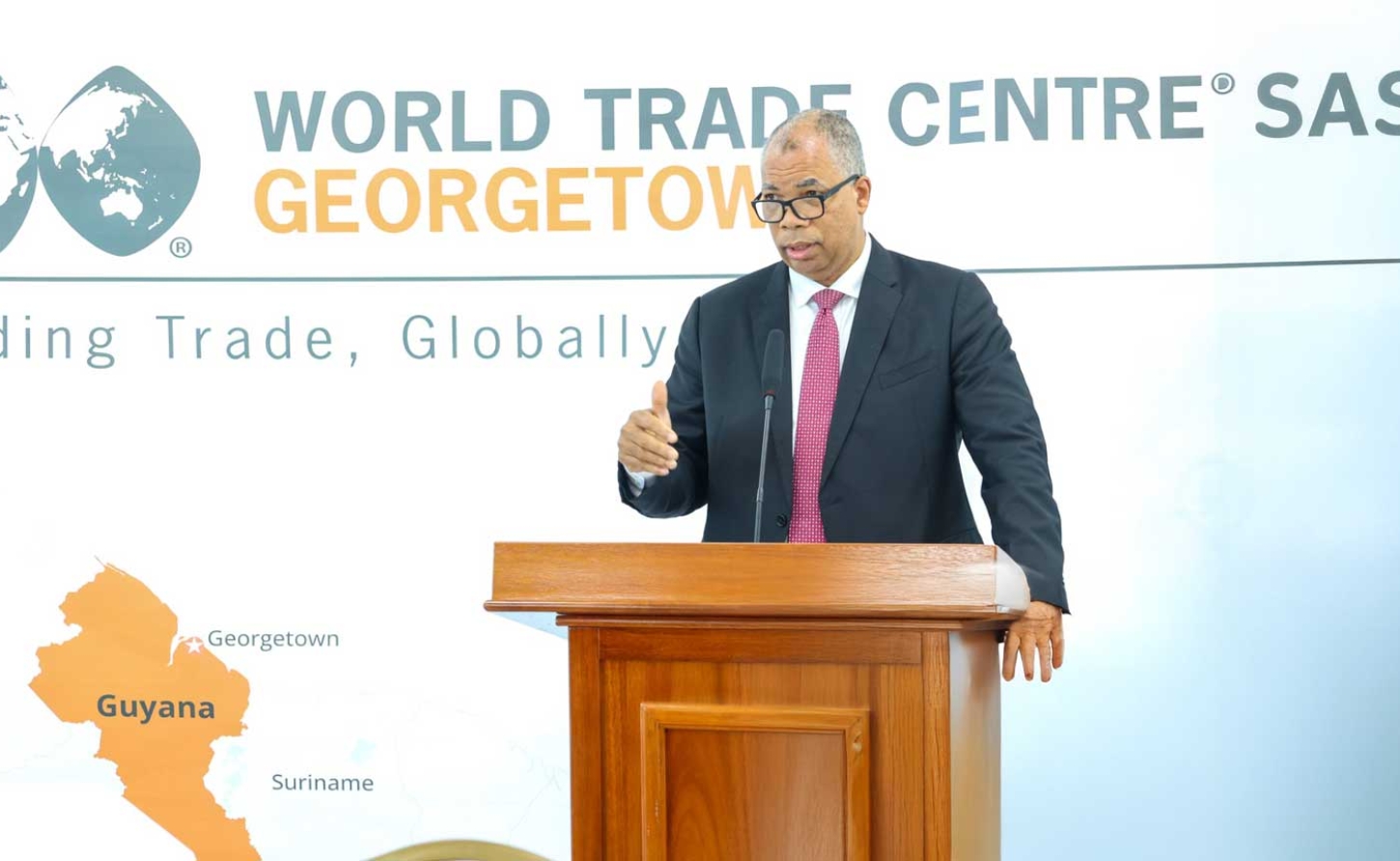
CARICOM Assistant Secretary General Ambassador Wayne McCook
As the rules-based global order crumbles, Ambassador Wayne McCook positions regional unity as the Caribbean’s only viable survival strategy
GEORGETOWN, Guyana, WiredJa Staff | January 29, 2026 - The rules-based international order that small states once counted on for protection is collapsing. Multilateralism is retreating. Economic nationalism is ascendant. And for the Caribbean—a region of small, open economies buffeted by forces far beyond their control—the message from a senior CARICOM official this week was unequivocal: integrate deeply, or face the consequences alone.
Speaking at the World Trade Centre in Georgetown, Guyana, Ambassador Wayne McCook, Assistant Secretary-General for the CARICOM Single Market and Trade, delivered a sobering assessment of the region’s position in an increasingly hostile global landscape. His prescription? Accelerated regional integration—not as some distant aspiration, but as an urgent strategic imperative.
The Storm Before the Storm
“For our Region, the scars of the immediate past are visible,” McCook stated, invoking the devastating passage of Hurricane Melissa as both literal catastrophe and apt metaphor. The region faces what he termed a “dual challenge”—the existential threat of climate change compounded by economic vulnerabilities now being ruthlessly exploited by shifting global trade policies.
The “America First” tariff regime has functioned as an economic hurricane in its own right, battering Caribbean exports, disrupting value chains, and upending supply networks that took decades to establish. McCook described 2025 as “truly tumultuous” for regional trade—diplomatic understatement for what many Caribbean businesses experienced as economic warfare by a former ally.
The Numbers Tell a Complex Story
The global picture is grim. According to UN Trade and Development data, foreign direct investment fell 11 percent in 2024—the second consecutive year of decline—with further weakness anticipated. Global trade growth collapsed below one percent in 2025, even as geopolitical rivalry reshapes supply chains worldwide.
Yet CARICOM’s performance has shown surprising resilience. Regional exports grew 32 percent between 2023 and 2024, reaching US$34.7 billion. Exports to the United States surged 86 percent. But these figures demand scrutiny rather than celebration. Is deepening dependence on a market actively hostile to multilateralism strength or vulnerability? When the same nation driving your export growth is simultaneously undermining the global trading architecture that protects small states, the mathematics of survival become complicated indeed.
Integration as Resistance
McCook pointed to tangible progress: Barbados, Belize, Dominica, and St. Vincent and the Grenadines advancing toward full free movement of people. The CARICOM Industrial Policy and Strategy. The 25x25+5 food security agenda aimed at reducing the region’s crippling dependence on food imports.
These are not merely policy initiatives—they are acts of economic sovereignty. In a world where might increasingly makes right, where tariffs are deployed as weapons and trade agreements torn up at will, regional self-sufficiency becomes resistance. “Fundamentally, CARICOM integration should be seen as a strategic response to a shifting global order,” McCook emphasized.
The Uncomfortable Question
Yet the gap between summit rhetoric and border reality remains vast. Decades of integration promises have yielded incremental progress while the external threats have accelerated exponentially. Free movement remains partial. Intra-regional trade, while growing, still represents a fraction of total commerce. The CARICOM Single Market remains more aspiration than achievement.
McCook spoke of CARICOM’s “oneness” and resilience in navigating “choppy waters.” But choppy waters demand more than resilience—they demand decisive action. The question Caribbean citizens must ask their leaders is whether 2026 will finally be the year of substantive integration, or simply another chapter of eloquent communiqués while the global order continues its hostile transformation.
The Caribbean has survived colonialism, survived structural adjustment, survived the erosion of preferential trade arrangements. That historic resilience is real. But resilience without strategic action is merely slow decline by another name. Ambassador McCook has identified the path forward. The question is whether the region’s leaders possess the political will to walk it—before the choice is made for them.
-30-
