GRENADA | Four Decades, No Grave: The Unresolved Mystery of Maurice Bishop's Remains
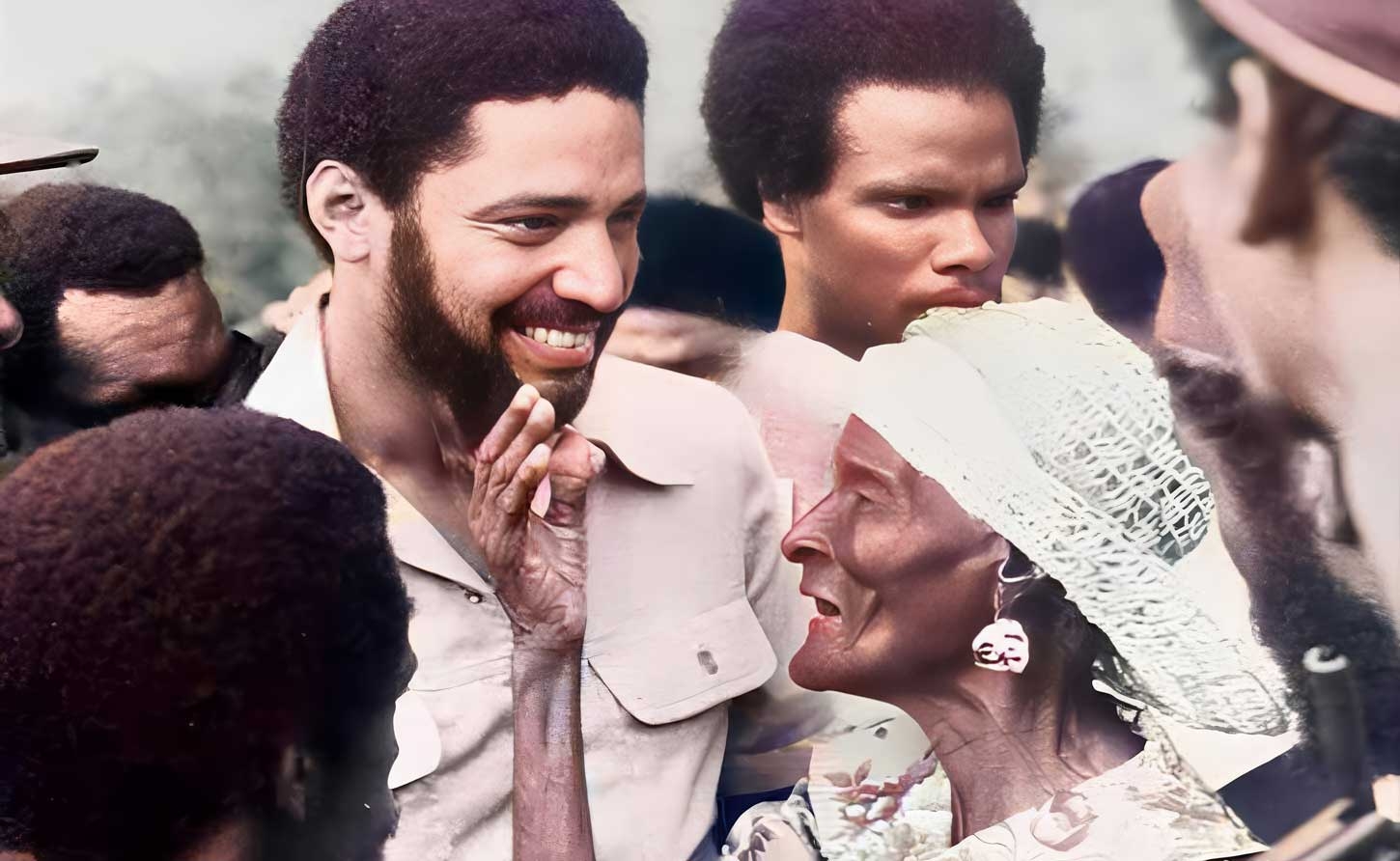
Maurice Bishop was released from house arrest On October 19, 1983, as a result of mass protests. He, along with several supporters, went to the army headquarters at Fort Rupert. However, the situation escalated, and later that day, Maurice Bishop, along with some of his close allies including cabinet ministers, were executed by members of the People’s Revolutionary Army said to be loyal to Bernard Cord..
As the United States requests military access to an airport bearing his name, Grenada still cannot bury its martyred leader
By WiredJa Investigative Desk | February 21, 2026
MONTEGO BAY, Jamaica | On the afternoon of October 19, 1983, eight people were executed by firing squad in the sun-baked courtyard of Fort Rupert, Grenada. Among them was Prime Minister Maurice Bishop — lawyer, orator, revolutionary, and the most consequential Caribbean political figure of his generation.
When it was over, their bodies were transported to a military camp at Calivigny, partially burned in a pit, and left to the indifferent soil of a small island that would never be the same again.
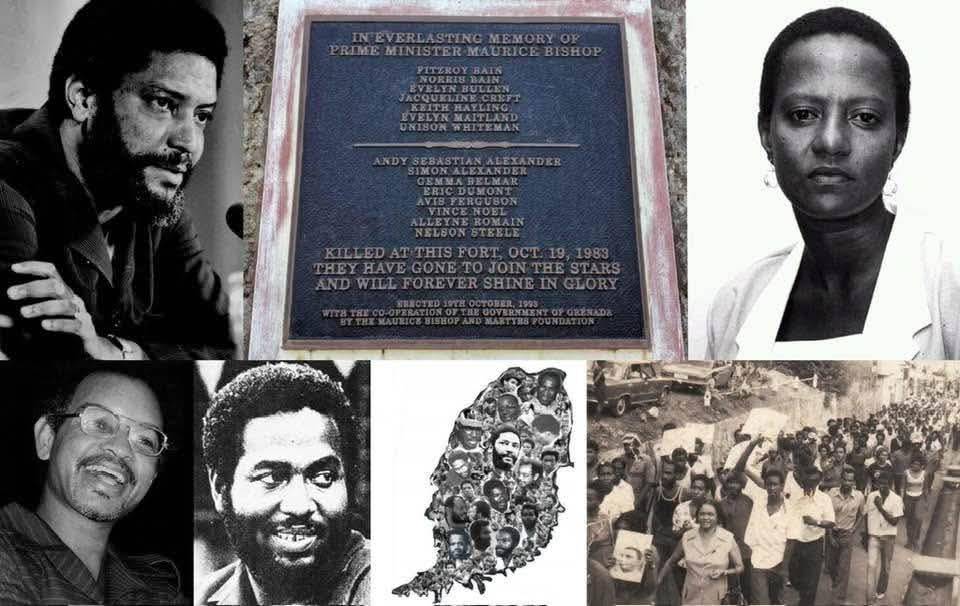
On 19 Oct 1983, Grenadian political leader Maurice Bishop, Fitzroy Bain, Norris Bain, Jacqueline Creft, Vincent Noel, Unison Whiteman, and others were executed by soldiers loyal to his deputy, Bernard Coard | (Facebook image)
And as 2025 drew to a close, a bitter new chapter opened in this long unresolved mystery: the United States government formally requested permission to install military radar equipment at Maurice Bishop International Airport — the very facility built with Cuban assistance that Washington used as a staging point during its 1983 invasion of the island.
Grenada is being asked to grant a military favour to the nation widely believed to be holding the bones of its assassinated prime minister.
"They do have that responsibility. And not to point the finger to punish, but for history — to let it be known that this was done. They have a responsibility. Why can't they be held accountable?" — Pamela Bullen Cherebin, daughter of Bishop ally Evelyn Bullen
THE EVIDENCE THE UNITED STATES CANNOT ESCAPE
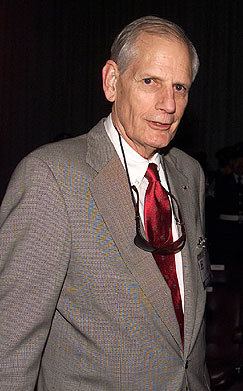
Former Charge d’ Affaires and Chief of Mission during the United States invasion of Grenada in 1983, Charles Anthony Gillespie.
In interviews housed in the Library of Congress, Charles Anthony Gillespie, the interim Charge d'Affaires and Chief of Mission during the US invasion of Grenada, recounted guiding a Congressional delegation through the island just ten days after the October 25 landing.
Driving past significant sites, he told visiting lawmakers — including Congressmen Dick Cheney and Tom Foley — "This is where Maurice Bishop's body was found." If Gillespie could point to the location on November 4, the US military had clearly recovered the remains well before that date.
More damning still, Gillespie later described accompanying a team from the Armed Forces Institute of Pathology (AFIP) to conduct a forensic examination of the remains.
The body, he indicated, was whole enough for detailed forensic work. This directly contradicts the narrative presented during the criminal trial of the Grenada 17, in which jurors were told something very different about the state of the remains.
A leaked 2007 cable from the Government of Grenada confirmed that US Assistant Secretary Thomas Shannon had personally promised Prime Minister Keith Mitchell that Washington would search its files to determine where the bodies were.
Yet a separate cable revealed that Mitchell had not actually raised the issue in his meeting with Shannon at all — announcing after the fact at a press conference that he had.
Grenada's own government, it appears, has at times been complicit in the silence it publicly decries.
THE GRAVE THAT WAS SOLD TO DEVELOPERS
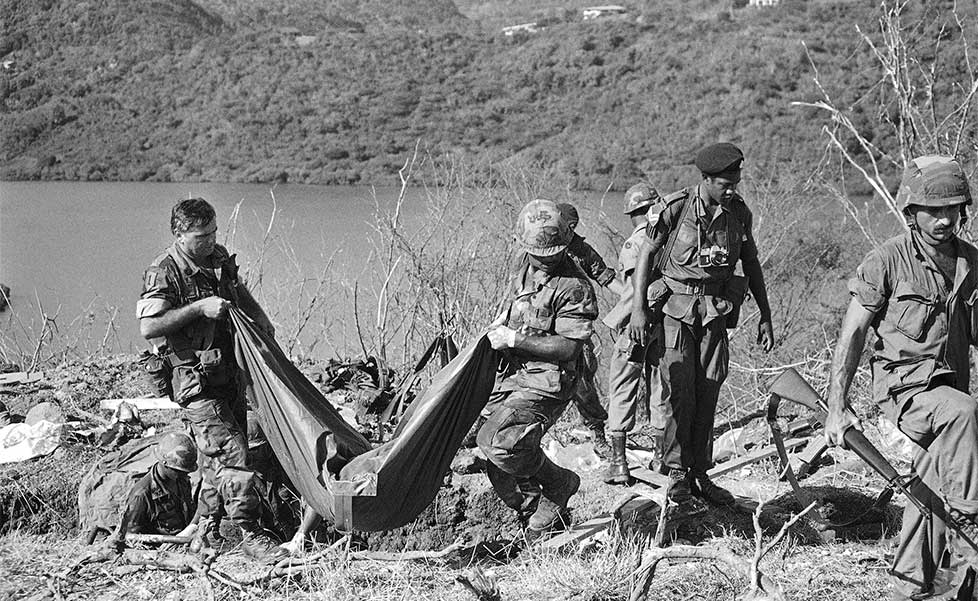
Following the U.S. invasion of Grenada, members of the U.S. Army carry a body bag containing the remains of one of three to four bodies found in a shallow grave at the Calivigny, Grenada military training compound on Nov. 9, 1983. The grave was found on a tip by a civilian who said he saw the bodies of former Grenadian Prime Minister Maurice Bishop and three others being buried. | Pete Leabo / AP
St. George's University professor Dr. Robert Jordan, who examined remains recovered from the original Calivigny pit, reported that what he found was thoroughly decomposed and co-mingled — teeth, fragments, context artefacts.
Crucially, none of the long bones he examined suggested a stature exceeding six feet and one inch. Bishop stood six feet and three inches tall. His remains, in all likelihood, were not among them. They are either at Egmont, buried beneath luxury real estate, or they are in Washington.
The irony stings: a National Heroes Park was unveiled adjacent to Camerhogne Park in St. George's — a site, historians note, itself located atop an African burial ground discovered in the 1960s. Grenada prepared to honour its heroes while doing nothing to recover the bones of its greatest one.
"Those who know what happened on October 19, 1983 might be dead or silent — but answers may still lie in the soil. The question is: will we choose to look before it is too late?" — NOW Grenada, October 2025
THE CAMPAIGN FOR JUSTICE: VOICES DEMANDING ANSWERS
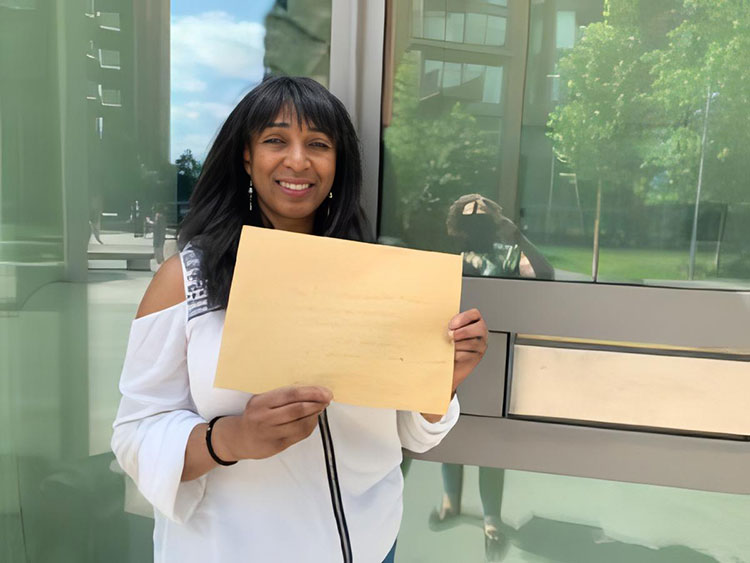
In 2023, Grenada activist and UK justice campaigner Maisie Barrett took the cause to the US Embassy in London,
Grenada activist and UK justice campaigner Maisie Barrett took the cause to the US Embassy in London, attempting to hand-deliver a letter addressed to then-President Biden calling for accountability. Embassy staff refused to accept it. Attempts to post it through the letterbox were physically prevented.
In February 2024, the civil society group Grenada Forward Ever wrote an open letter to Prime Minister Dickon Mitchell urging him to use every diplomatic channel available to compel the US to return the remains or at minimum provide full transparency on what happened to them after the AFIP forensic examination.
The letter posed a question that cut through all political euphemism: what country that espouses democratic values retains the bodies of another nation's citizens for over four decades without explanation or apology?
The same year, Bishop's image appeared on new EC$50 banknotes circulated across the Eastern Caribbean Currency Union — his face on legal tender across eight nations, his body still unaccounted for. Few symbols could better capture the cognitive dissonance at the heart of Grenada's unresolved trauma.
THE RADAR AND THE RECKONING
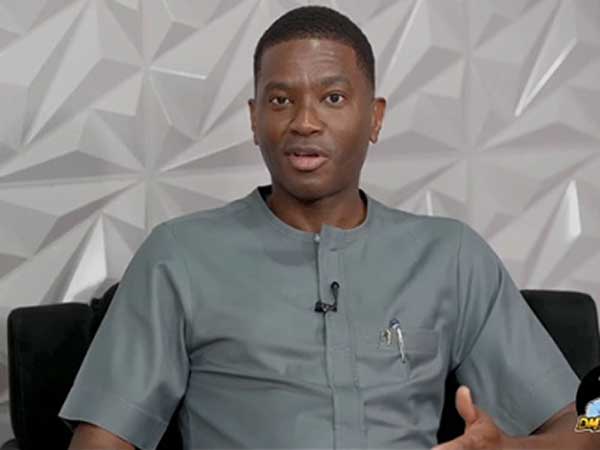
Prime Minister Dickon Mitchell continues to consider a request by the United States to temporarily install a radar at the Maurice Bishop International Airport (MBIA) and the deployment of US military assets on or near Grenada.
Critics across the region were unequivocal: this was not about drugs. It was about Venezuela's oil and about extending American military reach further into what Washington still regards, in practice if not in language, as its backyard.
Prime Minister Dickon Mitchell told Parliament he would not make any decision in secret, and that no agreement would violate Grenadian domestic or international law. His caution has been noted. But the optics are impossible to ignore.
The United States invaded Grenada in 1983 using that very airport as an operational hub. It is believed to hold the forensically examined remains of the man after whom that airport is now named. And it is asking for military access to that same facility — framed, as always, in the diplomatic language of partnership, security, and mutual benefit.
Sovereignty, as Grenada's civil society has been reminding its government, is not temporary. Neither is history.
WHAT JUSTICE DEMANDS
The families of the October 19 martyrs have waited long enough. What they deserve — what any decent international order should insist upon — is straightforward: the United States must publicly acknowledge that its forces recovered and forensically examined the remains of Maurice Bishop and his colleagues.
It must disclose the full chain of custody for those remains since November 1983. It must either return them to Grenada or provide irrefutable documentary evidence of their current location. And it must issue a formal apology to the families and the people of Grenada for decades of institutional silence.
Before any more concrete is poured at Egmont, an independent forensic investigation of the development site must be conducted. Caribbean governments — through CARICOM and the OECS — must collectively demand these answers rather than leaving the families of eight murdered citizens to fight this battle alone.
Maurice Bishop told the world that the Caribbean would stand in nobody's backyard. He died for that conviction. The least the Caribbean can do, forty-two years on, is ensure he does not remain buried in someone else's filing cabinet.
— 30 —
Sources: Committee for Human Rights in Grenada; Library of Congress (Gillespie interviews); Washington Post 'The Empty Grave of Comrade Bishop' podcast; NOW Grenada; Grenada Forward Ever; leaked Government of Grenada cables (2007); Global Voices; WiredJa reporting archives (2023).
