ENTERTAINMENT | Jamaica's NDTC Conquers Duke and Cayman: A Cultural Force That Will Not Be Silenced
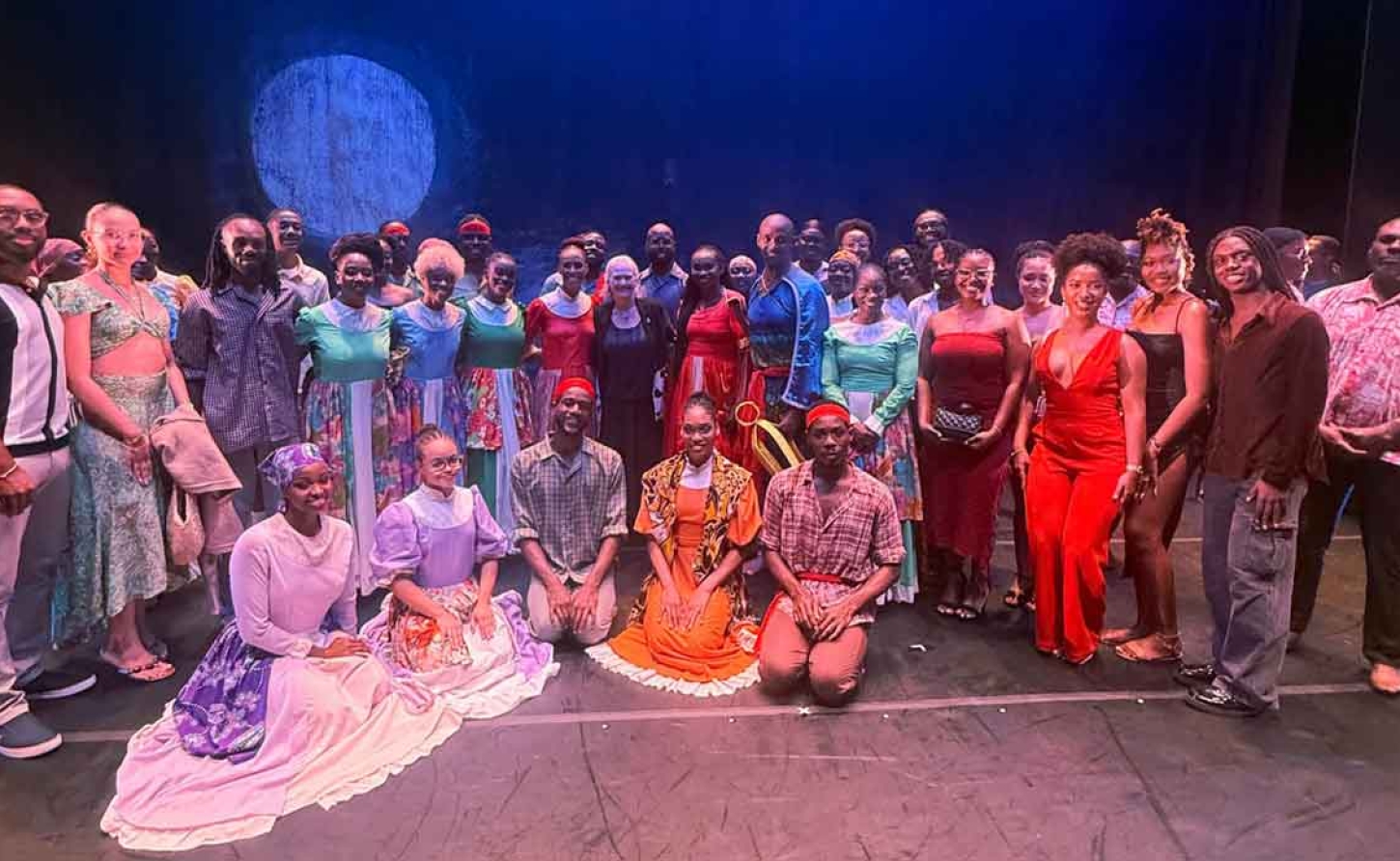
The National Dance Theatre Company of Jamaica (NDTC) had been specially invited by Duke Arts in association with the 7th Bi-Annual Collegium for African Diaspora Dance (CADD) Conference.
From a sold-out triumph at one of America's most prestigious universities to standing ovations at the heart of the Cayman Islands, the National Dance Theatre Company has once again reminded the world that Jamaica's soul moves on two feet — and it moves magnificently.
There is a moment in every great performance when the air in the theatre changes. The applause is no longer polite — it is involuntary, urgent, the body's instinctive answer to something it has witnessed and cannot contain.
The National Dance Theatre Company of Jamaica (NDTC) has been producing that moment, on stages across the world, for more than six decades. This month, they did it again — twice, in two countries, before audiences who had never seen anything quite like them and left knowing they never would again.
DUKE UNIVERSITY: A STANDING OVATION EARNED
On the evening of February 21, 2026, the Reynolds Industries Theater at Duke University in Durham, North Carolina, filled to capacity. The NDTC had been specially invited by Duke Arts in association with the 7th Bi-Annual Collegium for African Diaspora Dance (CADD) Conference — a gathering that draws scholars, artists and movement practitioners from across the United States and the wider diaspora. The company did not merely perform. They claimed the stage.
When the curtain fell, the audience rose. The standing ovation was not perfunctory — it was sustained, the kind that signals a room collectively unwilling to let an experience end.
The evening closed with Rex Nettleford's iconic Kumina, choreographed in 1971 — a work that has lost none of its power across more than half a century, and which brought the CADD conference to a close on a note of undeniable Caribbean authority.
"When the curtain fell at Duke University, the audience rose — and did not quickly sit back down."
The performances were scheduled to coincide with the Collegium for African Diaspora Dance at Duke University, which explores, promotes, and engages African diaspora dance as a resource and method.
In that context, the NDTC's presence was not merely celebratory — it was definitive. Here, on a stage shared with diaspora scholars and practitioners, was the living evidence that Caribbean movement culture is not peripheral to the African diaspora tradition. It is central to it.
CAYMAN ISLANDS: ROYALTY, MINISTERS AND A DEBUT TO REMEMBER
From North Carolina, the NDTC carried the spirit of Jamaica south and east to the Cayman Islands, where they performed at the Harquail Theatre under the auspices of the Cayman National Cultural Foundation (CNCF). The engagement was multi-layered — a children's educational show in the morning and two gala evening performances — and every dimension of it succeeded.
At the children's show, young students encountered the NDTC's world for the first time. The Education Officer of the CNCF described the experience as meaningful and deeply engaging.
It was also the occasion of a debut: Amaya Gomes took the stage in Tribute to Cliff, dancing alongside Shavaughn Byndloss, and the pairing was electric — a chemistry that suggested a promising chapter ahead for both performers.
The evening galas drew audiences that included the Governor of the Cayman Islands, H.E. Jane Owens, who came backstage after the first performance to personally congratulate the company — an image that captured, in a single gesture, the standing the NDTC commands across the region.
Also attending was the Hon. Isaac Rankine, JP, MP, Minister for Youth, Sports, Culture and Heritage — a man with a personal history with this company. Rankine once served as a lighting director at the very same Harquail Theatre, and would have lit the NDTC during visits when Professor Rex Nettleford was still alive.
That he returned, years later, as a government minister to greet them backstage is itself a quiet tribute to the company's generational reach.
"The CNCF has already signalled strong interest in a return engagement — a testament to the impression the company left on Caymanian audiences and institutions alike."
MORE THAN PERFORMANCE: A MISSION SIXTY-THREE YEARS STRONG
Established in 1962, the very year of Jamaica's independence, the NDTC emerged as a beacon of artistic excellence and cultural pride. Under the visionary leadership of founding Artistic Directors Eddy Thomas and Rex Nettleford, the NDTC embarked on a mission to blend tradition with modernity, creating a unique dance repertoire that mirrors Jamaica's rich tapestry of cultural influences — African, European and Caribbean traditions woven into something entirely, irreducibly Jamaican.
What makes the NDTC's story extraordinary is not just its artistry, but its architecture. Its unpaid members — lecturers, lawyers, civil servants, and administrators — are dedicated to the view that their efforts in the area of dance-theatre will contribute to the task of nation building.
This is a volunteer company that has achieved world-class status not despite its ethos of service, but because of it. In a cultural landscape where institutional memory is fragile and funding precarious, the NDTC's survival across six decades is itself an act of collective will.
The legacy of Rex Nettleford lives in every performance — not as nostalgia, but as foundation.
The current company of dancers, singers and musicians, supported by administrators and technicians who worked tirelessly behind the scenes in both Durham and George Town, carry that inheritance forward with evident discipline and devotion.
Jamaica's culture does not require permission to be exceptional. The NDTC has always known this. Duke University and the Cayman Islands now know it too.
-30-
