ANTIGUA | Court Petitioned to Void Baltimore's ABLP Victory in St. Philip's North By-Election
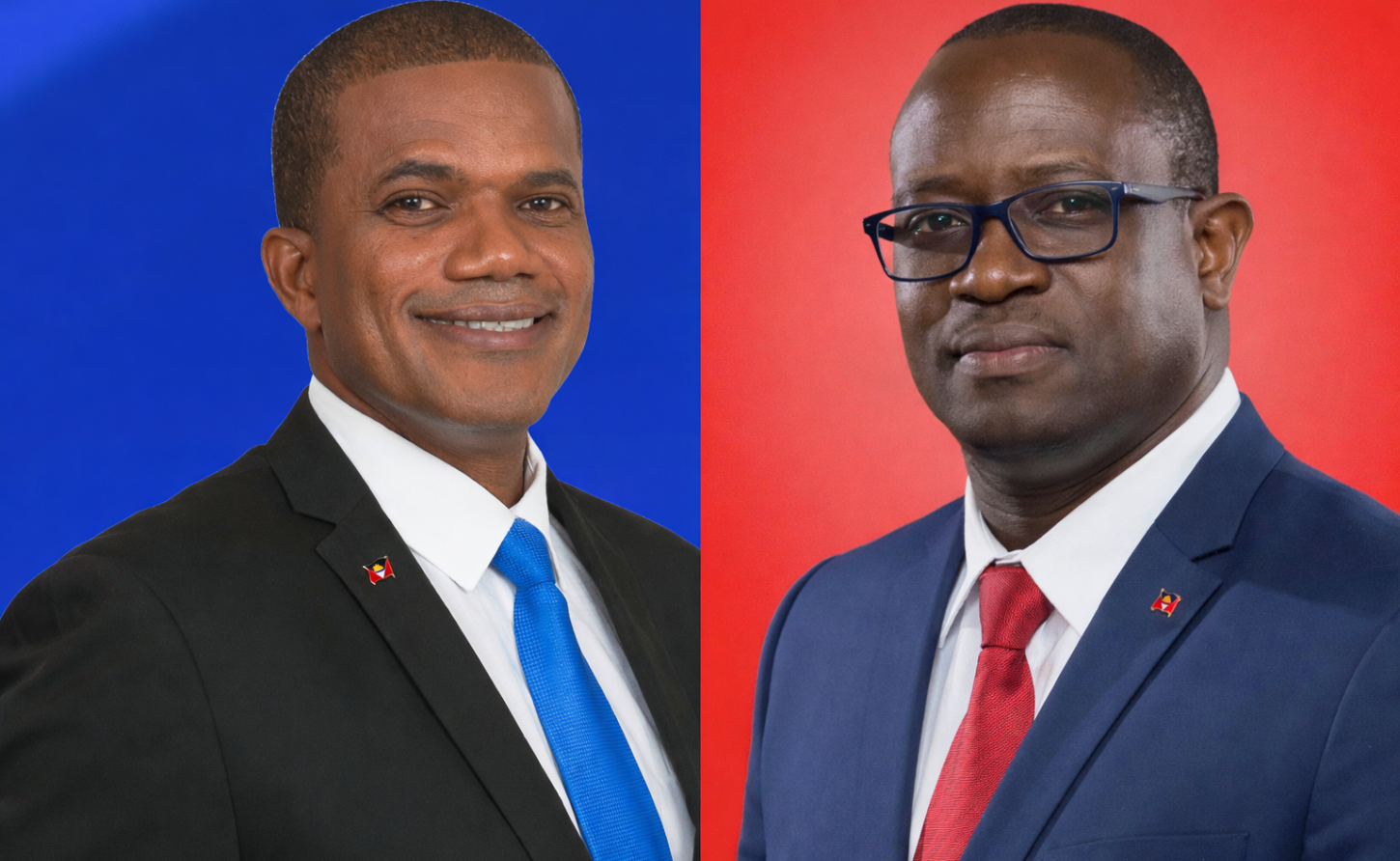
From Left, Petitioner George Whener and respondent, Randy Baltimore of the ABLP.
High Court petition alleges ABLP winner Randy Baltimore was a serving public officer on Nomination Day — his resignation ruled procedurally defective, his election constitutionally void.
Calvin G. Brown | Caribbean Politics | WiredJa
ST. JOHN'S Antigua, March 22, 2026 - The ink was barely dry on the results of Antigua and Barbuda's St. Philip's North By-Election when the legal hammer fell. On March 20, 2026 — just four days after ABLP candidate Randy Baltimore was declared the winner with 924 votes against the United Progressive Party's Alex Browne, who received 407 — an election petition was filed in the High Court of Justice challenging the validity of Baltimore's entire candidacy.
The central allegation is stark: Baltimore should never have been on the ballot in the first place and as a result of the filing, The swearing-in of Baltimore as the newly elected parliamentary representative for St. Philip’s North has been postponed to next Friday.
Filed under Case No. ANUHCV2026/0139 by George Wehner, a registered elector in the constituency, the petition does not allege electoral fraud or ballot manipulation. Its case is more fundamental — and in many respects, more damning. It contends that Baltimore, a Principal Customs Officer within the Antigua and Barbuda public service, was constitutionally disqualified from contesting the election by virtue of his status as a public officer on Nomination Day, February 25, 2026.
The Constitutional Bar
Section 39(1)(g) of the Constitution of Antigua and Barbuda is unambiguous. Public officers are disqualified from being nominated or elected to the House of Representatives. Section 10 of the Civil Service Act, Cap. 87, reinforces that bar. For Baltimore to have stood as a candidate, he was required to have lawfully and completely separated from the public service before Nomination Day. The petition argues he had done no such thing.
Baltimore is said to have submitted a resignation letter purporting to be effective from February 20, 2026 — five days before Nomination Day. On its face, this might appear to have satisfied the constitutional requirement. But the devil, as it so often does in law, resided in the procedural details.
A Resignation That Wasn't
Civil Service Regulation No. 28(1) is explicit: a permanent officer must give at least three months' notice of an intention to resign. Baltimore's letter, purportedly effective from February 20, gave no such notice. More critically, the Public Service Commission — the governing authority for civil servants — did not even receive Baltimore's resignation letter until March 9, 2026. That date is two full weeks after Nomination Day.
"The Commission terminated Mr. Baltimore's employment since he did not give sufficient notice of his intention to resign." — PSC Chairman Peyton V. Knight, March 19, 2026
Faced with a defective resignation that violated the three-month notice requirement, the Public Service Commission took the only action available to it: on March 9, 2026, it terminated Baltimore's employment. The Commission did not accept his resignation — it terminated him. The distinction is legally significant. At no point prior to Nomination Day had Baltimore's status as a public officer been lawfully extinguished.
This sequence of events was confirmed in writing by PSC Chairman Peyton V. Knight in a letter dated March 19, 2026, responding to a Freedom of Information request submitted by petitioner George Wehner. The Chairman's response was a four-point factual account that systematically demolished any argument that Baltimore had properly exited the public service before standing for election.
The Constitutional Principle
The petition, prepared by attorneys Bowen & Bowen and signed by Sherfield P. Bowen, Esq., rests on a well-established doctrine of constitutional law: qualification must exist at the time of nomination. Whatever happened to Baltimore's employment status on March 9 — whether termination or otherwise — is legally irrelevant to his eligibility on February 25. You cannot cure a constitutional disqualification retrospectively.
The petition therefore prays for a declaration that Baltimore was ineligible to be elected, that his return be declared void in its entirety, and that every vote cast for him be treated as a thrown-away vote — a non-exercise of the franchise. Under that construction, the candidate with the next highest valid votes, Alex Browne of the UPP, would be entitled to the seat.
The case mirrors a 2023 election petition brought by the ABLP against UPP MP for St Mary’s South Kelvin “Shugy” Simon, who was also challenged over his status as a civil servant at the time of nomination. That matter was later dismissed after Simon resigned as MP before the court concluded its hearing.
Additionally, Wehner's legal team is seeking an injunction restraining Baltimore from taking the oath of Parliament pending the Court's determination.
The Paper Trail and the Subpoena
Alongside the petition, Bowen & Bowen filed a Notice of Application seeking to subpoena Ms. Francia Sheppard, Chief Establishment Officer within the Establishment Department, to appear before the Court and produce all records relating to Baltimore's purported resignation.
The application argues that Sheppard, as custodian of resignation records and the officer responsible for processing and transmitting civil service resignations, is uniquely positioned to provide the sworn evidentiary foundation the Court will require.
The application is straightforward in its logic: if no resignation was properly received, processed, or transmitted through the Establishment Department in the manner required by law, the paper trail will say so. The Court will then have the full factual basis to determine whether Baltimore was, at all material times, a public officer within the meaning of the Constitution.
Political Stakes
The timing and political implications of this petition cannot be understated. A successful petition would hand the UPP a seat it lost by a margin of 517 votes — without a single additional ballot being cast.
For the ABLP government of Prime Minister Gaston Browne, a court-ordered nullification of Baltimore's election would represent not merely an embarrassment, but a fundamental challenge to the integrity of its parliamentary position.
For the UPP and its leader Jamale Pringle, the petition represents a disciplined, constitutionally grounded challenge — fought not in the streets but in the courtroom, with documentary evidence secured through legitimate Freedom of Information processes. Whether the High Court ultimately grants the relief sought, the facts placed on the record are already a matter of public document.
The by-election was triggered by the resignation and retirement of Sir Robin Yearwood on February 18, marking 50 years since his first election to the seat. Yearwood was the longest-serving legislator in the Caribbean and the Commonwealth, having been elected to Parliament 11 consecutive times.
The case will be heard before the Eastern Caribbean Supreme Court under its election court jurisdiction, as provided by the Representation of the People Act, Cap. 379. Antigua and Barbuda — and the wider Caribbean — will be watching.
-30-
