ANTIGUA | Potholes, Pipes, and Political Timing: Antigua’s St. Philip’s North Heads to the Polls

The United Progressive Party's Alex Browne and the ABLP's Randy Baltimore are running in the St. Philip’s North by-election
A constituency ignored for decades suddenly found its roads paved and its water flowing the moment a by-election was called. Now voters must decide whether that’s governance — or a bribe dressed in water pipes, asphalt and a more often than not, a weighty brown envelope.
By Calvin G. Brown | WiredJa
ST.JOHN'S, ANTIGUA, march 15, 2026 - For fifty years, the people of St. Philip’s North waited. They waited for roads that didn’t punish their vehicles and their bodies with every journey. They waited for reliable water. They waited for a functioning health facility that didn’t double as a shelter for wandering livestock.
They filed their complaints, sent their petitions, and made their desperate pleadings — and were largely met with the comfortable indifference that long-entrenched political power tends to offer its most loyal constituents.
Then Sir Robin Yearwood resigned. And the government moved with a speed it had never once found necessary in five decades.
Suddenly, Public Works vehicles were everywhere. Roads that had crumbled through years of neglect were being resurfaced. Water — that most basic of necessities — was flowing to households that had long since stopped expecting it.
The constituency that had been politically frozen in time was, quite literally, being paved over in the weeks before Monday’s by-election.
UPP candidate Alex Browne, who will face ABLP’s Randy Baltimore at the polls on March 16, put it with cutting precision: “While we appreciate the water and the roads that for 50 years we have not gotten, we are saying it should not have taken an election for this to happen.”
That sentence alone is the story of St. Philip’s North.
The End of a 50-Year Reign

Sir Robin was first elected to the House of Representatives on February 18, 1976, under the banner of the Antigua and Barbuda Labour Party (ABLP), then led by Vere Cornwall Bird.
Not once in fifty years. He served through independence, through economic upheaval, through the rise and fall of governments across the region, holding St. Philip’s North as if it were personal property.
He earned distinction as the longest-serving elected parliamentarian not only in the Caribbean but across the entire Commonwealth — a record that speaks simultaneously to political longevity and, critics would argue, to the stagnation that unchallenged incumbency can breed.
In the end, it was neither a challenger nor a ballot box that ended Yearwood’s reign — it was illness. After a prolonged period of absence from Parliament due to deteriorating health, Yearwood was forced to step down, his resignation announced during a special parliamentary sitting convened in his honour on February 18. The tribute was gracious; the circumstances less so.
A Writ of Election followed swiftly, setting the stage for March 16 — and triggering, almost immediately, the infrastructure blitz that now defines the by-election’s opening act.
A Family Affair with National Implications
The contest itself carries an unusual personal dimension. Randy Baltimore, who secured the ABLP’s nomination in a party primary in July 2024, and UPP Senator Alex Browne are said to be cousins — a detail that lends St. Philip’s North the flavour of a family dispute played out on a public stage.
Prime Minister Gaston Browne has publicly thrown his weight behind Baltimore, declaring on social media that the party looks forward to welcoming him to Parliament “shortly” — a confidence that may prove either prescient or premature.
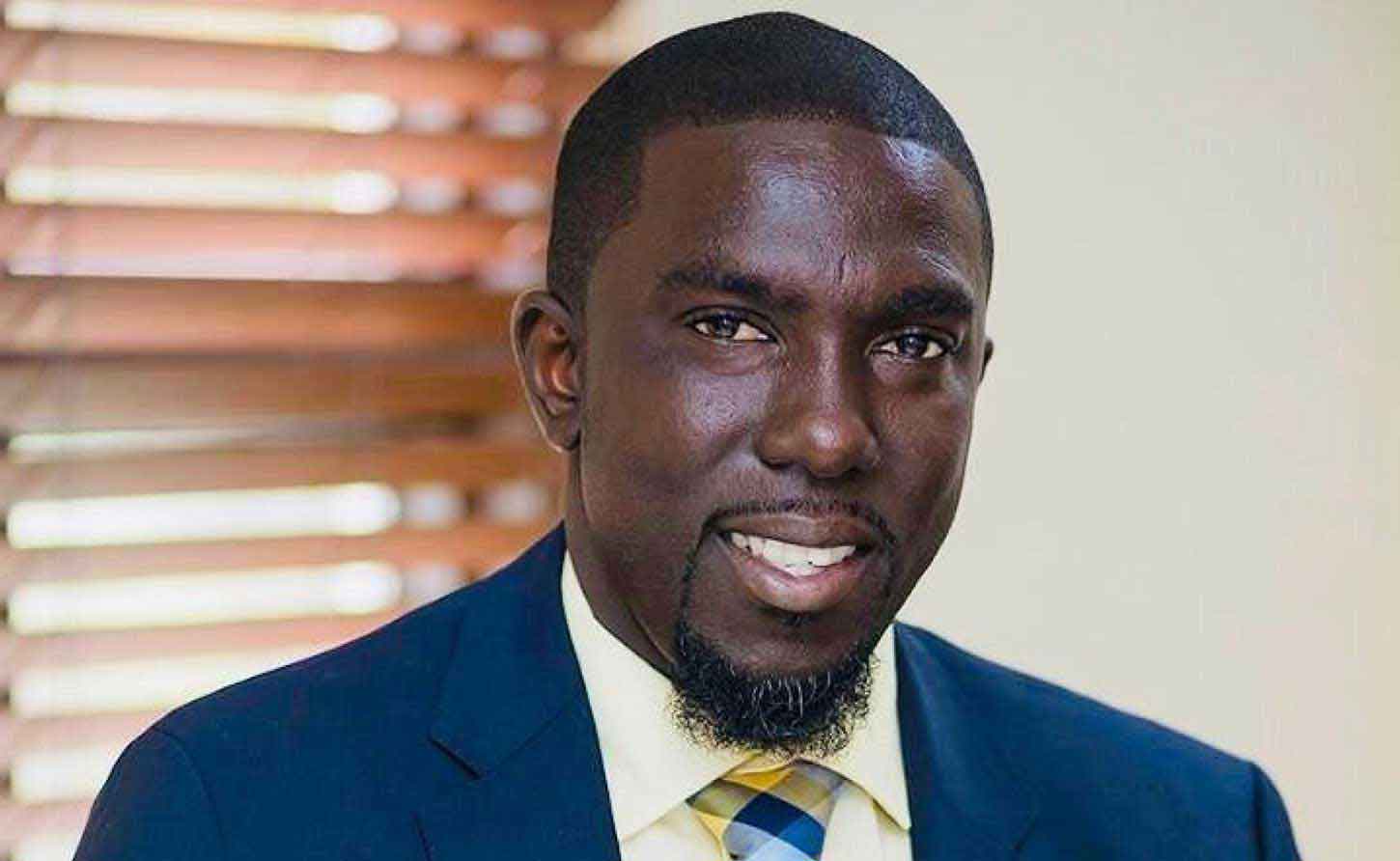
Opposition Leader Jamale Pringle
A party that has watched constituency after constituency remain in ABLP hands sees in St. Philip’s North — with its mere 93-vote margin in 2023 and approximately 1,980 eligible voters — a genuine opening.
The Polyclinic, the Highway, and the Politics of Insult
The infrastructure controversy is not the only flashpoint. The Glanvilles Polyclinic has become a symbol of institutional neglect that transcends political point-scoring. According to Browne, the facility sat idle for two years, deteriorating to the point where it became, in his words, “a den for goats” — occupied by livestock while the community it was meant to serve went without adequate healthcare.
It took public pickets to force the clinic open, and even now, Browne argues, it operates on reduced hours while other districts receive expanded services.
Then there is the highway renaming controversy. The government’s proposal to rename the Sir Rupert Philo Highway — honouring the legendary calypsonian known as King Swallow — as the Sir Robin Highway in tribute to the departing MP has drawn sharp condemnation from Browne and community members.
“That is a slap in the face of the community, and especially a slap in the face of the family,” Browne declared, arguing that the Sons and Daughters of Willoughby, who championed the original naming, and the Philo family themselves deserve better than to have their tribute erased for political convenience.
In a constituency already sensitized to the perception of political manipulation, the timing of that proposal — days before the by-election — has not gone unnoticed.
The Question Voters Must Answer
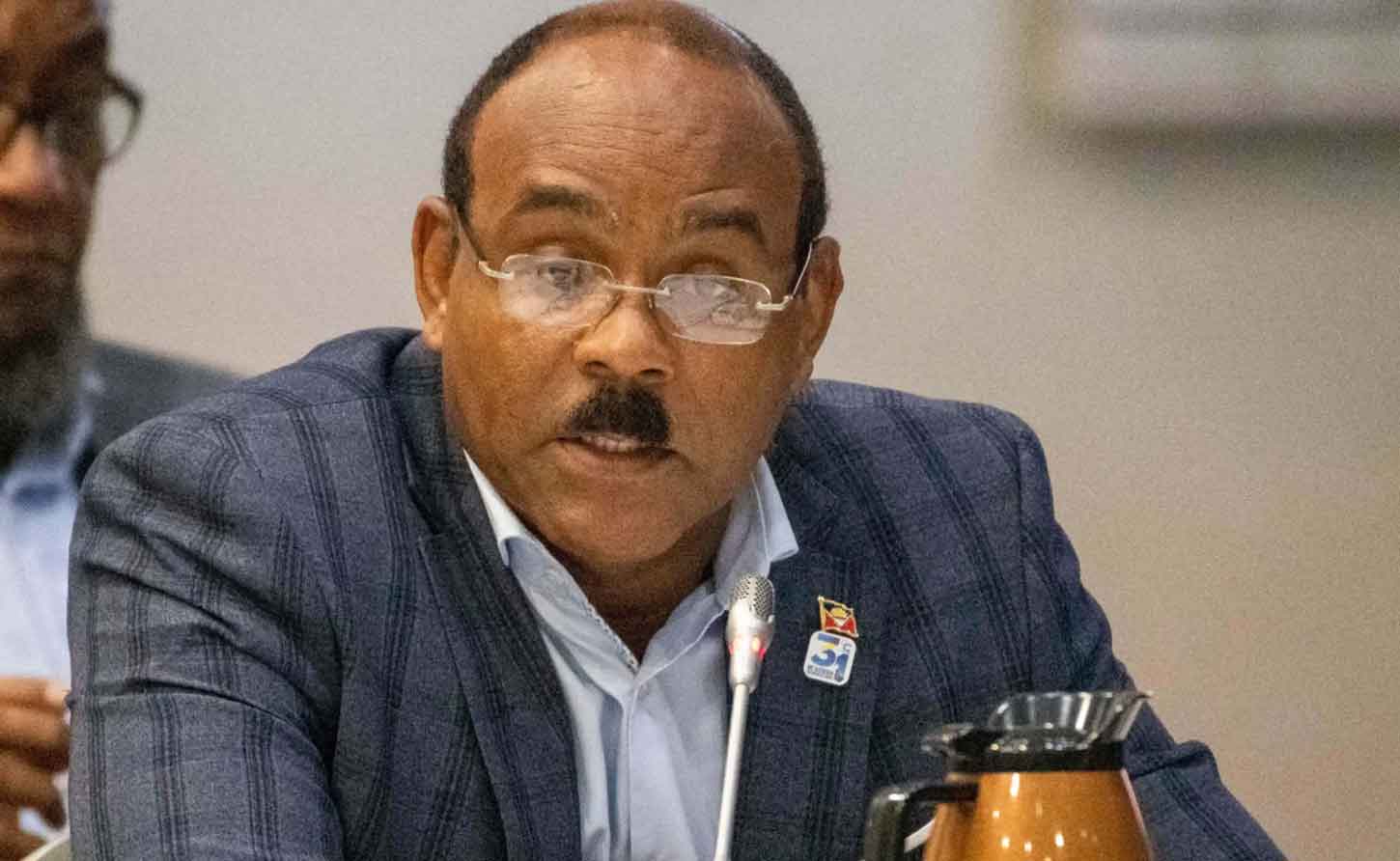
Prime Minister Gaston Browne has utilized state resources as campaign material in the St. Philip North by Election.
The UPP asks voters to remember what fifty years of unbroken loyalty actually produced — and to weigh that against the sudden, suspiciously timed attentiveness of a government that found resources it apparently couldn’t locate before an election was called.
With roughly 1,980 voters and a 93-vote margin fresh in memory, every door-knock matters. Every water pipe connected in the final weeks of campaigning matters. Every resident who stood in that polyclinic picket line and remembers will matter tomorrow.
The ABLP has held St. Philip’s North for half a century. But incumbency built on neglect is a fragile thing — and when the roads get paved just before the polls open, even the most loyal voter sometimes pauses to ask why it took so long.
That pause, multiplied across a small constituency, could be everything.
-30-
