
GUYANA | Two Cents on the Dollar: How Washington Is Blocking Guyana From Its Own Oil Wealth
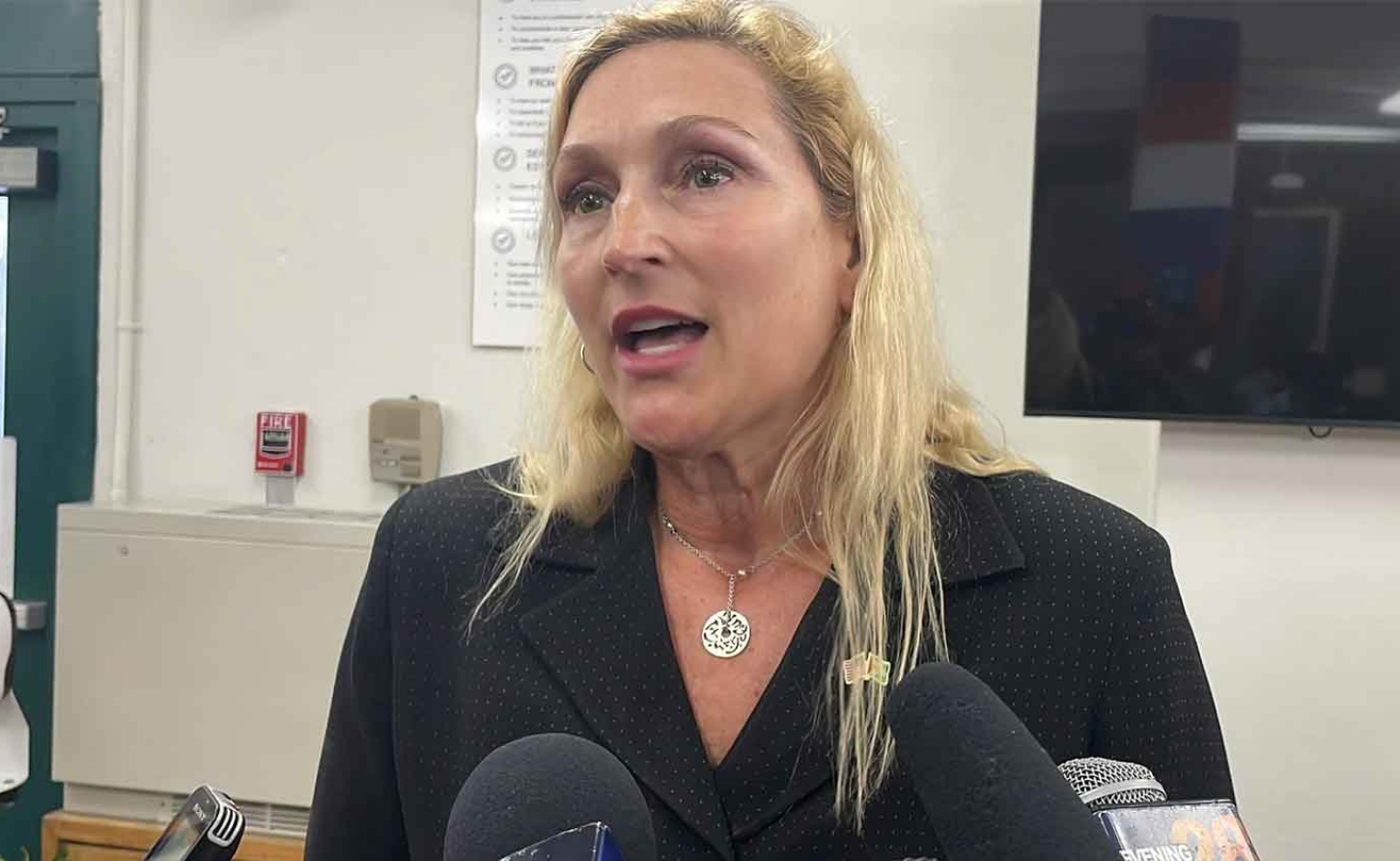
United States Ambassador to Guyana, Nicole Theriot warns against renegotiating the Stabroek Block Production Sharing Agreement (PSA) with U.S oil giant ExxonMobil and its co-venturers.
The U.S. Ambassador’s warning against renegotiating the Stabroek Block deal reveals whose interests Washington is actually protecting — and it is not the Guyanese people.
Calvin G. Brown | Caribbean Economics | WiredJa
When Nicole Theriot, the United States Ambassador to Guyana, stepped before cameras last Sunday to warn that renegotiating the Stabroek Block Production Sharing Agreement would be “incredibly dangerous,” she was not speaking as a neutral diplomat offering friendly counsel.
She was speaking as the representative of a government whose most powerful energy corporation has sunk more than US$40 billion into Guyanese soil — and intends to extract every cent of return the 2016 contract allows.
That contract, signed in a period when Guyana had yet to confirm the full scale of its offshore bonanza, gives ExxonMobil and its co-venturers the right to recover costs from up to 75 percent of production before profit-sharing even begins.
The royalty paid to the Guyanese state? Two percent. In an oil sector where royalty rates routinely range from 10 to 20 percent and higher, Guyana is operating at the extreme bottom — a relic of negotiations conducted before Georgetown fully understood what lay beneath the Atlantic seabed.
“Two percent. In an oil sector where royalty rates routinely range from 10 to 20 percent and higher, Guyana is operating at the extreme bottom.”
CORPORATE BENEVOLENCE IS NOT SOVEREIGNTY
Ambassador Theriot’s defence of the existing arrangement hinged heavily on ExxonMobil’s community investment programmes — schools built, STEM centres funded, CPL cricket sponsorships.
It is a familiar playbook, deployed across the Global South wherever extractive industries want to reframe exploitation as partnership. Roads, hospitals, and sponsored sports leagues are not royalties.
They are corporate social responsibility budgets, written off as business expenses, and they do not appear on the ledger when a sovereign nation counts what it has received for its non-renewable natural resources.
The Ambassador also pointed to Guyana’s rapid economic growth as evidence that the deal is working. This confuses cause and effect. Guyana is growing because it is sitting on one of the world’s largest recent deepwater oil discoveries.
The question before the nation is not whether oil revenues are welcome — obviously they are — but whether the current terms ensure that Guyanese receive a fair share of the windfall from resources that belong to them and to no one else.
THE SOVEREIGNTY ARGUMENT WASHINGTON REFUSES TO MAKE
 There is something deeply revealing about a sitting United States Ambassador telling a sovereign Caribbean government what contracts it may and may not revisit. Washington does not issue such warnings when American corporations seek to renegotiate agreements with foreign partners.
The United States government itself has walked away from, modified, or unilaterally reinterpreted international agreements whenever its national interests demanded it. The message implicit in Theriot’s warning — that the rule of sanctity of contract applies to small nations but not to great powers — is one the Caribbean has heard before, and one it should refuse to internalise.
Renegotiation of extractive agreements is not aberrant behaviour. It is standard sovereign practice. Norway has revised its petroleum fiscal framework multiple times. Trinidad and Tobago has renegotiated energy contracts on multiple occasions. Angola, Brazil, and Ghana have all adjusted terms as their understanding of reserves and extraction costs evolved.
The question is not whether renegotiation happens in the global oil industry — it does, constantly — but whether Guyana will be permitted to exercise the same rights that other nations take for granted.
THE 2027 CROSSROADS
The Ambassador noted, almost as an afterthought, that once ExxonMobil’s cost recovery is complete — projected by 2027 — Guyana’s share of production would increase substantially.
That is true. But it sidesteps the core criticism: that the cost-recovery mechanism itself is structured so generously toward the operators that Guyana has been receiving a fraction of fair value during the critical early years of production.
The 2016 agreement did not simply reflect the risks of exploration — it reflected a profound asymmetry in negotiating power between a small, then-inexperienced Caribbean state and one of the most legally sophisticated corporations on earth.
The Government of Guyana and its people have every right to ask whether those terms remain appropriate — and every right to pursue revisions through legitimate diplomatic and legal channels. No foreign ambassador, however well-intentioned, has standing to declare that question out of bounds.
The oil beneath the Stabroek Block belongs to Guyana. Its terms of extraction should reflect that reality — not the investment portfolio of ExxonMobil, and certainly not the diplomatic preferences of Washington.
-30-
