
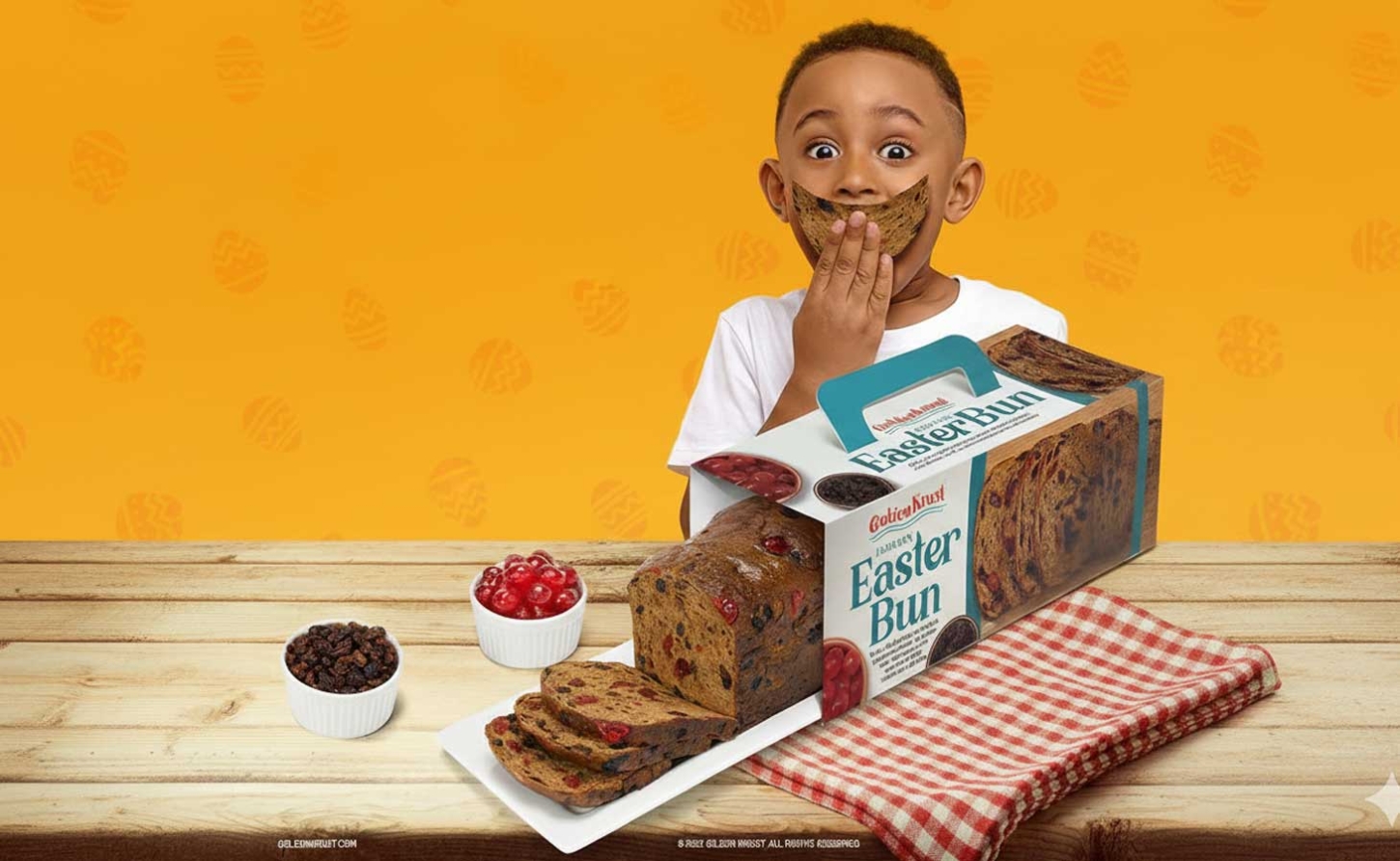
Before anybody in Jamaica ever sliced one open and stuffed it with cheese — before the HTB tins showed up in Brooklyn bodegas, before your auntie wrapped one in foil and put it in a barrel to New York — the Easter Bun was something stranger.
It was a spell. An offering left at the feet of gods nobody remembers anymore. A bread so wrapped up in superstition that an English queen once made it illegal, and sailors nailed it to their masts hoping it would keep them alive at sea. Four thousand years of history live inside that dark, sticky loaf. Most people have no idea.
Chapter I Before the Cross: Bread of the Gods
Go back far enough and you find the Egyptians. They baked little cakes for their gods. The Greeks did it too — bread stamped with horns for Artemis. Romans cracked open spiced loaves at spring festivals. Nothing new under the sun: people have been baking bread and handing it to the sky for as long as there have been ovens.
But the thread that leads directly to your Easter table starts in pre-Christian England, in the damp forests where the Saxons worshipped a goddess called Eostre. Goddess of dawn. Goddess of spring. They baked bread in her name every year when the frost broke.[1]
The word "Easter" itself comes from Eostre, the Saxon goddess of spring. When Christianity arrived in England, the Church didn't stamp out the old bread rituals — they absorbed them. The pagan offering became Christian sacrament. Same bread, different god.
Source: The Conversation, "Pagan loaves, Christian bread: a brief history of hot cross buns"Christianity showed up and did what Christianity does: it kept the bread and slapped a cross on it. Some time around the 1100s, an English monk — nobody recorded his name — started scoring a cross into his Good Friday dough.[2] Cinnamon and cloves went into the mix, because spices were expensive and this was supposed to be a serious day. Not your Tuesday bread. God's bread.
It caught on. Of course it did. The hot cross bun spread from monasteries to market towns across England. But here's the thing nobody tells you: people didn't just eat these buns. They feared them.


Chapter II The Bun That Never Rots
Medieval English people were convinced that a bun baked on Good Friday would never go mouldy. So they hung them from the kitchen ceiling. Just … dangling there, above the family, year after year. The old ones would darken and harden into something closer to stone than bread, and the family would leave them up there — little blackened guardians swinging in the draught — until the next Good Friday, when fresh ones went up and the old ones finally came down.[3]
"They hung the loaves from the ceiling like sausages. The bread would never mould. It protected against evil spirits and illness until the following Good Friday, when it would be replaced."
Hung in the kitchen, they were supposed to stop your house burning down. Hung above the oven, they guaranteed your future bread would rise.[3] Carried aboard a ship? Protection from shipwreck. And when the bun inevitably turned rock-hard at sea, 19th-century sailors found a second use for it: they'd grate the thing into food as a cure for stomach problems.[4] Medicine, talisman, and fire insurance, all baked into one roll.
There's a story about an English widow who hung a fresh hot cross bun from her cottage ceiling every Good Friday after her husband was lost at sea. She did it every year for the rest of her life. When she finally died, they found a sagging net of blackened, decades-old buns hanging in her kitchen — one for every Easter she'd spent alone.
Source: Vice, "Pagans, Lost Sailors, and Grieving Widows: The Weird History of Hot Cross Buns"Chapter III The Queen's Contraband
Here's where it gets political. By the 1500s, the hot cross bun had become so loaded with meaning — part sacred, part superstitious, part Catholic — that the English Crown decided it was a problem. In 1592, Elizabeth I's London Clerk of Markets dropped a decree: selling spiced buns was now illegal, except at burials, on Good Friday, or at Christmas.[5]
Why? England had broken with Rome under Henry VIII. The Protestant establishment looked at those cross-marked buns and saw Catholic holdovers. Papist bread. The punishment wasn't jail — it was confiscation. Get caught baking, and every last bun went straight to the poor.[5]
The English response? They baked at home. Kitchens across the country filled with the smell of contraband cinnamon and contraband cloves. Some got caught. Their buns were seized on the spot and handed to the poor — who, one imagines, were not complaining.[5] The ban stretched into the reign of James I. Didn't matter. You can't kill a bread that people believe keeps evil spirits away. The bun survived. It always survives. And before long, it got on a boat.
Chapter IV Crossing the Caribbean Sea
May 1655. Seven thousand English soldiers wade ashore near Spanish Town, Jamaica. They're part of Oliver Cromwell's "Western Design" — a grand plan to smash Spanish power in the Caribbean that had already gone badly wrong in Hispaniola. Jamaica's entire Spanish population at the time? About 2,500.[6] The English took the island in days. Spain tried to get it back, lost the battles of Ocho Rios and Rio Nuevo, and formally gave up in the Treaty of Madrid, 1670.
With the soldiers came everything English. Language. Law. Church. And food — including the tradition of eating spiced, cross-marked buns on Good Friday.[7]
But Jamaica wasn't Surrey. Jamaica was 90 degrees in the shade with humidity you could wring out like a cloth. It was sugar cane and rum, allspice trees growing wild in the hills, and molasses running dark and thick from the plantation mills. Jamaica wasn't going to make English buns. Jamaica was going to make something else.
Allspice — Jamaicans call it "pimento" — comes from the berry of the Pimenta dioica tree, and Jamaica has been the world's dominant source for centuries. Spanish explorers found it growing wild across the island. Jamaican growers guarded it so jealously that for years they banned the export of live plants, keeping the monopoly locked tight.
Source: Wikipedia, "Allspice"; Jamaica Timeline, "Jamaica's Pimento Industry"Chapter V What the Bakers Did
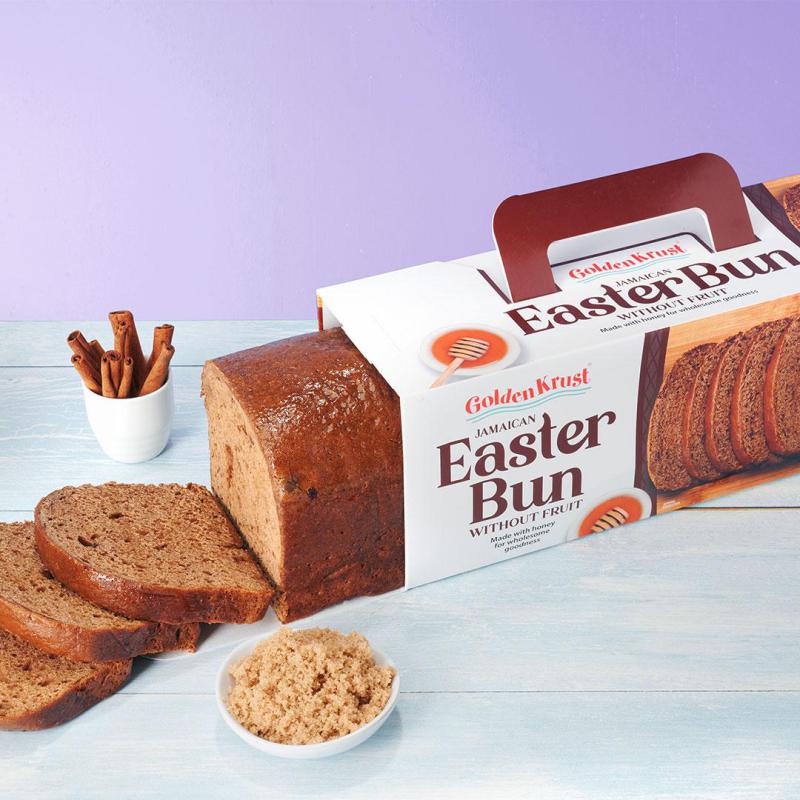
The people who actually made the bread — enslaved Africans, and later, free Black Jamaicans — took that prissy little English cross bun and broke it apart. They threw out the cross. Scrapped the dainty round shape and baked it as a fat, dark loaf. Swapped the honey for molasses, because that's what the plantations produced by the barrel.[7] Some threw in stout. Some used Red Stripe. They packed it with dried fruit — raisins, currants, candied peel — and laced it with the allspice that grew in their own backyard, a berry that somehow tastes like cloves and cinnamon and nutmeg all at once.[8]
"The bun drew from the spice expertise of enslaved Africans, whose knowledge of bold flavourings blended with British foundations to produce a uniquely hybrid dish."
What came out of the oven was denser than cake, darker than bread, and didn't taste like England at all. It tasted like Jamaica. Sweetened with the same molasses that had made plantation owners rich and enslaved people miserable. Spiced with the island's own pimento. The Jamaican Easter Bun wasn't a copy. It was an answer.
Chapter VI Nobody Knows Who Added the Cheese
This is the part of the story with a hole in it. Nobody — not food historians, not the oldest granny in Kingston, not the archives of the Jamaica Gleaner — can tell you who first looked at a Jamaican Easter Bun and thought: this needs cheese. The British never ate cheese with their hot cross buns. There's no obvious precedent anywhere.[9] Somebody, at some point, just … did it. And the whole island said yes.
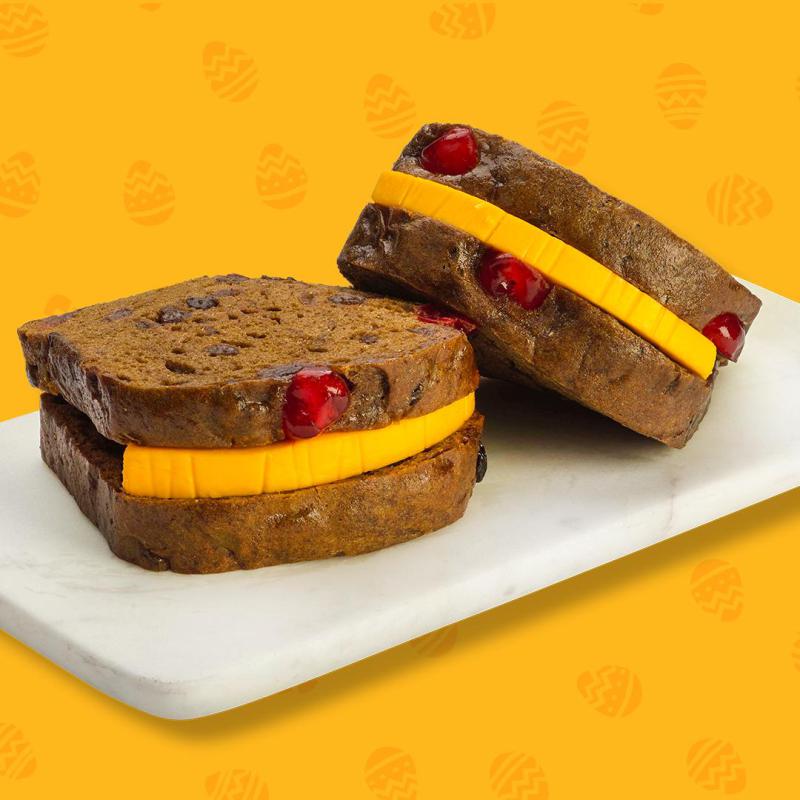
Jamaican Easter Bun and Cheese
The practical explanation makes sense: in a tropical country without reliable refrigeration, processed cheese — sealed in a tin, shelf-stable for months — was one of the few dairy products that wouldn't turn on you by lunchtime.[9] And the flavour just worked. That salty, slightly plasticky tang against the dense, sweet, spiced bun. It shouldn't work. It absolutely works.
Tastee Cheese has been manufactured in Jamaica since February 1968 by Dairy Industries Jamaica Ltd — the first company in the Caribbean to produce processed canned cheese. It's made from New Zealand cheddar through a partnership between GraceKennedy and Fonterra. The yellow tin is so tied to Easter in Jamaica that the holiday genuinely feels incomplete without it.
Source: Tastee Cheese, "History"; Atlas Obscura, "It's Not Jamaican Easter Without Canned, Processed Cheddar Cheese"Try serving bun without cheese in a Jamaican household at Easter. Try it. See what happens. I'll wait.
Chapter VII Big Bun Business
Somewhere along the way, the homemade tradition became an industry. National Baking Company picked up the legendary Hannah Town Bakery — HTB — in the early 1970s, and that brand became the name on the box that everybody recognised.[10] HTB, Purity, Yummy, Maxfield — these brands turned Easter baking into a year-round operation, though the numbers still jump every Lent like clockwork.
How big did it get? Big enough that by the 2020s, National Baking Company was running near maximum capacity and announced a new $70 million production facility.[10] Seventy million dollars. For a bread that a queen once tried to ban. Think about that for a second.
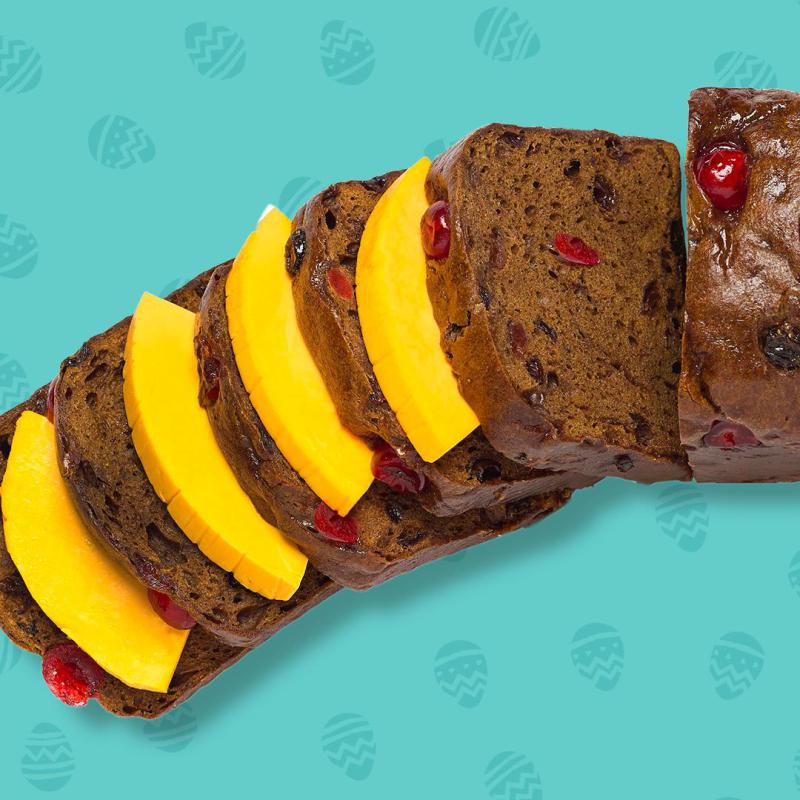
Sliced Jamaican Easter Bun with cheese
Chapter VIII The Barrel to Brooklyn
Jamaicans don't leave home empty-handed. When the big migration waves hit — to England in the '50s and '60s, to New York and Toronto after that — the bun went too. Packed in barrels. Carried as hand luggage. Eventually baked fresh in Caribbean bakeries on Flatbush Avenue and White Plains Road and Utica and wherever else yard people set up shop.
In New York, the tradition stuck hard. Brooklyn. Queens. The Bronx. Every March, the shops fill up with HTB boxes and tins of Tastee Cheese, and older Jamaicans — the ones who left the island thirty, forty years ago — order their bun and "that yellow cheese in the tin" and have what they call an "old-time Easter."[11] The phrase sounds casual. It isn't. It's heavy. It's a whole country compressed into a meal.
"The bun is geography. It's the taste of a place you carry with you, even when that place is 1,600 miles south and thirty years behind you."
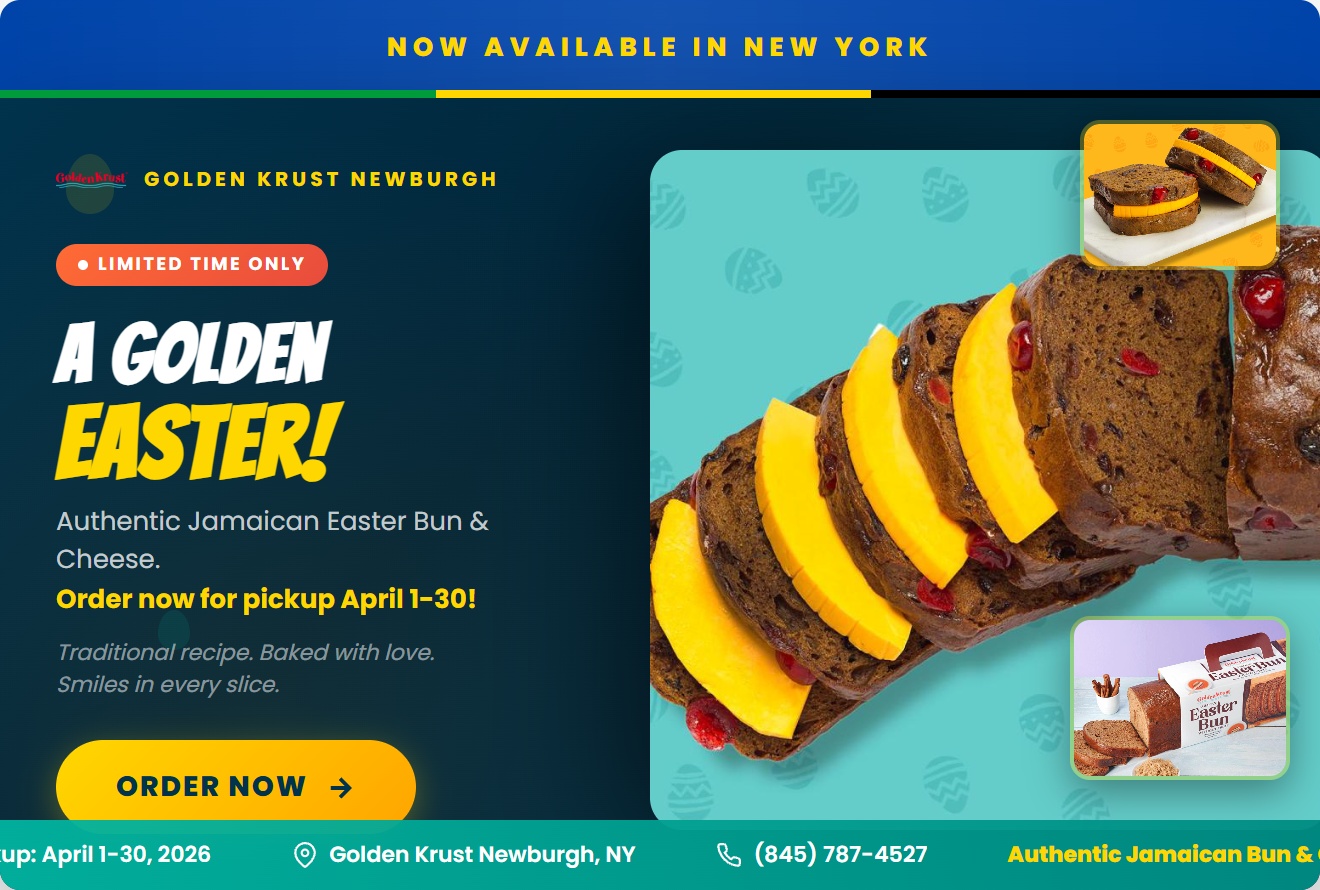
Now the tradition reaches into places nobody would have predicted. Golden Krust — Bronx-born, Jamaican-hearted — ships Easter Bun to Newburgh, New York. The Hudson Valley. You can pick up your Jamaican Easter Bun an hour north of the city, in a town that sits on the river, and the bun is the same bun, and the cheese is the same cheese, and Easter is Easter wherever you carry it.
Chapter IX What You're Really Eating
Zoom out. Look at the whole thing.
Pagan bread baked for a Saxon goddess whose name became "Easter." A 12th-century monk scoring a cross into dough. Elizabeth I making it contraband. English soldiers carrying the tradition across the Atlantic in 1655. Enslaved Africans tearing out the cross, adding molasses and allspice, and baking something entirely their own. A mystery genius pairing it with cheese. Tastee Cheese rolling off the line in 1968. HTB boxes in a barrel heading to Brooklyn. Your plate. Right now. This Easter.
That's four thousand years of gods, queens, enslaved bakers, widows, sailors, and your auntie in the kitchen — all of them, somehow, in that one dark loaf.
So when you cut it open this Good Friday — when you lay that thick slice of cheese across the face of the bun and press it down and take the first bite — just know what you're holding. It's not snack. It's not even tradition, really. It's a whole history of people who refused to stop baking, no matter who told them to stop. Pagans baked it. Christians baked it. Outlaws baked it. The enslaved baked it. Your grandmother baked it. And now it's in your hands.
Eat it slow.
Sources & References
- The Conversation — "Pagan loaves, Christian bread, a secular treat: a brief history of hot cross buns"
- Miss Foodwise — "Hot Cross Buns through Paganism, Christianity and Superstition"
- RavenHook Bakehouse — "The Interesting Story of the Hot Cross Bun"
- Smithsonian Magazine — "5 Great Historical Myths and Traditions About Hot Cross Buns"
- Wikipedia — "Hot cross bun" (Elizabeth I ban of 1592)
- Wikipedia — "Invasion of Jamaica" (1655 British conquest)
- Jamaicans.com — "The Story of the Jamaican Easter Bun and Cheese Tradition"
- SFLCN — "The History of the Jamaican Easter Bun: Tradition, Resilience, and Taste"
- Atlas Obscura — "It's Not Jamaican Easter Without Canned, Processed Cheddar Cheese"
- Food Chain Magazine — "National Baking Company"
- Cuisine Noir — "Jamaican Easter Bun Tradition Remains Spiced in Culture"