
CARIBBEAN |The Empire Sends an Invoice: Braverman’s Grotesque Inversion of the Reparations Debate
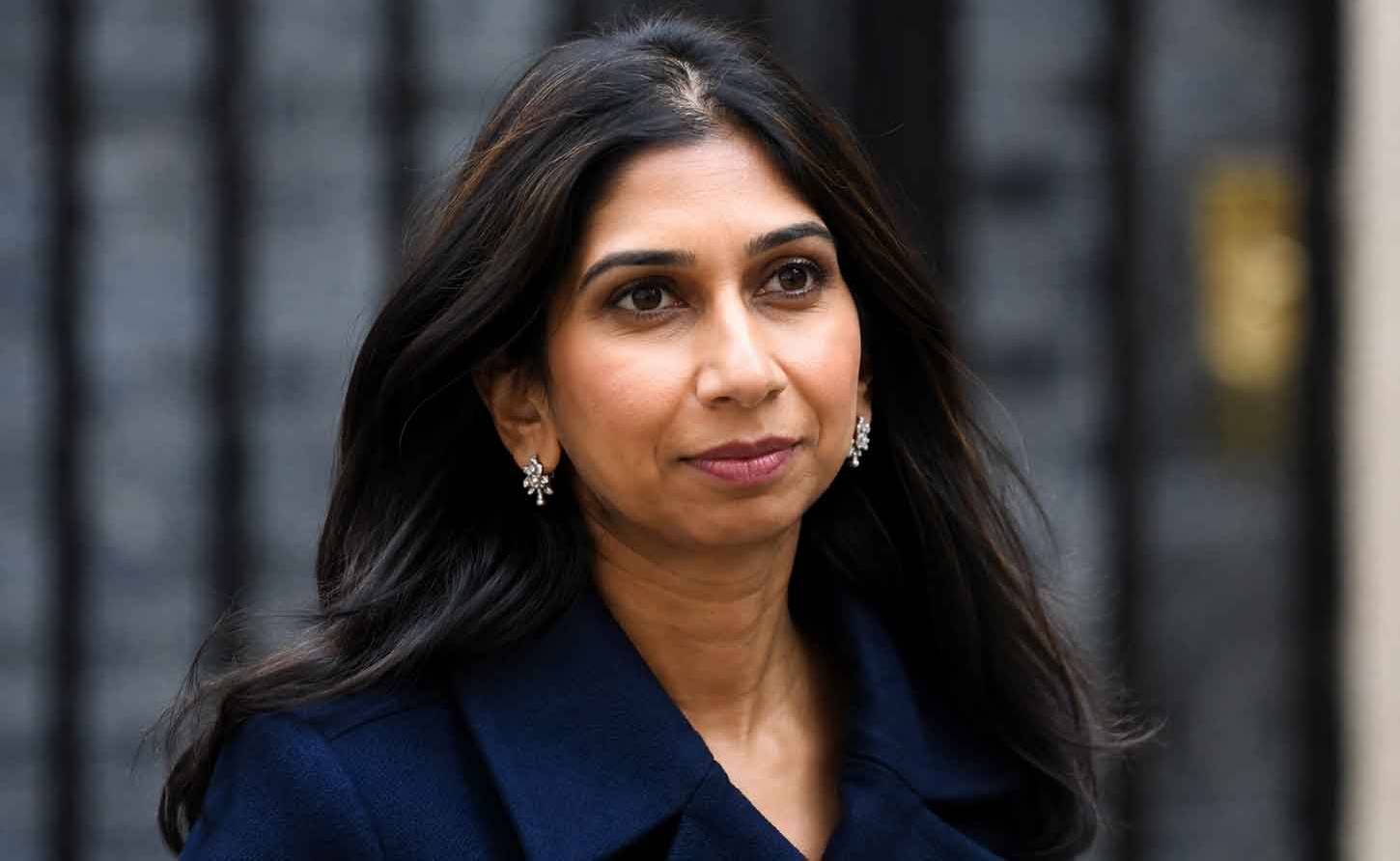
Former British Home Secretary, Suella Braverman
Britain’s former Home Secretary wants the descendants of the enslaved to compensate the empire that grew rich off their ancestors’ stolen labour. History — and the Treasury’s own books — tells a very different story.
MONTEGO BAY. Jamaica, July 6, 2026 - By Calvin G. Brown | WiredJa Opinion | There is audacity, and then there is Suella Braverman. The former British Home Secretary, now a Reform UK MP, took to X on July 3 to declare that “the British Empire did so much good for the world” — and that if anyone should be writing cheques, it is Britain’s former colonies, who ought to repay London for “the considerable investment, effort and contribution” the empire supposedly made in building them.
Read that again. The descendants of enslaved Africans — kidnapped from their homelands, shipped across the Atlantic in chains, worked to death on sugar plantations, and finally “freed” without a farthing — are being invited to compensate the empire that grew fat off their ancestors’ bondage.
It would be laughable were it not so calculated. Braverman’s outburst came in direct response to Labour MP Bell Ribeiro-Addy, who had noted that Jamaica will this year take its case for reparations directly to King Charles III.
Culture Minister Olivia Grange confirmed in Parliament on June 24 that Jamaica will petition the King to refer a set of legal questions on slavery reparations to the Privy Council — a sober, lawful process that has evidently rattled the imperial nostalgists. As Ribeiro-Addy observed, it is getting harder for British institutions to simply ignore the call for repair.
The Cheque Britain Wrote — To the Wrong People
Braverman insists that “to expect the British people of the 21st century to pay for actions that took place in the 18th century has no basis in law.” Her claim collapses under the weight of the British Treasury’s own books.
When Parliament abolished slavery in 1833, it paid compensation — £20 million of it, roughly five per cent of Britain’s GDP at the time and some 40 per cent of the government’s annual expenditure, worth billions in today’s money. Not a penny went to the enslaved. Every farthing went to the slaveholders, as recompense for the loss of their human “property.”
To finance the payout, Britain borrowed. And here lies the fact Braverman would prefer buried: HM Treasury admitted in 2018 that the loan was not fully repaid until 2015. British taxpayers — including, one presumes, Braverman herself, and including Caribbean immigrants of the Windrush generation — were still servicing the slaveholders’ compensation just eleven years ago.
Twenty-first-century Britons paying for eighteenth-century crimes has, it turns out, ample precedent in British fiscal practice. The only question has ever been who gets paid.
The freed, meanwhile, received “apprenticeship” — four further years of forced, unpaid labour until 1838. No land. No wages. No compensation. Nothing.
“British taxpayers were still paying off the slaveholders’ compensation in 2015. The enslaved — and their descendants — have never been paid at all.”
Who Built Whom?
The deeper insult in Braverman’s “investment” thesis is its inversion of the historical ledger. The colonies did not receive Britain’s largesse; they supplied it.
The sugar plantations of Jamaica and Barbados were the crown jewels of the Atlantic economy. By the late seventeenth century, tiny Barbados was generating more trade wealth for England than all of its North American colonies combined; by the eighteenth, Jamaica had become the most valuable possession in the British Empire.
The profits wrung from enslaved African labour financed grand country estates, endowed merchant banks and insurance houses, and — as Trinidadian historian and prime minister Eric Williams argued in Capitalism and Slavery — helped bankroll the Industrial Revolution on which Britain’s modern prosperity rests.
The Legacies of British Slavery project at University College London has traced the 1830s compensation money — some 46,000 claims — into railways, banking dynasties and family fortunes whose names still adorn British institutions today. The empire did not “invest” in the Caribbean.
The Caribbean was the investment, and Britain collected the returns for three centuries. Whatever infrastructure it left behind was extraction plumbing — built to move sugar to the docks, not to develop the societies it bled.
It is upon that stolen foundation that modern Britain stands — the same foundation from which Braverman, herself the daughter of parents who migrated to Britain from Kenya and Mauritius, now lectures the descendants of the enslaved about gratitude.
Jamaica’s Questions Will Not Go Away
Jamaica’s petition asks the Privy Council three questions: whether the forced transport and enslavement of Africans was ever lawful under the fundamental principles of English common law; whether it constituted crimes against humanity under international law for which the UK bears responsibility; and whether Britain is therefore obliged to remedy the Jamaican people for the wrong and its continuing consequences.
These are not slogans. They are legal questions, addressed to the King through his own constitutional machinery — which is precisely why they unsettle the Bravermans of this world. Bluster about imperial benevolence is easy; answering those three questions under law is not.
Braverman is entitled to her nostalgia. She is not entitled to her own arithmetic. The ledger of empire has only ever run one way — and the Caribbean is done pretending otherwise.
— 30 —
