
DIASPORA | Is Jamaica On The Wrong Road? Patrick Beckford Wants Answers —And So Should You
DIASPORA | Is Jamaica On The Wrong Road? Patrick Beckford Wants Answers —And So Should You
A decorated Jamaican public servant is asking the questions this government would rather you didn’t.
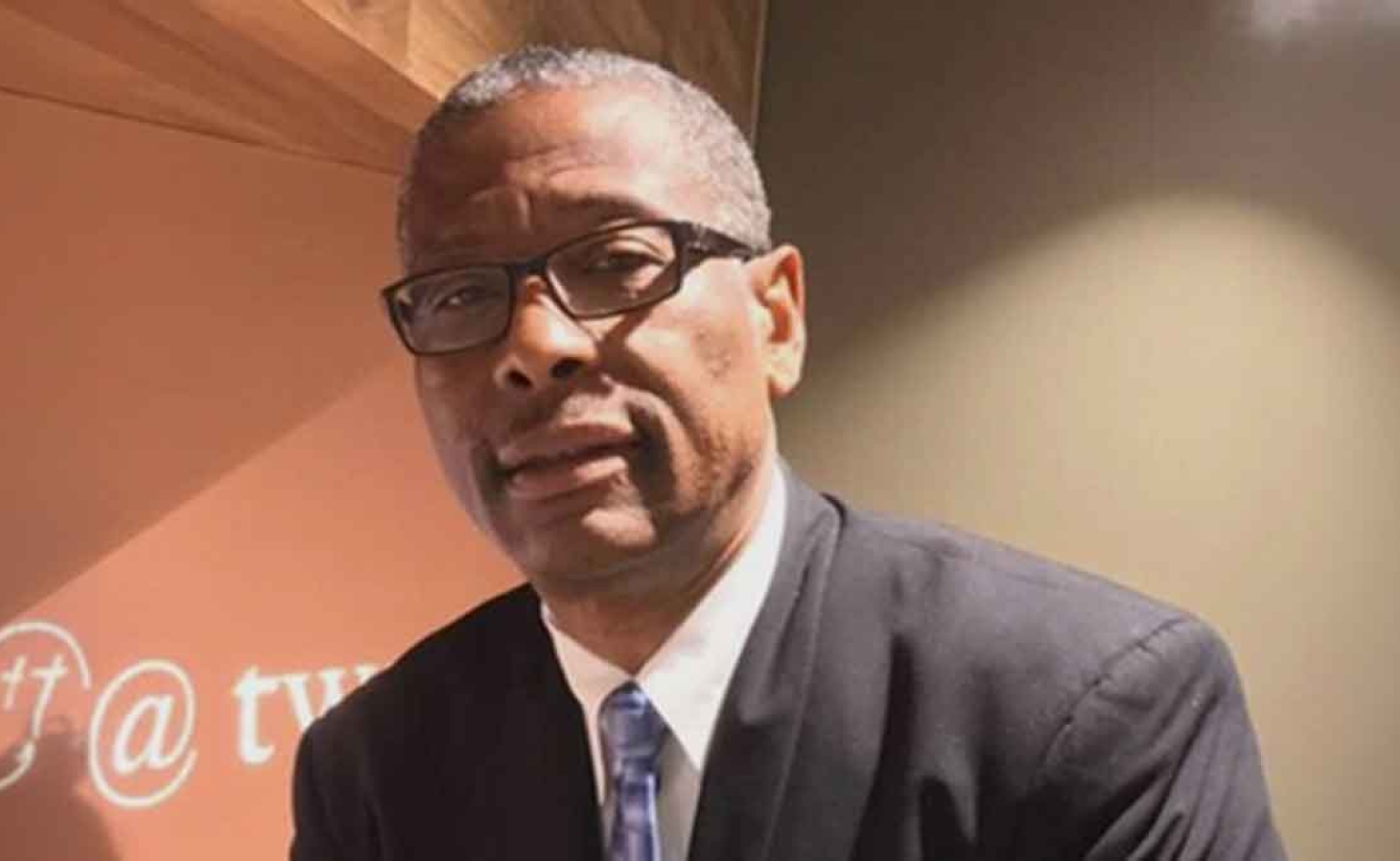
MONTEGO BAY, Jamaica, May 31, 2026 - Patrick A. Beckford OD does not write often. When he does, you listen. A man who has earned his decorations through public service — not political patronage.
Beckford published a commentary this week that should land on the desk of every Cabinet minister, every Opposition parliamentarian, and every Jamaican in the diaspora who has ever sent a barrel home.He titled it simply: “Is My Island Home on the Wrong Path?” It is, in fact, a prosecutorial brief dressed as a question.
The trigger was a headline in the Daily Gleaner: “PM says some of donated hurricane funds will go to the JDF, ODPEM.”
Beckford’s response was measured but devastating. “Perhaps I am missing something,” he writes — with the kind of restraint that signals controlled fury — “but if this report is accurate, many Jamaicans at home and throughout the Diaspora have every right to ask a simple question: Is this truly the best use of funds donated to help hurricane victims rebuild their lives?”
It is a fair question. It deserves a direct answer. It has received none.
“These are not opposition questions. These are not government questions. These are citizens’ questions.” — Patrick A. Beckford OD
Let Us Be Clear About What Is at Stake
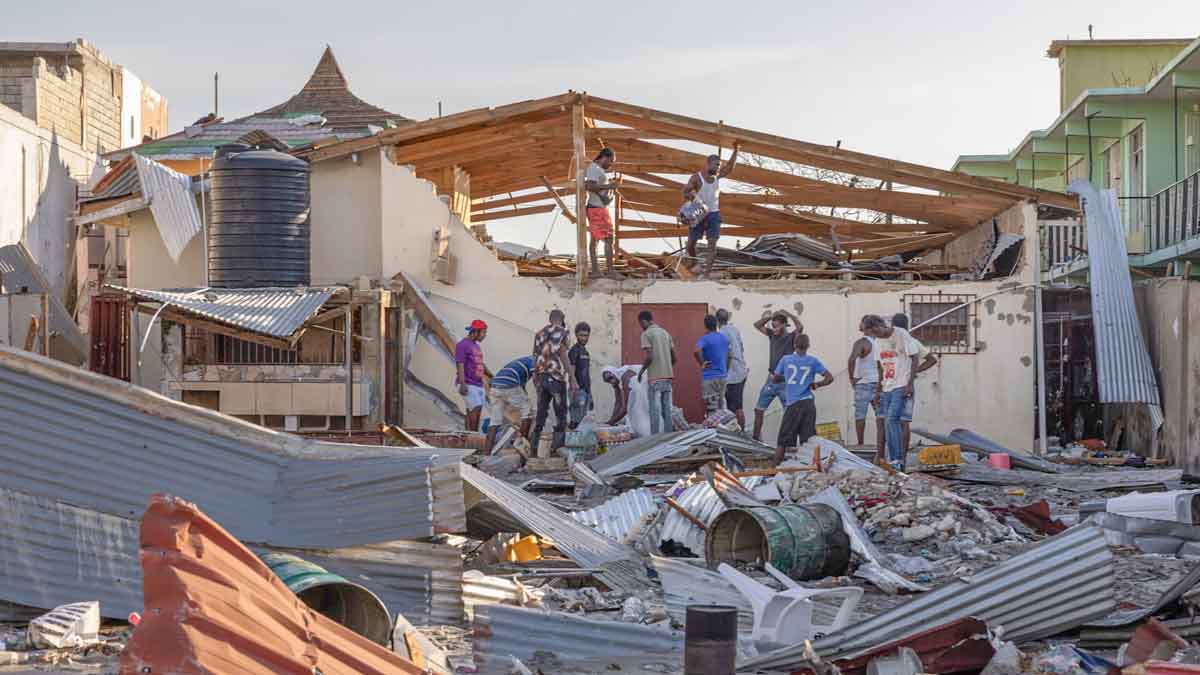
Men gather at a destroyed building after the passage of Hurricane Melissa. Photograph: Ina Sotirova/The Guardian
When Jamaicans in Brooklyn, London, Toronto, and Portmore opened their wallets after Hurricanes Beryl and Melissa, they were not donating to the state’s operational capacity.
They were donating to people — to families sleeping under zinc where glass windows used to be, to farmers watching rotting crops, to grandmothers sitting in community centres weeks after the storm because there was nowhere else to go.
Beckford draws the line precisely: “When thousands of Jamaicans continue to struggle with damaged homes, inadequate healthcare facilities, deteriorating schools, impassable roads, and communities still bearing the scars of Hurricanes Beryl and Melissa, should disaster-relief donations be diverted to agencies already funded through the national budget?”
The question answers itself.
Institutions of Force Before Institutions of Care
Cornwall Regional Hospital still faces challenges. Community health clinics need upgrades. Schools across the island continue to operate in conditions that would embarrass a government that speaks endlessly about development. Many rural roads remain, in Beckford’s own phrasing, “an embarrassment to a country that speaks endlessly about development and growth.”
And yet, the government appears eager to channel donated funds toward institutions of force before fully addressing institutions of care. That is a priority choice. And priority choices reveal character.
The Diaspora Is Not an Inexhaustible Resource
Beckford does not say this with bitterness — he says it with mathematics. “The Diaspora’s ‘money tree’ is aging.” The men and women who sacrificed through the 1970s and 1980s to wire money home, who packed barrels at Christmas, who flew in after every disaster with tools and cheque books — many of them are retirees now.
The generation coming behind them does not feel the same obligation automatically. It must be earned through demonstrated accountability.
Beckford poses the question with the directness of a parent who has run out of patience: “If this were your own child repeatedly demonstrating poor judgment and lack of responsibility, would you continue writing blank checks, or would you insist on accountability before providing additional support?”
That is not rhetoric. That is arithmetic.
The Questions That Remain Unanswered
The accountability questions, Beckford notes, are not new. They are the same questions that have gone unanswered after every national crisis. He lays them out with the precision of a man who has spent a career watching governments dodge: How much money was received from local and overseas donors? How much has been spent? What projects have been completed? Who are the custodians and stewards of these funds? What independent audits have been conducted? What measurable benefits have reached the people for whom the money was intended?
“These are not opposition questions,” Beckford insists. “These are not government questions. These are citizens’ questions.” He is right. And any government that treats citizens’ questions as partisan provocations has already answered the most important question of all.
Admit the Wrong Road and Change Course
Beckford invokes a military principle — apt, given the institutions now apparently in line for these funds: if you discover you are on the wrong road, the worst thing you can do is keep marching simply because you have already traveled far. “Sometimes leadership requires admitting mistakes and changing course.”
That is wisdom. It is also a direct challenge to an administration that has shown a remarkable talent for forward momentum in the absence of direction.
“A nation does not lose its future overnight. It loses it one shrug of the shoulders, one unanswered question, and one act of silence at a time.” — Patrick A. Beckford OD
Patrick Beckford is not silent. He is asking. The government must now decide whether it will answer — or confirm, by its silence, exactly what kind of road Jamaica is on.
— 30 —
