
JAMAICA - HAITI | The Boats In Portland: Jamaica's Test of Conscience, Law and Caribbean Solidarity
JAMAICA - HAITI | The Boats In Portland: Jamaica's Test of Conscience, Law and Caribbean Solidarity
MONTEGO BAY, Jamaica, June 25, 2026 - By O. Dave Allen | The arrival of Haitian migrants on Jamaica's shores is more than an immigration matter. It is a defining test of our conscience, our values and the kind of nation we aspire to be.
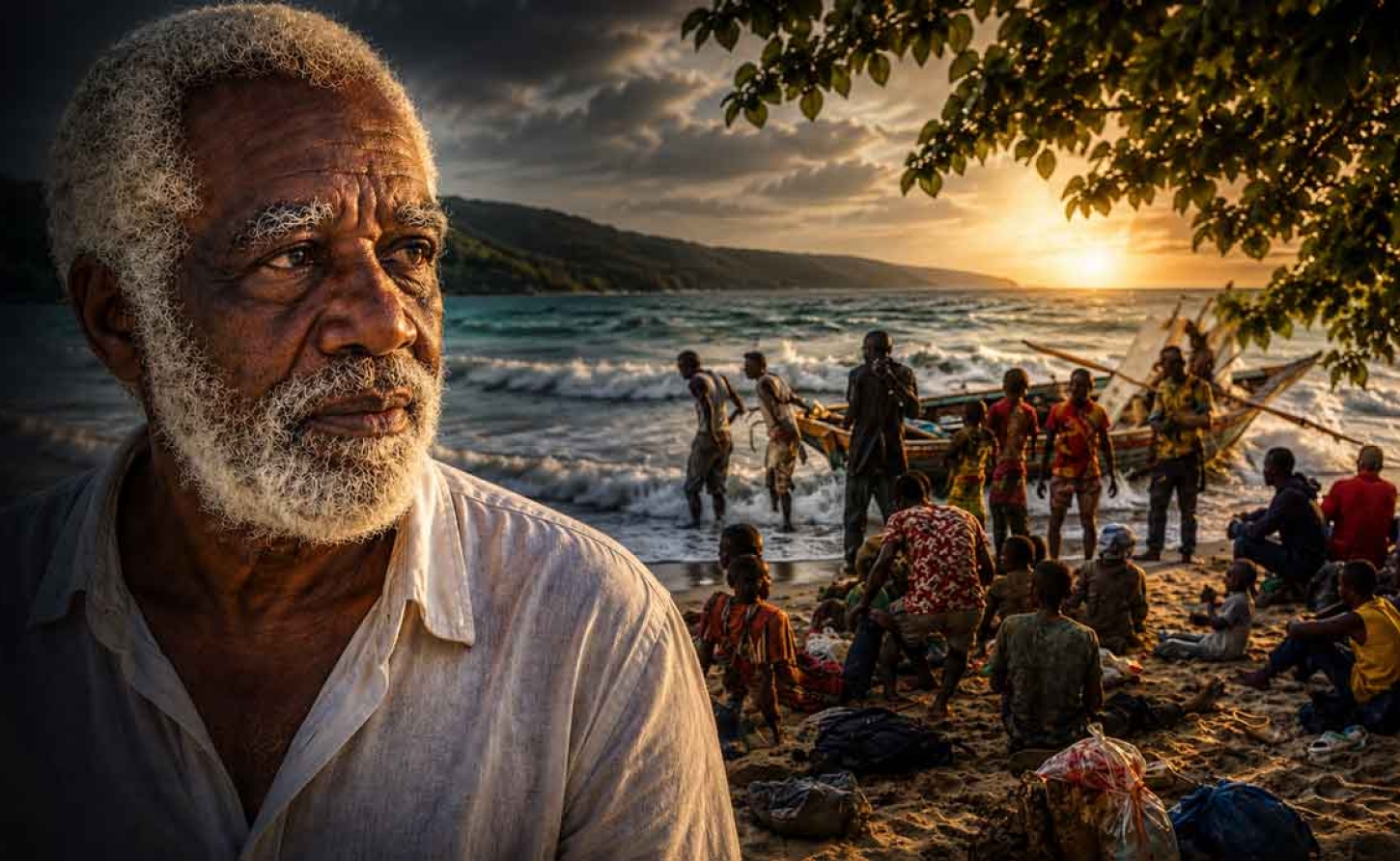
Twenty-eight Haitians, including women and children, recently landed in Portland after fleeing a country engulfed by violence, lawlessness and humanitarian collapse. Their arrival should prompt orderly identification, medical screening and security vetting. No one disputes that.
But it should also summon something deeper — and something our own laws already demand of us: compassion, regional responsibility and a clear-eyed understanding of our legal obligations.
Here is what too much of the public conversation has missed.
The men, women and children who reach our coastline in fragile vessels are not, in the eyes of international law, ordinary immigrants. Many are irregular maritime migrants — and, in a real number of cases, asylum seekers. That distinction is not a technicality. It reshapes what Jamaica is permitted, and required, to do.
A person who crosses a border without a visa to escape persecution and collapse is not defying the law. In an important sense, they are invoking it. The right to seek asylum is recognised in Article 14 of the Universal Declaration of Human Rights, and it is given binding force through instruments Jamaica chose, of its own sovereign will, to join.
Jamaica is a State Party to the 1951 Convention relating to the Status of Refugees and its 1967 Protocol, the foundational legal architecture of refugee protection.
O. Dave Allen
We are also bound by the International Covenant on Civil and Political Rights, which Jamaica ratified in 1975. The Covenant guarantees the right to life, protection from arbitrary detention, and the right to be treated with dignity — guarantees that do not pause at the water's edge or expire because a person arrived by boat.
At the heart of all of this sits a single, non-negotiable principle: non-refoulement.
Non-refoulement means a State may not return a person to a territory where they face serious threats to their life or freedom. It is enshrined in Article 33 of the Refugee Convention, and it is so fundamental that international lawyers regard it as customary law — binding on every nation, whether or not it ever signed a treaty. Jamaica did sign. We cannot now pretend the obligation does not exist.
In practical terms, this means Jamaica cannot lawfully push a boat back to sea, or summarily expel those aboard, without first assessing whether returning them would deliver them into danger. Each person is entitled to have their claim heard individually, fairly, and on its own facts.
None of this strips Jamaica of its sovereignty. We retain every right to protect our borders. We retain every right — indeed, the legal framework itself preserves it — to refuse protection to anyone who poses a genuine security threat, or who has committed serious crimes. The Convention is explicit that those who endanger the host country may be excluded from its protections.
And that exclusion is precisely the point.
The Haitians arriving in Portland are not arriving in chains. They are not being flown in under escort, in leg irons and handcuffs. They are not, by any account, being described as convicted murderers, rapists or violent offenders.
They are families escaping terror.
They are fishermen, farmers, labourers, tradesmen, caregivers and young people searching for safety and a chance to rebuild.
Compare that with the broader, separate question of third-country nationals. There have been reports of discussions between Jamaica and the United States regarding persons removed under American immigration enforcement procedures — individuals reportedly transported under restraint during deportation operations.
Whatever one makes of those arrangements, they belong to an entirely different legal and moral category. They should never be conflated with people exercising a recognised right to seek asylum.
The visual contrast could not be sharper. On one side, vulnerable Haitians in fragile boats, fleeing one of the world's worst humanitarian disasters and protected by treaties we ourselves ratified. On the other, persons being removed under formal deportation procedures by a powerful partner.
That distinction matters. The law draws it. So should we.
There is, too, a contradiction the Government cannot ignore. At the very moment officials tell Jamaicans the country has effectively reached full employment and must import overseas labour to sustain growth, desperate Caribbean neighbours are arriving willing to work, willing to rebuild, willing to contribute.
If Jamaica genuinely needs hands in agriculture, construction, fisheries and caregiving, surely we should first consider those fleeing catastrophe within our own Caribbean family — people whose lawful presence, once status is determined, could ease real labour shortages while restoring their dignity.
This is not an argument for open borders. It is an argument for intelligent, lawful public policy that does what our treaty obligations already require.
Jamaica should establish a transparent emergency framework that grants temporary humanitarian protection while each case is individually assessed, consistent with the Refugee Convention and the ICCPR. Those who pose a security risk should be removed in accordance with law.
Those who qualify for protection should receive it. Those with skills needed in labour-short sectors should be eligible for regulated temporary work permits.
Such an approach would serve everyone. Farmers would gain workers. Migrants would gain dignity and lawful status. The Government would strengthen border management through legal pathways rather than driving desperate people underground. Communities would benefit from orderly integration instead of unmanaged irregular migration.
And no single territory should carry this alone. CARICOM must act collectively — a coordinated regional system of temporary protection, lawful employment, burden-sharing and humanitarian assistance is both the practical answer and the expression of who we claim to be.
Our response to Haiti should reflect our Caribbean identity. Marcus Garvey taught that the destiny of Black people is inseparable wherever they may live. Norman Manley envisioned a Caribbean bound by cooperation rather than division.
Jamaica has long proclaimed regional solidarity in international forums. Those principles now demand practical expression.
Haiti is not a distant country. It is our neighbour. Its revolution inspired freedom movements across the Caribbean and the wider Atlantic world.
And the bond runs deeper than inspiration. It runs in blood, and it runs in debt.
When Haiti broke its own chains, it did not hoard the freedom it had won. It became free soil for the enslaved of the entire Caribbean. Under the constitution of 1816, any person of African descent who set foot on Haitian ground was declared free — and made a citizen.
While our own people were still held in bondage on Jamaican estates, Haiti was the shore they could run to.
Nor did Haiti flinch when the slaveholders came calling. When a slaveholder demanded the return of men who had reached Haitian soil, President Alexandre Pétion refused — holding that by the simple act of arriving they had already become free Haitians, and that slavery could not exist on Haitian land. Haiti gave sanctuary. Then it refused to surrender those who found it.
Remember, too, who helped ignite the Haitian Revolution. Dutty Boukman — the priest whose ceremony at Bois Caïman in 1791 lit the fuse of the only successful slave revolt in history — had been enslaved here in Jamaica before he was sold on to Saint-Domingue. A man forged in this island's suffering helped set Haiti free.
So when Haitians arrive on our beaches today, they are not strangers washed up by an accident of geography. They are the descendants of a nation that once opened its arms to ours — and that once told the slave-catchers, to their faces, that no one who reached its shore would be sent back into chains.
If we are honest about our history, the debt of refuge runs toward Haiti, not away from it.
Its people are now enduring what few Jamaicans would willingly tolerate. If our own citizens were one day forced onto overcrowded boats after a national collapse, we would pray neighbouring nations met them with fairness and humanity — not suspicion alone.
Leadership is measured not only by how firmly a nation secures its borders, but by how faithfully it honours the law and how wisely it balances security with compassion.
The boats in Portland have brought more than migrants. They have brought a legal duty and a moral question to our shoreline at the same moment.
Will Jamaica honour the obligations it freely accepted, and extend a lawful, humane hand to Caribbean neighbours who seek nothing more than safety and honest work?
Or will we reserve our greatest accommodation for arrangements serving the priorities of larger powers, while turning away those closest to us — and those the law tells us we may not simply turn away?
The answer will define far more than immigration policy. It will define who we are.
-30-
