
JAMAICA | When Legal Strategy Meets Political Silence
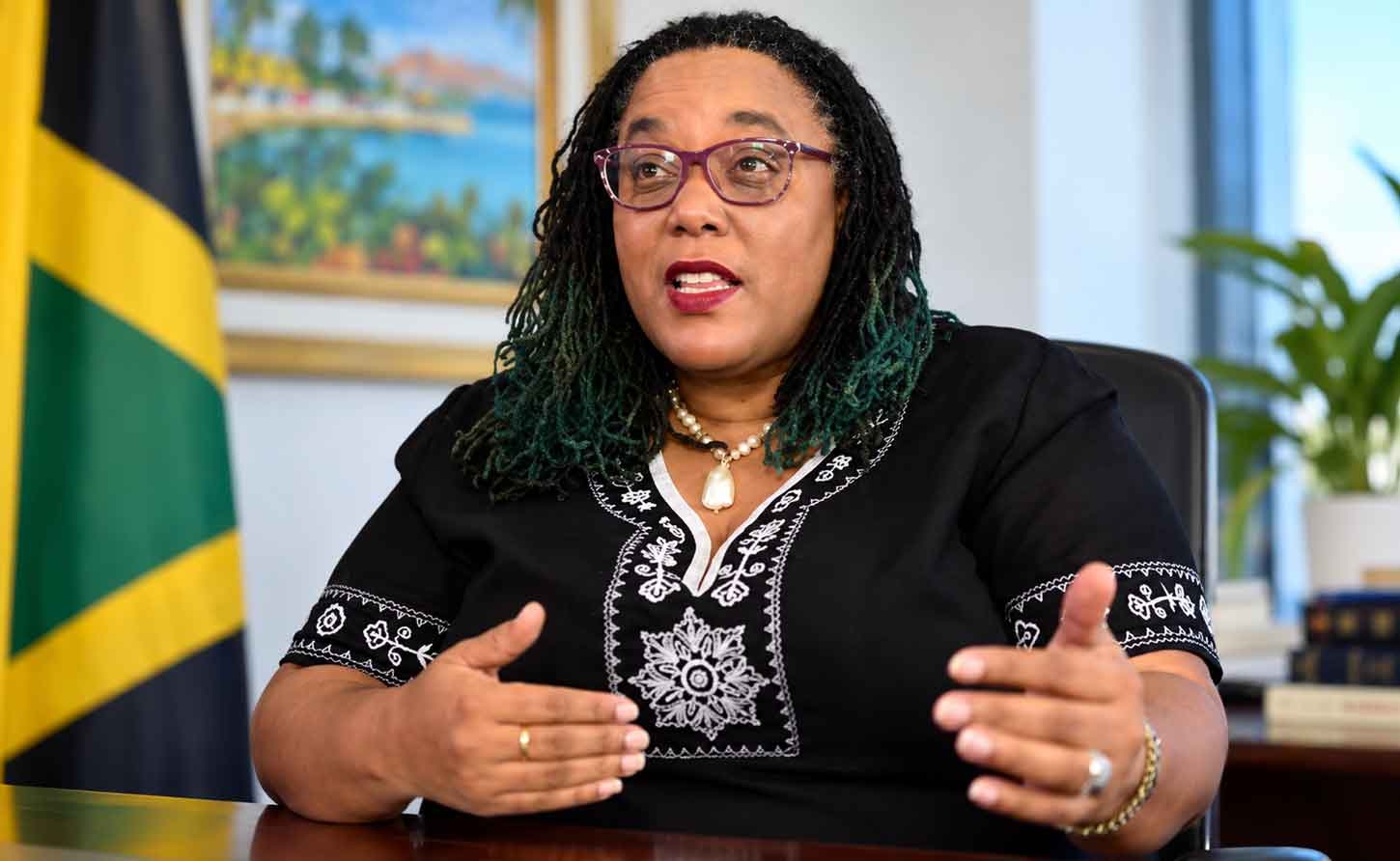
Dr. Deborah Hickling Gordon - specialist in Cultural and Creative Economy Policy
KINGSTON, Jamaica, Sep 11, 2026 | Deborah Hickling Gordon| I have been listening to the hateful, dastardly manipulations of reality being put forward by some members of the UK Media on the matter of the Jamaican delegation's trip to London on a full agenda including serving petition on mattters legal related to Reparatory Justice on His Majesty, the King. While our own tactical missteps have fueled this perspective, the negative UK media perspectives all but ignore the realities of stolen lives, brutalised generations and unpaid labour implicit in the demand for urgent reparations. They deliberately ignore the point.
The British media is notoriously cynical, especially when they find a topic to ride, ride they will. It is our responsibility, however, to look at ourselves and our own processes and determine how best to approach what is a very complex assignment. The first step, perhaps is to acknowlege the disconnect in Jamaica’s recent diplomatic filing to King Charles III highlights a fundamental challenge: high-level legal strategy leaving public communication behind by failing to bring its people along on the development journey.
The delegation, featuring Culture Minister Olivia Grange, astute legal minds like Bert Samuels, and regional heavyweights like former Prime Minister of St Vincent and the Grenadines Ralph Gonsalves did not go to the UK to mount a rogue political campaign. Instead they invoked a specific legal tool: Section 4 of the UK’s Judicial Committee Act of 1833. This provision allows the King, as Jamaica’s constitutional Head of State, to refer unresolved legal and constitutional questions to the Judicial Committee of the Privy Council (JCPC).
This strategy bypasses monetary demands to secure a binding judicial determination. A favorable advisory opinion from the JCPC would establish that transatlantic chattel slavery was unlawful under English common law from its inception, stripping away the argument that slavery was "legal at the time". An unfavorable opinion? Well, we wait to see.
Simply, “we don’t come here to ask you about money, we asking you to explain yourself.” The proof is in the pudding and the pudding must be the answers to the questions when they come!”
Again, I will make the point that not every critical inquiry is ‘partisan political’ or in search of personal attention, nor are they to be seen as a personal affront, but are really only, in fact a desire to have the questions answered. Several of the answers to the questions I asked before have actually been answered by the way this week, but only because they were asked.
I think it is fair to say that there is a disconnect between the technical, legal, bureaucratic and academic approaches to important, complex issues like reparatory justice and the people on whose behalf they are being sought. I also think it is fair to say that there is a real necessity for national communication imperatives and popular connection in these issues. Is to say so ‘partisan political’; in search of personal attention; or a personal affront? No... it is just a perspective.
Mine is that, to build genuine public engagement, reparatory justice must move beyond boardrooms and academic conferences into everyday civic life. A broad political communication strategy with targettep publics inside and outside of Jamaica is required. Every campaign of this magnitude and significance needs a communication strategy.
That would determine the wisdom of a glitzy publicity blitz like what we are seeing... and balance it with the necessary political ground game to build widespread buy in and address the misunderstandings and misgivings that the reparations movement has already attracted, which are sure to be amplified as the campaign builds. Ten years ago I made this same suggestion... to somebody who could have moved the needle, I forget who now. Imagine how much closer to target we would have been with a Jamaican public in tune and in full defense of this project?
So back to the future, now, having asked some pertinent questions, Jamaicans have learned, that, this is not a “Jamaican splinter” approach, and that the petition is deeply integrated into broader regional and international frameworks:
- There is CARICOM Integration: Supported by CARICOM Heads of Government, the filing aligns with the regional 10-Point Reparations Plan.
- Is in keeping with the Global Coalition: Endorsed by Ghana’s leadership, it ties directly into the UN-led drive for reparatory justice for people of African descent.
- And has Multidisciplinary Leadership: Legal strategy (Bert Samuels), historical scholarship (Prof. Verene Shepherd), and political diplomacy (Ralph Gonsalves) and others combine to advance a unified cause.
Despite the soundness of the legal strategy, its execution suffered from significant public relations missteps:
- Tactical Missteps: Handing in a petition at the gates of the home of an absent monarch that created optics that hostile UK media exploited as a “junket” or “begging exercise” - manipulative mendecancy. It is well known that poor tactics can ruffle the perfect strategy.
- Information Vacuum: Information reaching the UK diaspora before being clearly articulated to the public in Jamaica and being fed to Jamaicans after the fact.
- Internal Disconnect: Failing to link overseas legal battles with pressing domestic issues, such as republic status, poverty, and local displacement, leaving the public detached.
Proper communication is the only way to end our own cynicism at home. As we celebrate the yeoman efforts, some of the non-partisan questions of all OUR government, that I have heard, do highlight its own hypocricy on issues that are deeper than a couple of ‘posts’ will fix.
Non attention seeking questions like those from my students include,
“How you going to seek reparations abroad, when you admit to spending less than 2% of money held right here at home to ease the pain and sufferering of the same homeless, landless, hungry, poverty striken people ravaged either by Acts of God almost a year ago and now private sector bulldozing?
(I had not thought of it like that, but our young people do). Or
“Where is the local movement to become a Republic? What’s the update? If you not doing your own work at home, what sends you overseas to seek reparations?”
This one I agree with, save to say, as I explained to them that both sets of work can operate independently of each other, but optimal results would be derived from a holistic approach to both. There is need for a wholesome and holistic political-communications, public education and information strategy that includes and targets publics here and there, including:
Grassroots Engagement: Emulate early movement models, such as those led by Barry Chevannes, using town halls, verandah discussions, and community forums, school visits, audiovisual content, and the full range of communictions options available.
Civic Education Integration: Incorporate reparatory justice and constitutional reform directly into primary, secondary, and tertiary curricula.
Unified National Strategy: Explicitly connect the international legal battle with domestic governance, showing how constitutional transition and local development work hand-in-hand.
Legal precision is essential in international courts, but popular consciousness is built on the ground. Without clear communication, even the most historical legal victory risks remaining an elite academic exercise rather than a transformative national movement. One drives the other. Ask Vybez Kartel who also sought the intervention of the Privy Council - albeit apples and oranges. And if you think VK does not have a movement in play, think again.
There is no use pretending and denying that Reparatory Justice relates to every other discipline but not politics, big ‘P’ and little ‘p’ and that every format of the agenda is political. The separation of ‘power’ is a thin line. Culture is ordinary, not only providing topics for speech making and peer reviews... If there isn't popular understanding then these issues remain exclusive niche topics rather than movements in the making - or is that the point? What's the use of that? How does that move the needle of popular consciousness? Perhaps this is the role that the General, Ralph Gonsalves will bring to the table; as Bert Samuels has led on the legal strategy and Professor Verene has led on the historical, in this inter and multidisciplinary, cross-portfolio matter.
I was in Cuba recently and saw a cultural leader on a verandah engaging with the entire community gathered at a home. With my limited Spanish I gleaned that the discussion was about important national issues. The fervor of the community was palpable. It occurred to me, this is how the revolution was won, one verandah at a time...and that the government should fund it as thier Party would an election. In fact, from a political perspective, the Party that sees the necessity of a new communications approach to these sensitive issues will realise that this one stone can collide with two big birds. Ask Uncle Ralph who has an understanding of these things... he might agree.
*****
Dr. Deborah Hickling Gordon is a specialist in Cultural and Creative Economy Policy and Strategy for Sustainable Development for countries of the Global South; A member of the UNESCO Expert Facility on the Diversity of Cultural Expressions; and Coordinator of the Bachelor of Arts in Cultural and Creative Industries at the University of the West Indies, Mona.
-30-
