
JAMAICA | Holness Called Beenie Man's Relief Claim a Lie. On Pace, He Agrees
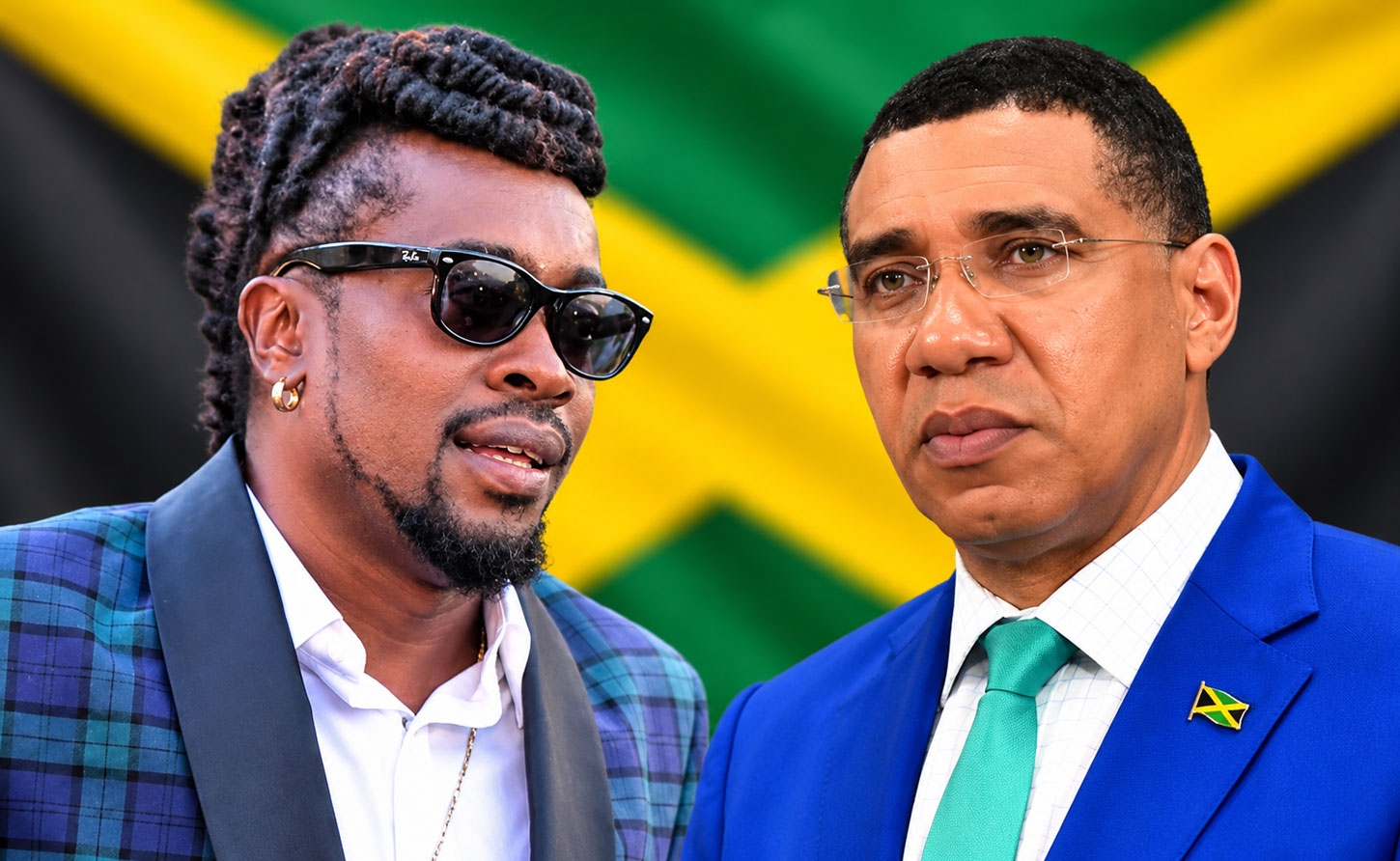
Interrnational Recording Artiste Moses "Beenie Man Davis" and Prime Minister Andrew Holness
Beenie Man told British television that Jamaica's hurricane relief money is not reaching the people it was given for. The Prime Minister called it a lie and questioned the deejay's love of country. But on the pace of relief — the thing families actually feel — Andrew Holness has been saying much the same since April, and said it again in the very speech in which he rebuked the artiste.
MONTEGO BAY, Jamaica, November 2, 2026 - Calvin G. Brown | On Wednesday, October 28, one year to the day after Hurricane Melissa came ashore, Prime Minister Dr Andrew Holness stood in the rebuilt wards of Black River Hospital in St Elizabeth and looked down the guest list. "As I perused the list of invitees," he told the gathering, "I thought to myself the Minister [of Health] neglected to invite Beenie Man because then he would see for himself firsthand how the Government has been spending on the recovery."
The room understood the target. An ITV News interview with Moses Davis — Beenie Man — had been circulating in Jamaica since the day before. Speaking to reporter Cree-Summer Haughton, the deejay said: "This is nothing new that the Government get the money, the Government distribute the money the wrong way. The people who supposed to get the money haven't been getting any."
Holness did not stop at the guest list. "Don't tear down your country," he said. "Don't tell me you love Jamaica, and the first thing you want to do is to tear down Jamaica." And in remarks reported from his two public events that Wednesday — the hospital and the commissioning of the Doppler weather radar at Cooper's Hill — he went further: "It is a lie that was told on Jamaica by someone who benefits from brand Jamaica." Those who benefit from the brand, he said, go abroad and wave the flag to fill their shows while tearing down the country.
His State Minister, Senator Abka Fitz-Henley, piled on the same day, telling ITV the comments were "irresponsible, mischievous and entirely false" and claiming the deejay had campaigned for the Opposition in the last general election.
That is a serious thing for a Government to say about a citizen — that his criticism is a lie, and that a man who makes it cannot claim to love his country. Test it against the record, and the record is awkward for the Prime Minister.
Because the day before Black River, at a press briefing at Jamaica House, Holness said Jamaicans still waiting for help were entitled to expect greater urgency from the Government. He announced a further J$9.65 billion for the ROOFS programme, taking roof-repair spending since Melissa to J$21.65 billion, and set a target of 90 per cent of roofs repaired by year-end. The task now, he said, was "to accelerate the pace at which recovery reaches the families still awaiting."
Families still awaiting. A year on.
Go back further. On September 8, launching the Jamaica Reconstruction and Resilience Oversight Committee, Holness said: "I made it very clear, I am not satisfied with the pace at which we have been able to deliver." He added: "And now we are almost a year past the event, we are now just being able to sign contracts and starting to deliver the houses." In April, speaking to a diaspora conference in New York about the then J$10-billion ROOFS programme, he put it more plainly still: "It is not an issue of the Government not having the resources, it is an issue of the bureaucracy to distribute."
Set aside the stage name and the delivery, and the two men agree on the fact: a year after the storm, the money has been slow to reach the households it was meant for. Where they part is on why. Beenie Man said the Government "distribute the money the wrong way"; Holness, who called that a lie, says the fault is bureaucracy. On the fact itself, the Prime Minister is Beenie Man's best witness.
The deejay was not inventing a grievance. The Auditor General reported in May that the Office of Disaster Preparedness and Emergency Management had spent J$26.2 million — 1.8 per cent — of the J$1.44 billion donated after Melissa, as of February 23, 2026. Donations from Hurricane Beryl, in July 2024, were also found still unspent. Holness himself has said the money came "from Jamaicans and others overseas."
The Government says it has since moved. Holness told the October 27 briefing that donations now total roughly J$1.7 billion, that J$750 million has gone to zinc, lumber, nails and tools for the Jamaica Defence Force to install 575 roofs, and that a further J$800 million is allocated to semi-permanent housing. Fitz-Henley put the roofs at 550. Either way, the donated money is a sliver of the roughly J$85 billion Fitz-Henley says the Government has committed and spent on the recovery.
Holness has an answer, and it is not a weak one. More than J$300 million has gone into Black River Hospital, which now has 180 beds against 150 before. Almost ten health centres in St Elizabeth are being worked on. Electricity, he says, came back in about half the time Puerto Rico needed. Melissa was, in his telling, the most powerful hurricane to have hit Jamaica, "accounting for 54% of our 2024 GDP," and "in a disaster, you can't compare the government response to perfection."
All of that can be true and still miss the point. A hospital is national expenditure; a roof is household relief. Beenie Man was talking about roofs.
The most telling line of the Black River speech was not aimed at the deejay at all. Turning to the grants, Holness said: "I have been on record to say I am not satisfied with the pace of the recovery grants." Then: "I don't need anybody to tell me that. I've seen it for myself." He described a public administration that had become "inflexible" and was "at risk of serving itself rather than serving the people."
So in one speech the Prime Minister conceded the substance of the complaint — too slow, too many families waiting — and called the man who voiced it a liar. The complaint is patriotic when it comes from Jamaica House. It is tearing down the country when it comes from a television interview in England.
He kept at it over the weekend. On Saturday, a Jamaica House statement posted to the Prime Minister's X account was headed "Prime Minister Says False Claims of Public Funds Misuse Are Destructive and Undermine Jamaica's Credibility." It did not name Beenie Man. It did not need to. "We need to correct this false narrative that the government is somehow stealing the money or not using the money appropriately," Holness said at a housing handover in St Catherine. "There is nobody who is going to put up their money in sympathy for Jamaica because we had a hurricane, unless they believe that the systems in Jamaica are institutionally strong. And if we ourselves go and tear that down, then that's it." The country, he said, "needs a re-education" — and it was his job to lead it.
Buried in the same release was the answer to the whole row. The Prime Minister suggested that "making beneficiary lists accessible could help address public concerns about whether assistance is reaching intended recipients." A government confident in its numbers publishes them — who was paid, when, and who is still waiting — and lets a deejay's interview answer itself. Spragga Benz asked for exactly that list. So, on the anniversary, did Opposition Leader Mark Golding, who called the recovery "too slow, too bureaucratic, too disconnected from the people that it's supposed to serve" and noted that "the reconstruction dashboard has never materialised."
Dancehall noticed the double standard. Konshens wrote on Instagram: "Beenie did not tear down Jamaica, he questioned the GOVERNMENT!!" Tanya Stephens asked: "The displaced ppl being neglected nuh satisfied either. Which lie Beenie tell?" Buju Banton rejected the flag line outright — "we do not wave the flag, we are the brand Jamaica." Beenie Man has since previewed a song, "We Di Money Deh", which he says was inspired by "the concerns of Jamaicans still waiting for help."
Holness had a better answer available, and in April he gave it: criticism, he told the New York conference, "is necessary to keep us grounded, keep us on our feet." Six months later a Jamaican who said abroad much of what the Prime Minister says at home was told it amounted to tearing down the country he professes to love.
The deejay may have overreached on where the money went; the Government's October figures say it is being spent, if late. But the question underneath his complaint — why, a year on, are so many roofs still open to the sky — is the one Holness has been putting to his own bureaucracy since April. The only thing that changed at Black River was who was asking.
-30-
