
GUYANA Court Finds Leslie Ramsammy Defamed Enrico Woolford, Clears the Times
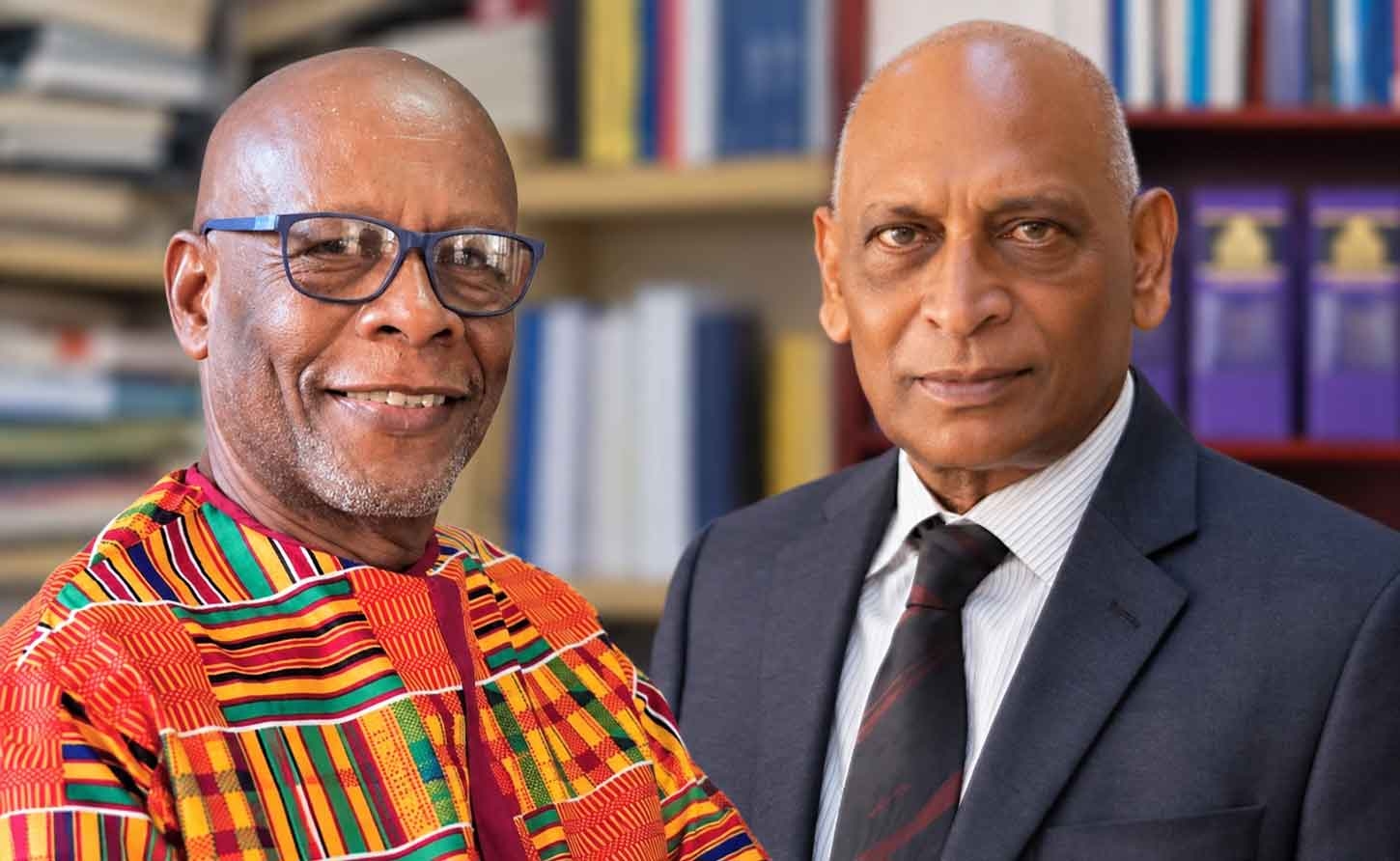
Journalist Enrico Woolford and former government minister Leslie Ramsammy
A single name on a sanctions list, published at the height of Guyana's tabulation crisis, has cost a former government minister G$5 million and an apology he must print himself.
GEORGETOWN, Guyana September 18, 2026 - Calvin G. Brown| It took one line in a newspaper column to do the damage, and six years to undo it. A 2020 column naming the broadcaster among those who rigged the elections costs its author G$5 million, a public apology and a permanent injunction — while the publisher walks free on reportage
On 17 September 2026, Justice Peter Hugh of the High Court of the Supreme Court of Judicature of Guyana ruled that Dr Leslie Ramsammy — former health minister, veteran parliamentarian and columnist — defamed the broadcaster Enrico Woolford by naming him among individuals who were “part of the plot or complicit in rigging” the March 2020 general and regional elections.
The column, “Ramsammy's Ruminations: Caricom, ABCE, Commonwealth, OAS – time for sanctions now, no more patience”, ran in the Guyana Times on 18 March 2020, in print and online, while the vote tabulation was still unresolved. Under the heading “Private sector and Media”, one name appeared: that of the then head of the state-owned National Communications Network.
Justice Hugh ordered Ramsammy to pay Woolford G$5 million in general and aggravated damages, plus $250,000 in costs, with interest running until payment. Within 21 days the columnist must publish a prominent apology and retraction on terms agreed between the parties; failing agreement, they return to court on 23 October for the judge to write the wording himself.
A permanent injunction now restrains both Ramsammy and the Guyana Times from republishing the words, or anything to similar effect.
Where the defence broke
Ramsammy fought on fair comment, truth and qualified privilege, and lost all three. Applying the five ingredients of fair comment set out in Albert Cheng v Tse Wai Chun Paul, the judge found four unsatisfied. Naming a man in a list of people to be sanctioned reads as an unequivocal imputation of personal wrongdoing — what Woolford did, not what the writer thought of him.
The heart of the ruling lies in the gap between bias and complicity. Cross-examination established that government politicians appeared on NCN “before, during and after” the elections while opposition figures featured “now and then”; that Woolford could neither confirm nor deny the imbalance, and did not rebut a bias complaint from Kit Nascimento.
Enough, the judge accepted, to prove Woolford was reasonably perceived as partial — and nowhere near enough to prove he helped rig anything. An honest person, however partisan, might call the coverage slanted; none could travel from slanted broadcasting to knowing participation in electoral fraud. The judge called the leap illogical.
An honest person might call the coverage slanted. None could travel from slanted broadcasting to knowing participation in electoral fraud.
Truth failed on the same ground. Qualified privilege was struck out altogether — pleaded in a single sentence, without the particulars the Civil Procedure Rules require.
The newspaper walks
The quieter half of this judgment may prove the more consequential. Guyana Times Inc. was found to have published the same words — and was cleared anyway.
The publisher succeeded on the Reynolds public-interest defence. The court accepted editor-in-chief Tusika Martin's evidence that the column was handled as attributed opinion, reviewed principally for grammar, and not as an investigative article requiring a pre-publication interview of every person named.
It carried the assertion without adopting it as its own. Its failure to seek Woolford's comment weighed against it; the urgency of a live constitutional crisis and the plainly public character of the subject weighed more.
Woolford's pleadings narrowed his options further. Having filed no Reply alleging malice, he was confined to disputing whether privilege existed at all. It did. The claim against the paper was dismissed, and he must pay it $250,000 in costs — precisely cancelling what he recovers from Ramsammy on that head.
What it settles, and what it does not
Nothing here rehabilitates March 2020; that controversy, and the recount and international pressure that followed, were real. What Justice Hugh has drawn is a boundary around the vocabulary of that period: a columnist may denounce an institution's coverage as biased, but naming a journalist as a conspirator in electoral fraud is an assertion of fact, and facts must be proved.
For Caribbean newsrooms, the split verdict is the lesson. The writer who makes the accusation carries it alone. The publisher who carries it honestly, attributed and unembellished, may be shielded — but reportage is a narrow doorway, and it closes on any editor who makes another man's allegation the house's own.
Woolford was represented by attorney-at-law Eusi Anderson; D. Kissoon, N. Vieira and A. Dev appeared for the defendants.
The clock now runs: twenty-one days, one apology, and a column that will finally be answered in the same newspaper that carried it.
— 30 —
