
DIASPORA | Jamaica's PNP, Borderless Party, Ballotless Citizens
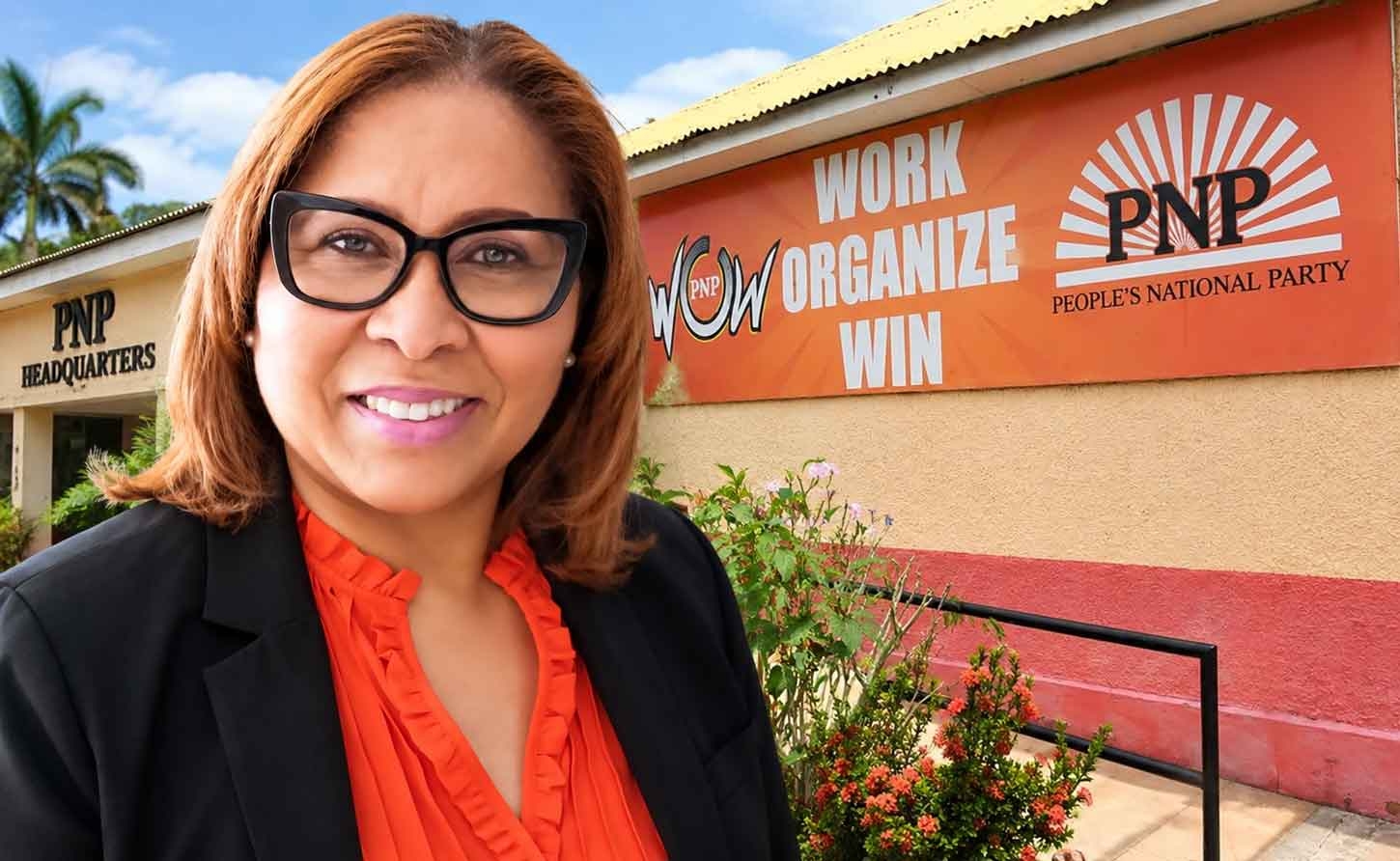
Florida attorney Dahlia Walker-Huntington, Diaspora Region Chair
The PNP has given Jamaicans overseas a region, a chair and six zones. What it has not given them — what no Jamaican government has given them — is a vote.
Kingston, Jamaica — 17 September 2026 - The People's National Party announced on Thursday that its Diaspora Region has elected its first slate of officers, completing a structure that exists nowhere in Jamaican electoral law: a region of a political party with no constituency and no polling division.
Florida attorney Dahlia Walker-Huntington takes the chair. Angella Francis heads the United States zone, Elvis Oliphant Canada, and Calvert Barclay the UK and Europe, with Oliver Falloon-Reid and Dr Michael Wiltshire chairing the southeast and northeast United States divisions.
Six geographic zones now sit alongside the party's six Jamaican regions, folding the old overseas affiliates — the Jamaica Progressive League, the Jamaica National Movement, the PNP-UK — under one banner.
Give the party its due. No Jamaican political organisation has gone this far. P.J. Patterson called Jamaica a borderless country when he convened the first Diaspora Conference in 2004, and two decades of governments since have treated the phrase as a slogan to be dusted off every second June.
Mark Golding opened direct party membership to Jamaicans overseas in 2023 and authorised the seventh region in 2024. That is architecture, not atmosphere. But architecture is not franchise, and the distance between the two is where this story lives.
The arithmetic of absence
On 3 September 2025 the Jamaica Labour Party took 412,705 votes to the PNP's 401,398 — a margin of some 11,300 ballots on a turnout of barely 40 per cent. Comrades abroad watched it on a livestream.
Jamaica's own diaspora research explains why: there are no provision for voting from overseas, and the only route to a ballot box is an airline ticket.
An estimated 1.1 million Jamaicans live in the United States, more than 300,000 in Canada, hundreds of thousands in Britain. Not one could mark an X without first registering to vote, clearing immigration at Norman Manley or Sangster International Airports.
But, they vote anyway, in United States dollars. Remittances reached US$3.49 billion in 2025, close to a fifth of national output and a multiple of foreign direct investment.
When Hurricane Melissa tore through western Jamaica last October, inflows dipped and then surged: December alone brought US$315.3 million, up 13.6 per cent year on year. That was the diaspora's ballot, cast at the Western Union counter.
Remittance without representation is a hard foundation on which to build a region.
Her own standard
The choice of chair sharpens the point rather than softening it. Walker-Huntington was the first elected member of the Jamaica Diaspora Advisory Board in 2004 and has spent twenty years arguing in print that a biennial conference is not engagement, that appointed councils and ministerial investment tours are not engagement either. She must now demonstrate that a party region is something more. The standard she will be measured by is her own.
The objections are not merely defensive, and they deserve a hearing. Sceptics — some of them in the diaspora — argue that citizenship must mean more than a passport, and that Jamaicans twenty years gone, taxed elsewhere and policed elsewhere, should not decide who governs those who stayed.
Proposals for graduated eligibility — keyed to years abroad, frequency of return and economic ties — have circulated for a decade without resolution. The administrative cost is real, as is the worry that party-branded structures overseas will export Jamaica's tribal politics into communities that have largely kept it at arm's length.
Both parties have circled this water for years without swimming. Andrew Holness, in opposition in 2015, urged the Simpson Miller administration to examine the French model of direct parliamentary representation for citizens abroad; his government has said little since.
Golding has argued that dual citizenship should not disqualify a Jamaican from Parliament, but has stopped short of endorsing an overseas vote.
The Constitutional Reform Committee that reported in 2024 contained not one diaspora member and left the citizenship question unresolved. Section 40 still bars Jamaicans who have pledged allegiance to a non-Commonwealth state — which is to say most of Florida and all of Brooklyn — from sitting in the House.
The test the party has set itself
So the test for the seventh region is narrow and answerable. Do its members carry delegates' votes in a PNP presidential election? Do its resolutions bind the National Executive Council, or merely reach it? Will the manifesto pledge of diaspora representation in an expanded Senate survive contact with a Cabinet the party does not yet hold? A region that can raise money and work phone banks is useful to any party. A region that can change an outcome is something else entirely.
Patterson said the country was borderless. The party structure now is. The ballot box is not.
— 30 —
