
JAMAICA | Diaspora Takes Deportee Deal to Capitol Hill: Jamaican-American Demands Congress Probe Secret TCN Pact
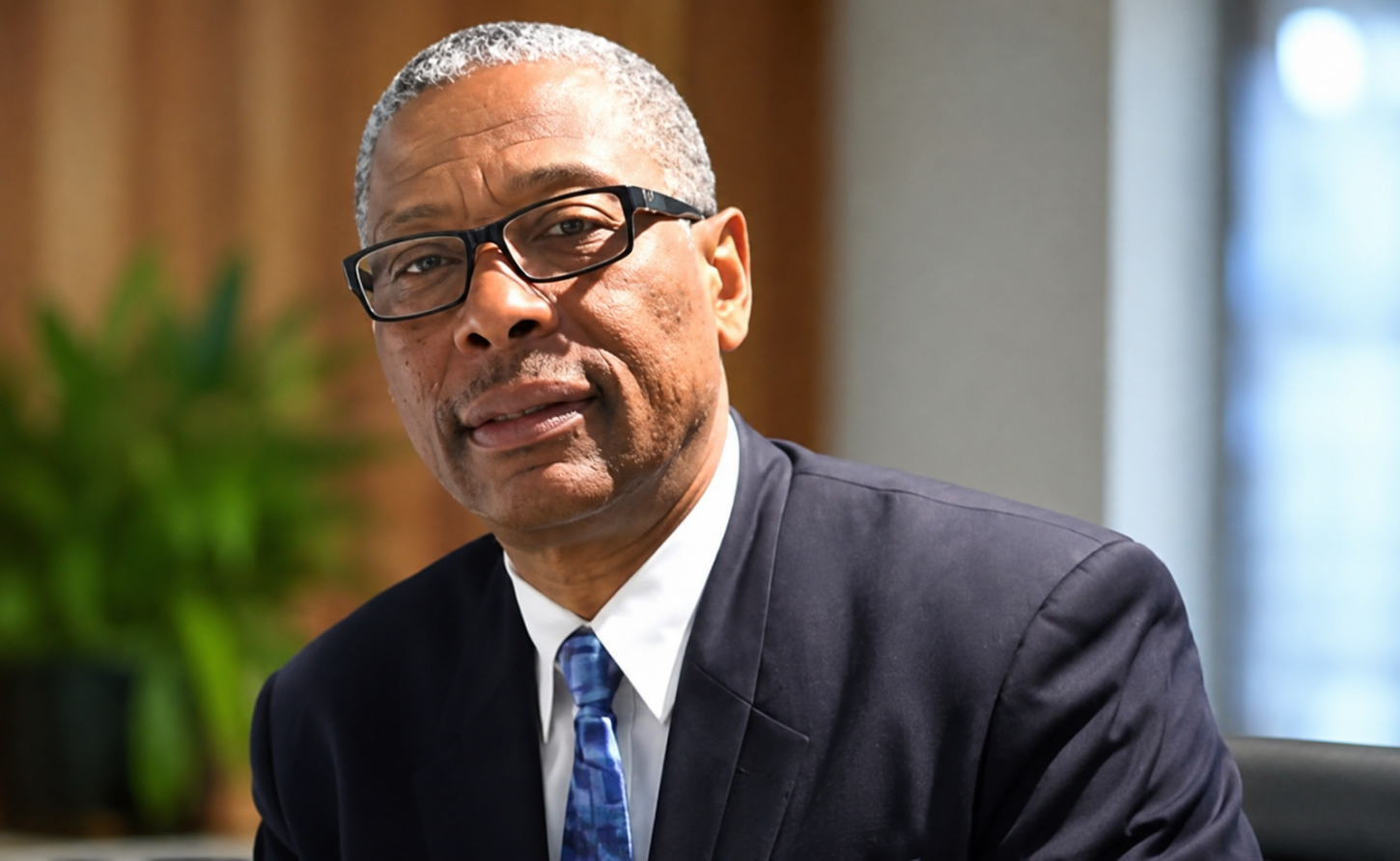
JAMAICA | Diaspora Takes Deportee Deal to Capitol Hill: Jamaican-American Demands Congress Probe Secret TCN Pact
With Kingston stonewalling and Washington silent, New Jersey constituent Patrick Beckford has fired fifteen pointed questions at his senators and congresswoman — demanding the transparency two governments have refused to provide.
MONTEGO BAY, Jamaica, July 5, 2026 - Calvin G. Brown | Caribbean Affairs |The questions Kingston will not answer are now headed to Washington.
Patrick A. Beckford, a Jamaican national residing in New Jersey, has written to United States Senators Cory Booker and Andy Kim and Congresswoman Bonnie Watson Coleman, formally requesting congressional oversight of the memorandum of understanding (MOU) between the governments of Jamaica and the United States for the transfer of third country nationals (TCNs) — an arrangement negotiated in secret, confirmed only after it was exposed by the press, and defended ever since with semantics rather than substance.
Writing “as a constituent of New Jersey, a Jamaican-American, and someone deeply committed to democratic accountability, transparency, and the rule of law,” Beckford is careful to frame his intervention as an oversight request rather than an accusation. But the fifteen questions he poses land like a charge sheet against two governments that have, between them, offered the public remarkably little.
Fifteen Questions Two Governments Won’t Answer
Beckford wants to know whether a formal MOU exists, and if so, whether “the complete document will be made available to Congress and the public.” He asks how many TCNs are expected to be transferred, what categories of individuals are covered — “families, children, asylum seekers, or individuals with criminal convictions” — and how long each will remain in Jamaica.
Then come the questions with teeth. Was any “financial assistance, reimbursement, grant, loan, or other consideration offered, promised, or exchanged” between the two governments? Which officials, American and Jamaican, negotiated and signed the deal? “Which government initiated discussions leading to the agreement?” Was Congress consulted before implementation, and “what legal authority authorizes the Executive Branch to enter into this arrangement?”
Each question strikes precisely where official accounts have been weakest. When Jamaica’s National Security Minister Dr Horace Chang was asked at a post-Cabinet briefing what Jamaica was getting out of the arrangement, he dismissed the question as irrelevant.
When asked which side initiated the deal, his answers appeared to contradict themselves. When asked why deportees could not simply be flown home from the United States — which has direct air links to more than 110 countries, against Jamaica’s two dozen — he called it a “technical issue.”
A Deal Wrapped in Semantics
The Holness administration insists the individuals covered are not deportees at all, merely persons “in transit” — up to 25 every two weeks, held for roughly fourteen days under International Organization for Migration supervision, with transfers paused if more than ten remain on the island within a 30-day window. Yet the MOU itself reportedly uses the word “deportee,” and Amnesty International describes third-country removals in precisely those terms.
The Opposition People’s National Party has warned the arrangement places Jamaica’s internal security, international standing and fragile social infrastructure at severe risk — a risk assumed while thousands of Hurricane Melissa survivors remain without homes.
Beckford’s letter presses on the human dimension the semantics obscure: he demands to know what protections exist to ensure transferred individuals “receive appropriate medical care, legal process, language assistance, and protection of their human rights.” The concern is not academic. Jamaicans remember Orville Etoria, deported by the United States to Eswatini — a country to which he had no connection — before international pressure secured his return home.
“Democratic societies function best when governments operate transparently and remain accountable to the people they serve. Agreements affecting sovereign nations, taxpayer resources, and vulnerable individuals should be subject to appropriate public scrutiny rather than uncertainty or speculation.”— Patrick A. Beckford, letter to Senators Booker and Kim and Congresswoman Watson Coleman
The Diaspora Finds Its Voice
Beckford’s intervention signals something Kingston would be unwise to dismiss: the Jamaican diaspora — whose remittances remain a pillar of the national economy — is no longer content to watch this controversy from the sidelines. “The Jamaican-American community has long maintained strong cultural, economic, and civic ties to both countries,” he writes. “Many of us simply seek factual information so that public discussion may be guided by evidence rather than rumor.”
There is a deeper irony here. It may take the United States Congress — through the very oversight mechanisms Beckford has now invoked — to extract answers that Jamaica’s own Parliament and press have been denied. A US federal district court struck down the third-country removal policy as unlawful in February 2026, though it continues pending appeal; congressional scrutiny could yet expose the full architecture of a deal both capitals seem determined to keep in shadow.
“This is not about politics — it is about accountability,” Beckford insists. “Transparency strengthens democracy.” Two governments now have the opportunity to prove they agree. Their silence, so far, speaks for itself.
— 30 —
