
JAMAICA | Government Hoards Legal Aid Funds While Poor Jamaicans Forfeit Their Rights, MP Jess Warns
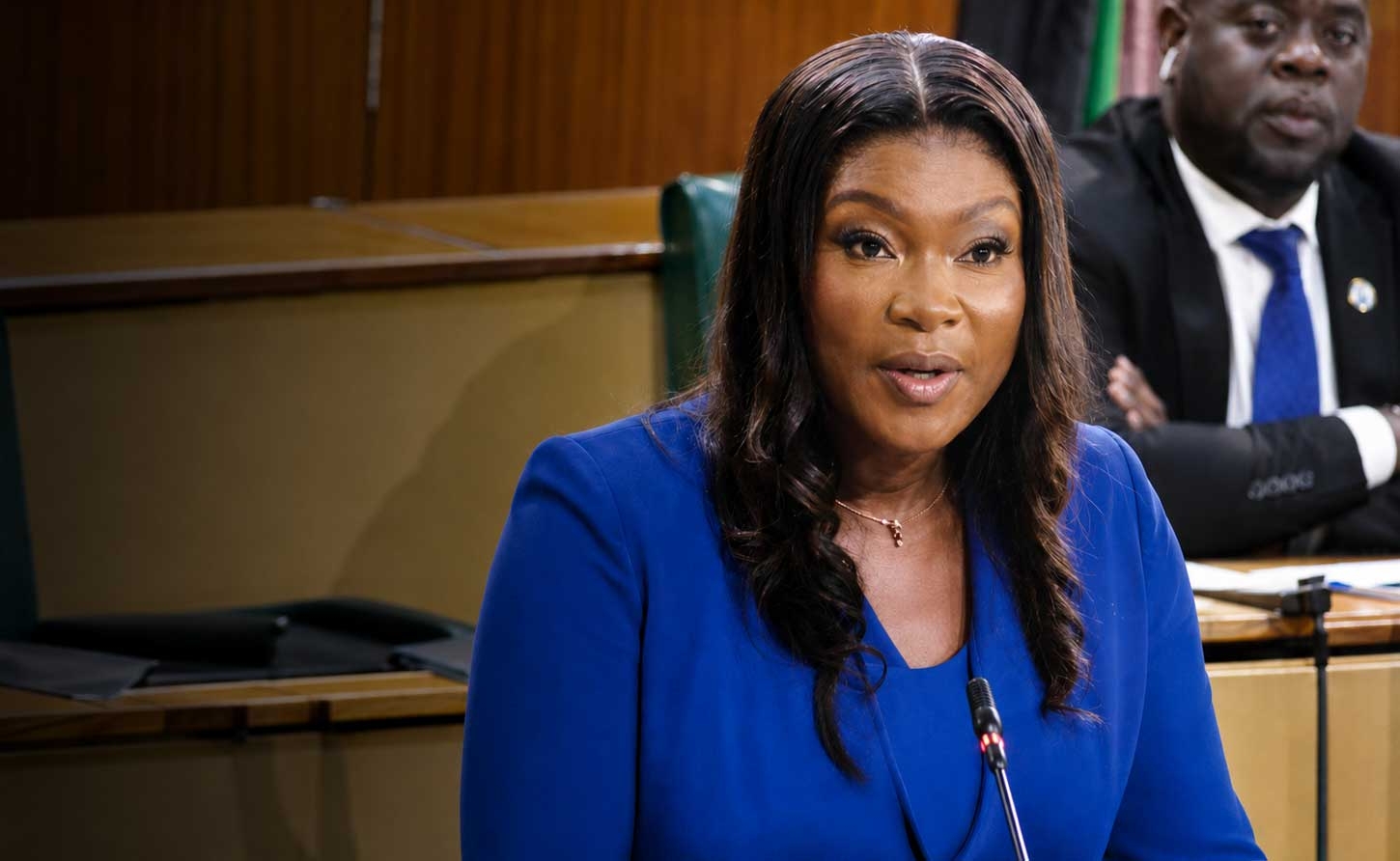
Opposition Spokesperson on Justice Zuleika Jess
The Ministry of Justice has the money. The Minister has admitted it publicly. Yet thousands of Jamaicans — most of them domestic abuse victims seeking divorce — face the courts alone, priced out of justice by an administration that has chosen inaction over intervention.
KINGSTON, Jamaica — June 6, 2026 — The Jamaican Government is sitting on the fiscal space to expand legal aid to civil cases while tens of thousands of poor Jamaicans — overwhelmingly women fleeing domestic abuse — navigate the courts without a lawyer, unable to pay the fees that stand between them and justice. That damning verdict was delivered on the floor of Parliament this week by Opposition Spokesperson on Justice Zuleika Jess, who revealed that the Minister of Justice had publicly confessed to the Standing Finance Committee that the money exists. The Government has simply chosen not to spend it.
Ninety Per Cent of Requests. Zero Funding.
The numbers are stark. Ninety per cent of all requests received by the Legal Aid Council are for civil matters, Jess told Parliament during her sectoral contribution on Wednesday. Yet legal aid in Jamaica remains almost exclusively reserved for criminal cases — leaving the overwhelming majority of those who seek help empty-handed.
Jess cited the Chief Justice's Civil Division Statistics Report, which records more than 16,000 new civil cases filed in Parish Courts every year. In up to 70 per cent of those cases, at least one party has no legal representation. The majority of civil legal aid requests, she noted, come from victims of domestic abuse seeking divorce — women at their most vulnerable, pitted against a system they cannot afford to navigate alone.
“The money is sitting in the treasury. The Minister has publicly confessed that the fiscal space exists. Yet this administration lets those funds sit idle while poor Jamaicans are crushed by legal fees or forced to forfeit their rights. Access to justice cannot be a half-measure.”— Zuleika Jess, MP, Opposition Spokesperson on Justice
A Choice, Not a Constraint
What elevates Jess's charge from political rhetoric to prosecutable accountability is the source of the admission. The Minister of Justice did not deny the need. He did not cite empty coffers. At the Standing Finance Committee, he acknowledged — on the record — that the Ministry has the fiscal space to extend civil legal aid. He simply hasn't moved.
That is a policy choice. And Jess named it as one. "This is a betrayal of the poor," she declared — framing the Government's inaction not as an unfortunate resource gap but as a deliberate decision to let vulnerable Jamaicans fend for themselves in courts designed by lawyers, for lawyers, at prices ordinary citizens cannot pay.
The constitutional principle is not complicated. Access to justice is not a privilege. In a functioning democracy, the inability to afford a lawyer should not mean the forfeiture of one's rights. Jamaica's legal architecture acknowledges this — hence the Legal Aid Council's existence. But when 90 per cent of those knocking on the Council's door are turned away from the civil aid they need, the architecture becomes a facade.
A Cardboard Cutout and a 15-Year Sentence
The legal aid crisis was not the only scandal Jess laid before Parliament. She raised the case of a music producer sentenced to a mandatory minimum of fifteen years in prison — for possessing imitation firearms used as props in music videos. Props. Not weapons. Not contraband. Stage dressing for an art form.
The case exposes a grotesque flaw in the Firearms (Prohibition, Restriction and Regulation) Act. The law, as written, sweeps imitation firearms into its mandatory minimum provisions — stripping judges of any discretion to distinguish between a music producer's stage props and a gangster's arsenal. The law does not know the difference. A court was forced to impose 15 years anyway.
More telling still: the state's own forensic resources were deployed to conduct ballistics tests on a cardboard cutout of a firearm. The absurdity is not incidental — it is the logical conclusion of mandatory minimum legislation written without proportionality, without judicial wisdom, and without mercy.
State prosecutors and defence attorneys — adversaries by profession — found themselves standing together in agreement that the law is unjust. When both sides of the courtroom say a law is broken, Parliament is obligated to listen.
Restore Judicial Discretion — and Do It Retroactively
Jess's call was unambiguous. Parliament must amend the Firearms Act to restore full sentencing discretion to judges — and any amendment must be applied retroactively, so that those currently imprisoned under the unjust provisions can have their sentences reviewed. The state does not repair broken justice by fixing the law only prospectively. Those already caught in the gears of a defective statute deserve recourse.
This is not a soft-on-crime argument. Judicial discretion is not leniency — it is the mechanism by which courts distinguish the genuinely dangerous from the technically guilty. A law that cannot make that distinction is not justice. It is arithmetic.
The Accountability Test
Together, both issues — the legal aid betrayal and the mandatory minimum injustice — sketch a troubling portrait of a Ministry of Justice that has lost its moral compass. A ministry that hoards funding for civil legal aid while domestic abuse survivors face their abusers in court without counsel. A ministry that watches a music producer serve a 15-year sentence for a cardboard cutout while both the prosecutor and the defender call the law unjust.
The Minister of Justice owes Parliament — and the Jamaican public — direct answers. Why, if the fiscal space exists, has civil legal aid not been expanded? When will the Firearms Act be amended to restore judicial discretion? And what steps are being taken to review the sentences of those already jailed under a law that Parliament itself may soon concede is broken?
Access to justice is the bedrock of every other right. Without it, the poor do not merely lose their cases — they lose their faith in the institutions built to protect them. Jamaica's justice system cannot afford that deficit. Neither can its Government afford the silence.
— 30 —
