
JAMAICA | Paulwell Demands Accountability After Islandwide Power Failure
JAMAICA | Paulwell Demands Accountability After Islandwide Power Failure
Ten years after a prime ministerial promise failed to hold, Jamaica's broken power grid has once again exposed the gulf between political rhetoric and the reality facing ordinary citizens
KINGSTON, JAMAICA. JUNE 6, 2026. At 9:02 PM on Friday June 5, 2026, Jamaica was plunged into total darkness. Every parish. Every household. Every business. The government, specifically the Prime Minister, must come clean and clear on cause of the system failure, responsible for the islandwide blackout. Bewildered and frustrated, every family is asking the same question: how, in 2026, does this still happen?
Fourteen hours later, full power had still not been restored. What Jamaicans received in its place was the political currency this government trades in most fluently — vague reassurances, appeals for patience, and the conspicuous absence of hard answers.
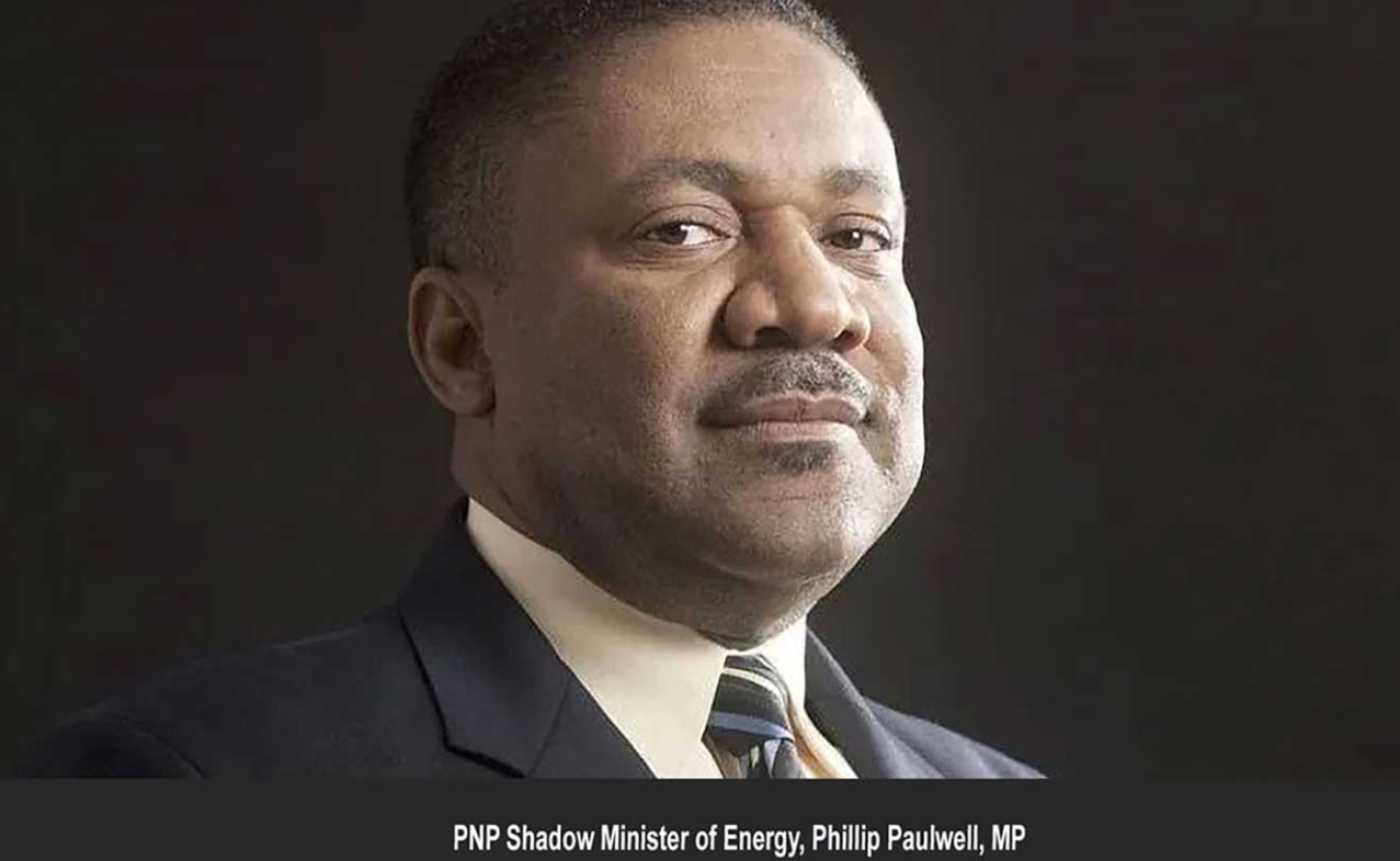
Opposition Energy Spokesman MP Phillip Paulwell is refusing to let that stand. "Jamaicans cannot be asked to simply endure darkness and move on," Paulwell said bluntly. "The OUR must account for what was done with the 2016 recommendations. If they were implemented, why are we here again? If they were not, who is responsible for that failure of oversight?"
The Promise That Wasn't Worth the Airtime
Jamaica has been here before. In August 2016, a near-identical island-wide blackout crippled the nation. A formal probe was launched. Recommendations were submitted to the Office of Utilities Regulation. And the Prime Minister — in a nationwide address — gave his word to the Jamaican people that the vulnerabilities would be fixed. That this would not happen again.
That was ten years ago.
Which makes the central question brutally simple: were those 2016 recommendations ever implemented? Because if they were, the system failed regardless — and Jamaicans deserve to know why. If they were not, then this government presided over a decade of deliberate inaction on critical national infrastructure, and the darkness on Friday night is not a natural disaster. It is a policy failure. It is a governance failure. And someone must answer for it.
What Caused the Blackout? Jamaica Still Doesn't Know
As of this writing, no authoritative, detailed explanation has been offered to the public. The suggestion that lightning may have been the initial trigger raises more questions than it answers. Caribbean nations live with lightning. They live with storms. Infrastructure that collapses at the first atmospheric provocation is infrastructure that was never properly hardened in the first place.
Paulwell is pressing for clarity on a more alarming possibility — could this have been a cyber attack? It is not an outlandish question. Critical infrastructure across the world has increasingly become a target for state and non-state actors. The fact that no official has categorically ruled it out — or committed to a timeline for making that determination public — is itself cause for concern.
JPS must publish a full, transparent account of what happened on Friday night. The OUR must explain, on the record, what became of the 2016 probe recommendations. And Prime Minister Andrew Holness must address this nation — not with the practiced calm of a politician managing optics, but with the specificity and accountability that a people left in the dark are owed.
The Arithmetic of Darkness
The human cost of this failure is not abstract. Businesses across Jamaica haemorrhaged revenue through the night and into Saturday. Households lost refrigerated food — a catastrophic blow in communities already stretched thin. Hospitals strained under emergency conditions, placing vulnerable patients at risk. Airports descended into disarray, rippling disruption across thousands of travellers.
These are not inconveniences. They are the compounding penalties that ordinary Jamaicans pay — in spoiled food, in lost wages, in medical risk — every time the nation's infrastructure is allowed to decay while those in authority make promises they never intend to keep.
"The economic and social cost of island-wide blackouts falls hardest on ordinary Jamaicans," Paulwell noted. "This cannot become a cycle of failure, probe, silence, and repeat. Accountability is not optional. It is owed."
Building Back with Resilience — Or Building Back the Same Lies?
There is a particular irony in the fact that "resilience" has become a cornerstone phrase in Jamaica's post-Hurricane Melissa political vocabulary. Resilience in tourism. Resilience in infrastructure. Resilience in national recovery. Ministers have deployed the word at every podium and in every press release.
Friday night's blackout is the definitive verdict on that rhetoric.
If this is what resilience looks like — a grid that collapses island-wide, that leaves fourteen hours of darkness in its wake, that offers no clear cause and no firm restoration timeline — then Jamaicans are entitled to ask whether the word means anything at all in the mouths of those who use it most.
What MP Paulwell Is Demanding
Paulwell has put the government on notice. He is calling for:
- An immediate, detailed public statement from Prime Minister Holness on the cause of Friday's failure and a firm timeline for full restoration
- An urgent report from the OUR detailing precisely what actions were — or were not — taken following the 2016 probe recommendations
- A full, transparent account from JPS of the sequence of events that led to total grid collapse
- A formal public determination on whether the failure was mechanical, systemic, or the result of a cyber attack
- Binding commitments — not political promises — to address the infrastructure vulnerabilities this blackout has once again exposed
A Nation Deserves Better
Jamaica is not a small island without resources. It is not a nation without technical capacity. It is a nation whose citizens have watched a government promise, year after year, that the failures of the past will not be repeated — and then watched, in darkness, as they are.
The cycle Paulwell describes — failure, probe, silence, repeat — is not incompetence alone. Incompetence can be fixed. This pattern, sustained across administrations, across OUR reports, across prime ministerial addresses, begins to look like a structural indifference to the lives of ordinary Jamaicans.
That indifference has a cost. Friday night, every household on this island paid it.
— 30 —
