
ST. LUCIA | The Court They Built But Won’t Use: Youth Advocate’s CCJ Tribute Holds a Mirror to CARICOM’s Leaders
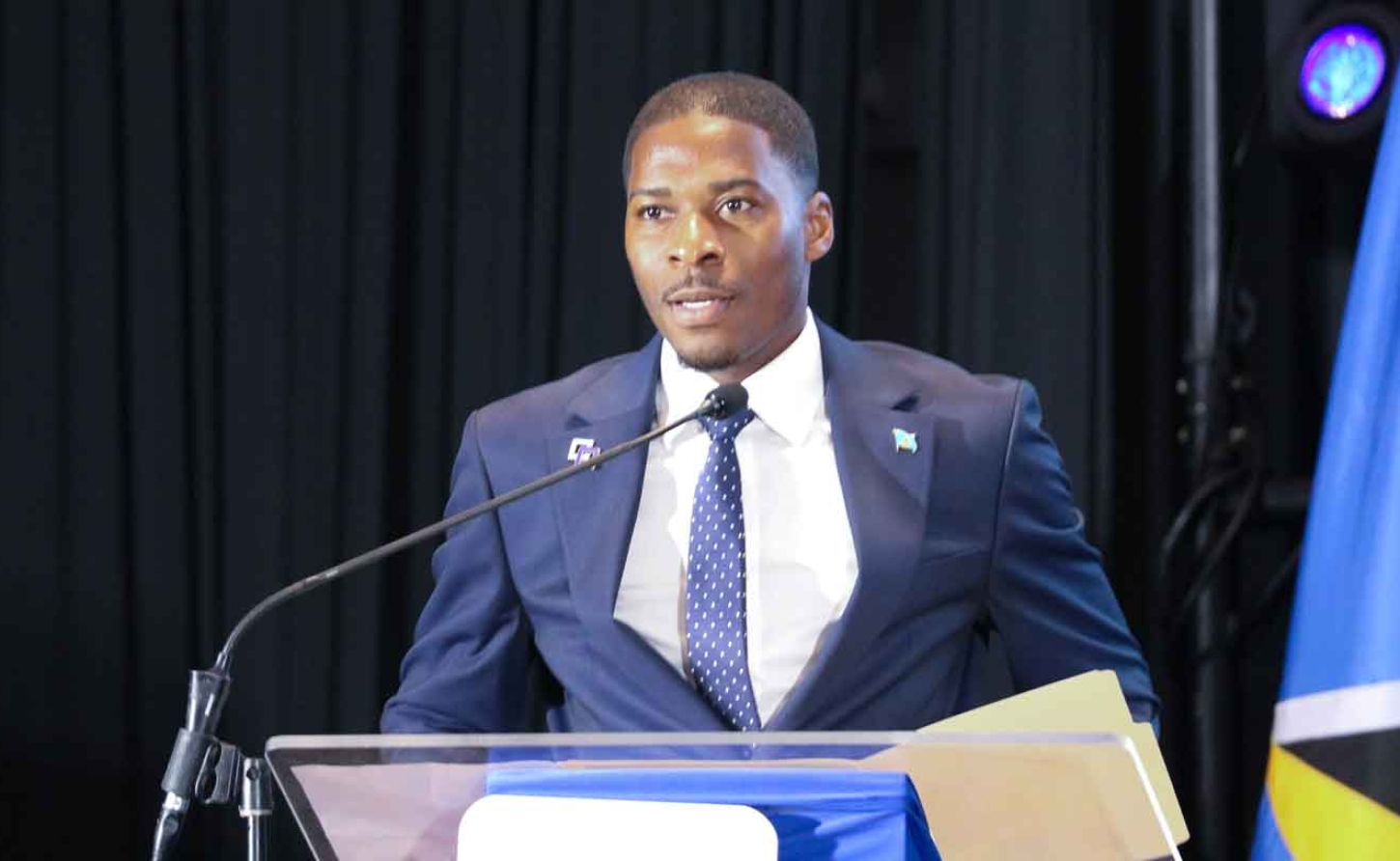
Saint Lucian youth advocate Rahym R. Augustin‑Joseph
At the opening of CARICOM’s 51st Heads of Government Meeting in Saint Lucia, Rhodes Scholar Rahym R. Augustin-Joseph celebrated the Caribbean Court of Justice as proof of what the Community can build — and, in doing so, exposed the uncomfortable truth that most member states still refuse to use it.
GROS ISLET, Saint Lucia —By Calvin G. Brown | WiredJa News | 6 July 2026 - When Rahym R. Augustin-Joseph rose to address the Opening Ceremony of the 51st Regular Meeting of the Conference of CARICOM Heads of Government on Sunday evening, the region’s leaders might have braced for the customary garnish of youthful optimism.
What they received instead was something far sharper: a tribute to the Community’s finest achievements that doubled, line by line, as an indictment of their collective failure to finish what they started.
Chief among those achievements, the Saint Lucian youth advocate and Commonwealth Caribbean Rhodes Scholar declared, was the Caribbean Court of Justice (CCJ) — the institution he singled out as the clearest evidence that regional integration can deliver for ordinary people.
“It is this CARICOM that has created the Caribbean Court of Justice, in its original and appellate jurisdiction, ensuring that justice is cost-effective, of quality, and accessible to all people, regardless of their socioeconomic circumstance, and which dispenses justice that is blind, but not tone deaf, to the realities of our people,” he told the gathering.
The Praise That Stings
The words were celebratory. Their implications are anything but. More than two decades after CARICOM brought the CCJ into being, only five of the Community’s fifteen member states — Barbados, Guyana, Belize, Dominica and, since 2023, Saint Lucia itself — have adopted the court’s appellate jurisdiction.
The rest, including the region’s two largest anglophone states, Jamaica and Trinidad and Tobago, continue to send their final appeals across the Atlantic to the Judicial Committee of the Privy Council in London.
The irony compounds itself. The CCJ sits in Port of Spain, in a country that funds and hosts a final court its own citizens cannot fully access. Jamaica, whose jurists helped conceive the institution, still routes its most consequential legal questions through a colonial-era tribunal an ocean away.
Every time a young Caribbean advocate praises the CCJ for making justice “accessible to all people, regardless of their socioeconomic circumstance,” the region’s holdout capitals should hear it for what it is: a polite reminder that access denied by geography and cost is justice denied.
“CARICOM is no longer optional, idealistic or solely resident in our reports and commissions; it is existential. If ever there was a time for us to integrate, it is now.”
Integration as Existential
Augustin-Joseph’s address, delivered under the summit theme “CARICOM: From Resilience to Renewal in a Changing World,” framed the court within a wider argument: that integration is no longer a diplomatic aspiration but a condition of survival.
“CARICOM is no longer optional, idealistic or solely resident in our reports and commissions; it is existential,” he declared. “If ever there was a time for us to integrate, it is now.”
He set out a roadmap for renewal built on pathways the Community has long promised and only partially delivered: genuine freedom of movement, so that citizens can pursue work and education across borders as an everyday reality rather than a treaty abstraction.
In addition, deeper partnerships with Canada and Africa that move beyond aid and seasonal labour towards shared prosperity in trade, innovation and culture; and food security anchored in treating agriculture not as yesterday’s occupation but as tomorrow’s opportunity.
On artificial intelligence, he warned that CARICOM must not be relegated to passive consumption of technologies designed elsewhere. “Let us develop a Caribbean strategy on Artificial Intelligence that invests in digital skills, safeguards our people, protects our data, supports Caribbean entrepreneurship, and ensures that technology serves humanity, not the other way around,” he urged.
A Generation That Will Not Wait
Alongside the CCJ, Augustin-Joseph credited the University of the West Indies with educating generations of leaders and lifting families out of poverty, and saluted CARICOM’s global advocacy on climate change, financial fairness and reparatory justice — evidence, he said, that the Community has already “opened mighty doors” in a changing world.
The region’s young people, he argued, are already writing the story of integration through their ambition, mobility and innovation. The question is whether their governments will write it with them.
It is a question that lands with particular force in a week when incoming CARICOM Chairman, Saint Lucia’s Prime Minister Philip J. Pierre, has pledged to make integration something citizens “can see and feel.” The most visible, most feelable act of integration available to the holdout states has been sitting in Port of Spain since 2005, gavel in hand, waiting.
Augustin-Joseph closed by urging leaders to depart Saint Lucia with renewed commitment, so that the next generation sees its future through a CARICOM lens. He gave the Community’s leaders their flowers.
Whether they have earned them will be decided not by the applause in Gros Islet, but by what those leaders do next — starting with the court their predecessors built, their young people celebrate, and most of their governments still decline to trust.
— 30 —
