
DIASPORA | From Port Maria to the Crown & Gown: St Mary-Born Scholar Wins 2026 Inspiration Award
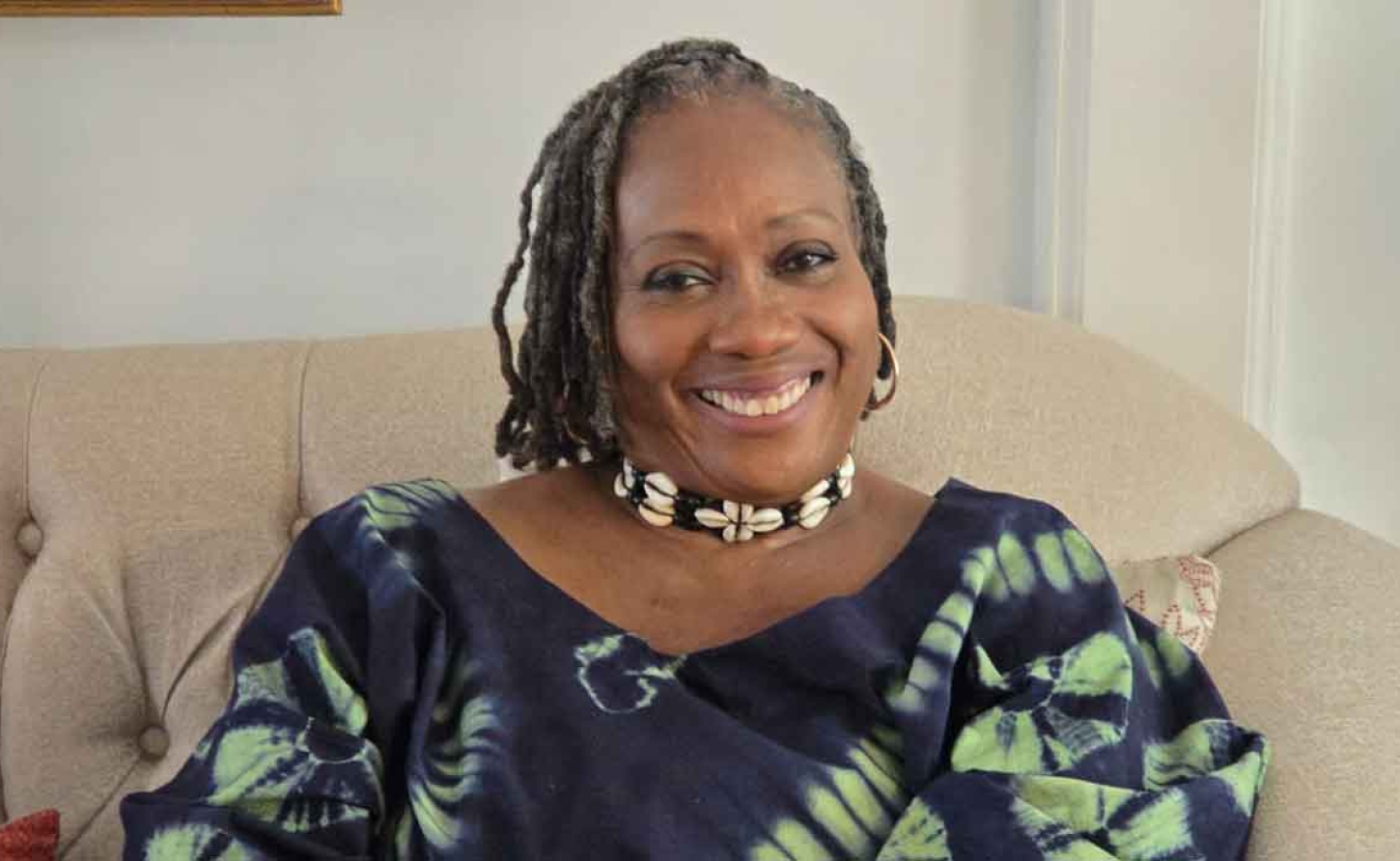
Jamaican-born Professor Dr Sonji Johnson-Anderson, who hails from Port Maria in St Mary, 2026 Inspiration Awardee | Derrick Scott Photo
Dr Sonji Johnson-Anderson, a Westfield State University lecturer whose work joins scholarship with the unfinished business of slavery’s legacy, will be honoured in Massachusetts next month on a bill that includes Pulitzer winner Nikole Hannah-Jones.
MONTEGO BAY, Jamaica, Calvin G. Brown | Diaspora | Port Maria is a long way from Springfield, Massachusetts. For Dr Sonji Johnson-Anderson, the distance has never been much of an obstacle.
The St Mary-born academic is among the recipients of the 2026 Inspiration Award from the African American Female Professor Award Association (AAFPAA), an honour recognising outstanding leadership, scholarship and commitment to advancing equity, inclusion and student success in higher education.
She will collect the award at the association’s 10th Annual Crown & Gown Gala on Saturday, November 7, at the Sheraton Hotel in Springfield. The milestone event, held under the theme “Crowned in Courage: Black Women Leading Change with Power and Purpose,” marks a decade of the association celebrating the achievements of African American women in academia.
“Far beyond any single title”
In a letter informing Johnson-Anderson of her selection, AAFPAA founder and chairperson Traci Talbert described a contribution that cannot be measured by a curriculum vitae alone.
“Your work reaches far beyond any single title, embodying the power of scholarship, advocacy, and healing in service to the students and communities you serve.” — Traci Talbert, AAFPAA
According to the media release announcing the honour, Talbert said the award rests on a particular kind of leadership: one that transforms access into opportunity, and advocacy into lasting institutional change.
From the classroom to the research desk
Johnson-Anderson built her academic credentials at the University of Massachusetts Amherst, completing an Education Specialist (EdS) degree in 2016 and a PhD in Teacher Education and School Improvement in 2018, before going on to postdoctoral work at the institution.
Between 2017 and 2021 she directed the STEM AP Ambassadors Programme, leading a team whose work produced the first edition of Empowering Underrepresented Students in Science: STEM Students Speak — a title that captures a programme built on placing students’ own voices at the centre.
Her research draws on three frameworks — Black Feminist Epistemology, Critical Race Theory and Performance Ethnography — to examine the experiences of students and families who find themselves on the margins of public and educational institutions.
Yet she is no ivory-tower theorist. Johnson-Anderson has taught at the primary, secondary and tertiary levels in Western Massachusetts, New York City and Jamaica. She currently lectures in world literature at Westfield State University in Massachusetts. It is a range few academics can claim, and one that keeps her research tethered to real children in real classrooms.
Crossing the waters
It is her work beyond the lecture hall that perhaps gives the award its fullest meaning. As Co-Executive Director and Director of Educational Initiatives for the Crossing the Waters Institute, she leads the development of educational programmes in the United States and South Africa.
The institute’s work confronts the historical and continuing wounds of slavery while fostering intercultural understanding. For a daughter of St Mary — the parish where Tacky’s Rebellion erupted in 1760, one of the most significant uprisings against slavery in the Caribbean — that mission carries a particular resonance.
Her responsibilities include organising international conferences and webinars designed to encourage dialogue, education and healing across cultures. Following recent work in South Africa, she is preparing for an upcoming visit to Benin, the West African nation whose coastline was once a major point of departure in the transatlantic slave trade.
A gala with a marquee guest
The November gala will also feature Nikole Hannah-Jones, the Pulitzer Prize-winning creator of The 1619 Project and Knight Chair in Race and Journalism at Howard University. Rather than delivering a traditional keynote address, Hannah-Jones will take part in a moderated, interview-style conversation as a central feature of the evening, which will bring together honourees and scholarship recipients.
For Jamaica, the recognition adds another name to the long roll of Caribbean-born educators shaping classrooms and policy across the diaspora — often with little fanfare at home. It is a reminder that the island’s most enduring exports are not only its music and its athletes, but its teachers.
And for a scholar whose work is, at its core, about who gets heard and who gets healed, the road from Port Maria to the Crown & Gown stage is itself a lesson worth teaching.
— 30 —
