
DIASPORA | VM Group Puts a US$4-Billion Number on the Diaspora — and Dares It to Invest
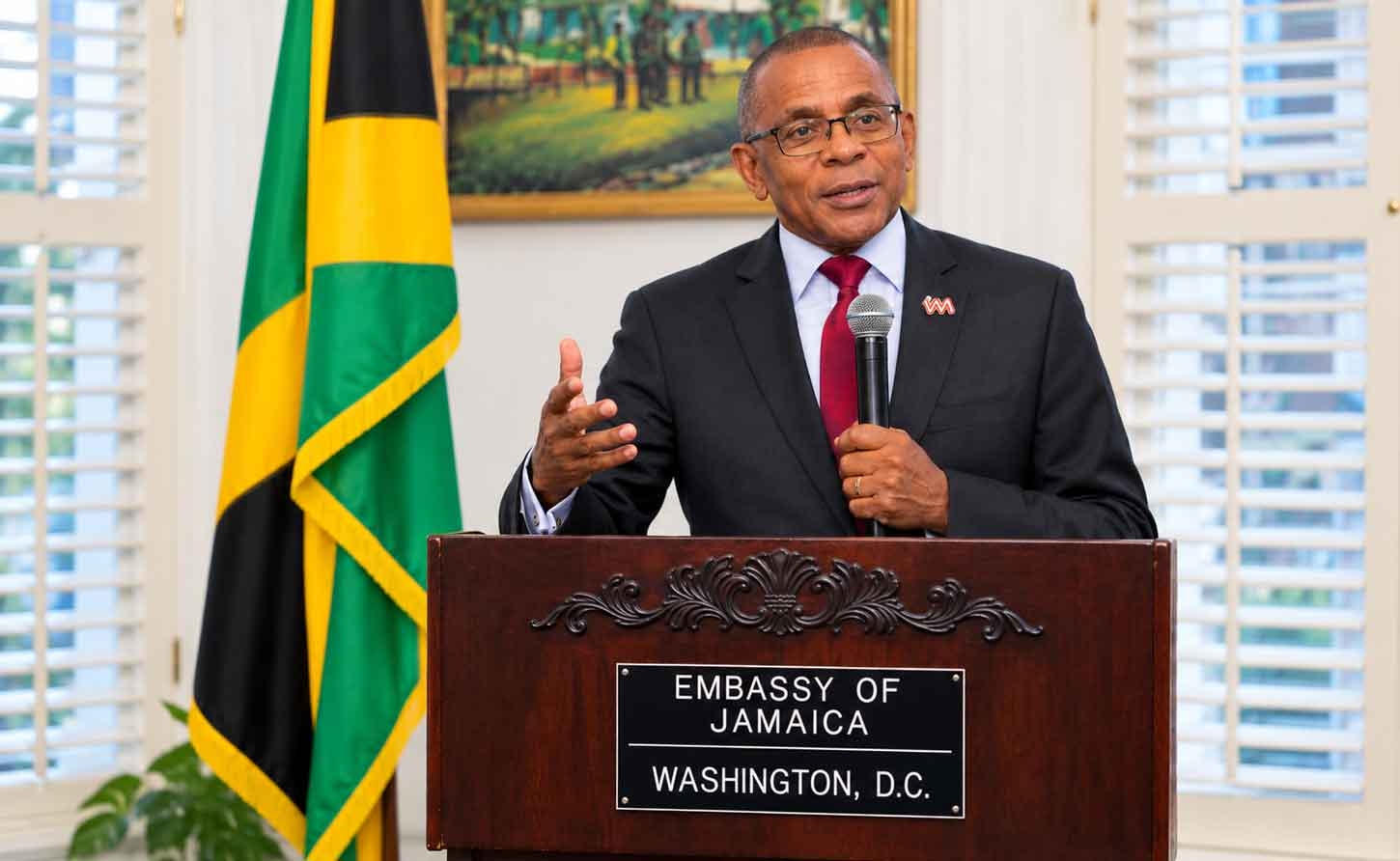
Courtney Campbell, Group President and Chief Executive Officer of VM delivers remarks at VM Yaad & Beyond” reception at the embassy of Jamaica in Washington DC on Friday, October 30 | Derrick Scott Photo
Overseas Jamaicans hold one in five VM accounts and nearly a third of its mortgage book. A year after Melissa, the question is what Jamaica does with that loyalty.
MONTEGO BAY, Jamaica |Friday, October 30, 2026— By Calvin G. Brown | Senior Correspondent, WiredJa Online | The Jamaican diaspora is not a sentimental footnote to the island's economy. It is a pillar of it, and on Friday one of the country's oldest financial institutions finally put a hard number on the weight it carries.
Jamaicans living overseas contributed approximately US$4 billion to deposits held by the VM Group last year, Group President and Chief Executive Officer Courtney Campbell disclosed while addressing Jamaicans and other guests at a “Yaad & Beyond” reception at the Embassy of Jamaica in Washington, D.C., on Friday, October 30. The figures were reported in a media release from Derrick Scott in Washington.
To put that number in context: the Bank of Jamaica recorded total remittance inflows of US$3.49 billion for all of 2025 — a record year. The diaspora's deposits at a single institution, in other words, outstrip what the entire country received in remittances through every channel combined.
The figures Campbell laid out should settle any lingering debate about whether overseas Jamaicans are peripheral to the island's financial life. VM Group has approximately 500,000 active accounts. Of those, 109,000 — more than one in five — are held by Jamaicans living abroad. Roughly 55 per cent of those overseas accounts are held in the United States.
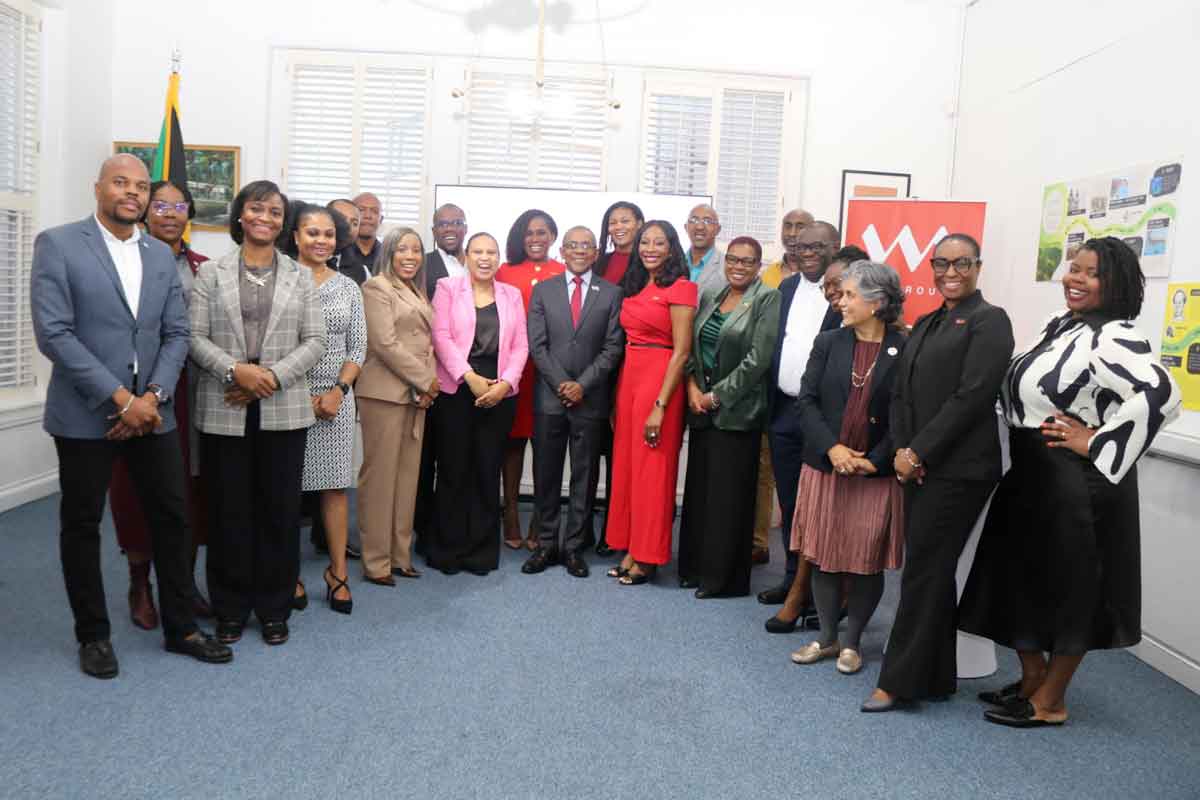
Courtney Campbell, Group President and Chief Executive Officer of VM Group and Chargé d’Affaires at the Embassy of Jamaica in Washington, D.C. Lishann Salmon Center shares a photo opportunity with members of staff at the embassy of Jamaica and VM staff members at VM Yaad & Beyond” reception at the embassy of Jamaica in Washington DC on Friday, October 30. Photo Derrick Scott.
And they are not merely parking money. Overseas Jamaicans account for approximately 30 per cent of VM Group's mortgage portfolio — nearly a third of the institution's home-lending book is held by people who do not live on the island. They are buying land in Hanover, building houses in St Catherine, holding on to family property in Manchester. The diaspora, quite literally, owns a piece of Jamaica, and is paying for it monthly.
The ask: move beyond savings
Campbell's message was that this loyalty is both an asset and an opportunity not yet fully seized. He urged overseas Jamaicans to look beyond traditional savings and consider real estate, stocks, bonds, wealth management and business development in Jamaica.
“Jamaica is a great place to invest,” he told the gathering, pointing to the strength of the financial sector, the regulation and supervision of the banking system, and the opportunities in real estate and business.
He noted that property values had generally shown resilience, though performance varied by location and sector, and pointed to the Jamaican stock market as a place where investors could find companies with growth potential. He singled out export-oriented businesses — particularly those able to exploit Jamaica's access to North American, European and wider Caribbean markets — as an area where diaspora capital and know-how could make a difference.
It is a pitch with teeth. A diaspora holding US$4 billion in deposits with one institution — money earning a deposit rate rather than an equity return — represents a pool of patient capital that Jamaica's small-business sector, its housing market and its stock exchange have never fully tapped.
Melissa changes the calculus
The timing of the Washington engagement is not incidental. The reception came a year, almost to the day, after Hurricane Melissa tore across western Jamaica as a Category 5 storm, and Chargé d'Affaires Lishann Salmon made the connection explicit.
Salmon framed the VM engagement as a chance to strengthen ties between Jamaica and its diaspora while identifying practical ways for overseas Jamaicans to contribute to the country's development — and she did not sugar-coat what that development now entails.
“We hope today's interaction will help you identify practical ways to pursue your financial goals by contributing to Jamaica's growth,” she said.
Families are still rebuilding homes, she noted. Businesses are still restoring operations. Communities are still working to recover their livelihoods. And reconstruction, she argued, cannot simply put back what was there: it must mean safer homes, stronger infrastructure and businesses better equipped to withstand the next shock. That, she said, will require capital, skills, trust and strong partnerships — and she named housing, engineering, technology, professional services and small-business financing as the sectors where diaspora involvement could matter most.
The subtext is hard to miss. In the weeks after Melissa, the diaspora did what it always does: it sent barrels, wired money and filled church halls with donated supplies. Salmon's message was that goodwill of that kind, however generous, is not the same as investment — and that the recovery of parishes such as Westmoreland, St Elizabeth and Hanover will turn on whether the first can be converted into the second.
A mutual built by migrants
Campbell's institution has a particular claim on this conversation. VM's mutual structure — the members own it — is what, by his account, drove the decision to establish overseas offices to serve Jamaicans who migrated in search of opportunity.
That footprint now extends well beyond banking. VM's property services team helps members buy, sell or rent property; its wealth management arm offers access to investment opportunities; and its pension and remittance services, including MoneyGram and other international transfer channels, keep money moving between households on both sides of the water. Campbell said the group is pushing overseas members toward its digital and online channels, and urged those contemplating investments or business ventures to seek professional advice.
The reception drew members of diaspora organisations, students from universities across the Washington, D.C., Maryland and Virginia area, community leaders, business representatives and VM's leadership team — a cross-section of the very people Campbell was asking to think of themselves not as senders of money, but as investors.
The bottom line
The US$4 billion figure deserves to echo well beyond one embassy reception. It is evidence that the diaspora is already among the largest stakeholders in Jamaica's financial system — larger, by deposits at a single institution, than the entire national remittance flow. The question Campbell and Salmon put on the table is whether the country, and the institutions that serve it, can offer those stakeholders something better to do with their money than leave it in a savings account.
For a nation still clearing the wreckage of Melissa, that is not an abstract question. It is the recovery plan.
-30-
