HISTORY | Pope Leo XIV’s Historic Apology for Chattle Slavery and the Wound That Will Not Close
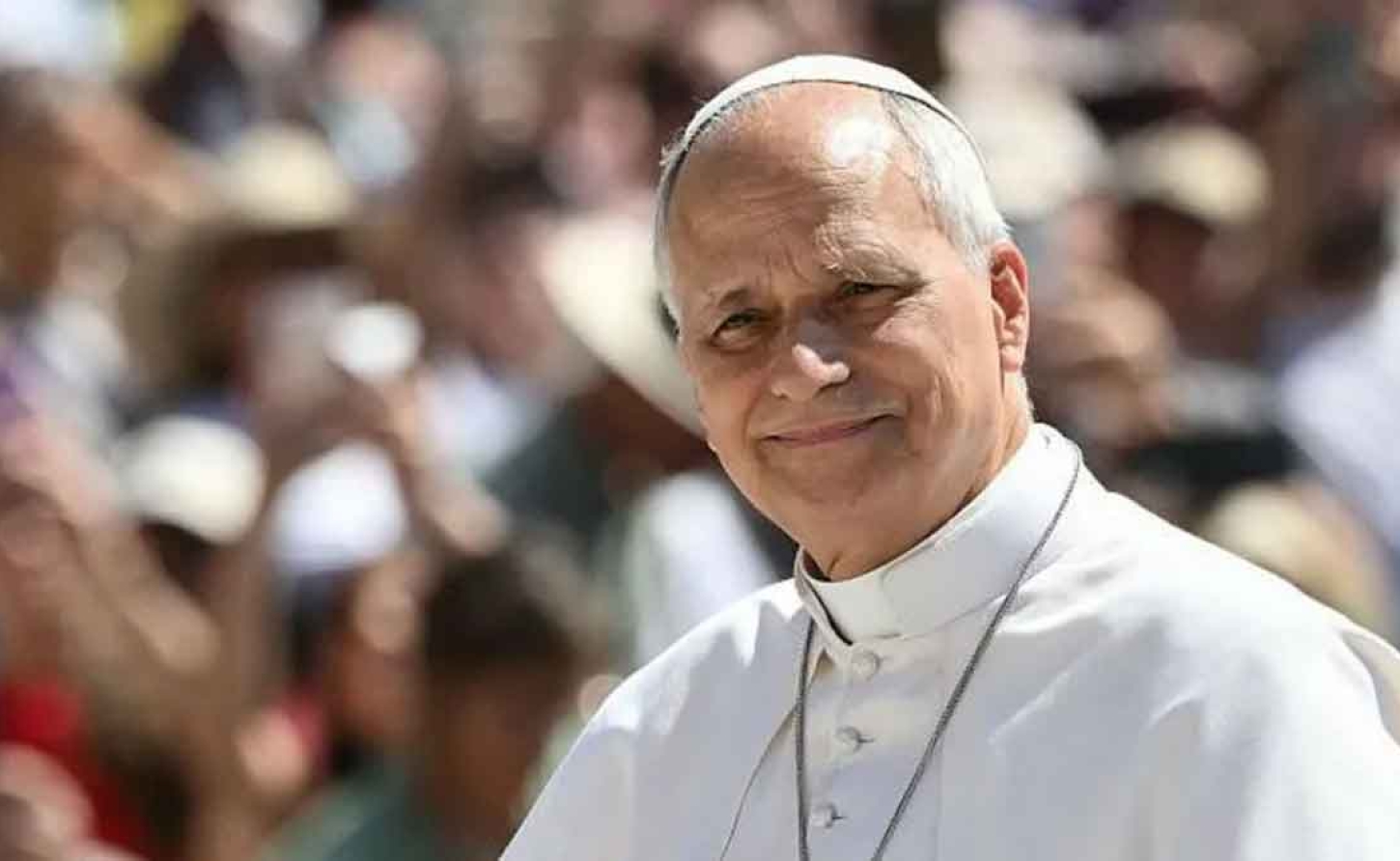
Pope Leo XIV’s Historic Apology for Chattle Slavery and the Church's involvement in legitimising slavery and its delay in condemning it for centuries.
The first American-born pope has done what none of his predecessors dared — formally apologize for the Vatican’s direct role in authorizing the enslavement of millions. For the Caribbean, the cradle of the transatlantic slave trade’s most brutal theatre, the words are momentous. The question is whether they are enough.
Calvin G. Brown | Faith & Society | WiredJa
KINGSTON, Jamaica - May 27, 2026 | Calvin G. Brown - On Monday, May 26, 2026, Pope Leo XIV signed his name to a sentence no occupant of the Chair of St. Peter had dared write in more than five hundred years. In his first encyclical, Magnifica Humanitas — “Magnificent Humanity” — the pontiff acknowledged what Black Catholics, Caribbean historians, and descendants of the enslaved have long demanded: that the Holy See did not merely tolerate the transatlantic slave trade. It authorized it.
“For this, in the name of the church, I sincerely ask for pardon,” Leo wrote, contemplating what he called “the immense suffering and humiliation endured by so many in stark contrast to their immeasurable dignity as persons infinitely loved by the Lord.” He named it plainly: “a wound in Christian memory, one from which we cannot consider ourselves detached.”
For the Caribbean — the region that absorbed the largest volume of enslaved Africans outside of Brazil, the theatre where plantation slavery was refined into its most ruthless industrial form — those words land with particular weight. And particular irony.
The Bulls That Built the Cage
The Vatican’s culpability is not theological abstraction — it is documented in ink and parchment. In 1452, Pope Nicholas V issued the papal bull Dum Diversas, granting Portugal’s king the explicit right “to invade, conquer, fight and subjugate” and “reduce their persons to perpetual slavery” any non-Christians encountered in Africa or the Americas. Three years later, Romanus Pontifex doubled down. Together, these documents formed the legal and moral backbone of the Doctrine of Discovery — the colonial-era theory that made it God’s business to seize African and Caribbean land and African bodies.
The permissions were not aberrations. They were reaffirmed by Pope Callixtus III in 1456, Pope Sixtus IV in 1481, and Pope Leo X in 1514. The Spanish crown received equivalent authority for the Americas. Centuries of Caribbean suffering trace a direct legal line back to those Roman offices. What was done to Jamaica, Barbados, Haiti, Martinique, and Trinidad was, in part, done with papal blessing.
In 2023, Pope Francis formally repudiated the Doctrine of Discovery. But critically, the Vatican never rescinded the original bulls — the instruments themselves remained technically intact. Monday’s encyclical represents the most direct reckoning to date with what those documents actually produced.
“The Catholic Church has never been an innocent bystander in the history of white supremacy. Black Catholics have waited a long time to hear the Vatican speak honestly about the church’s leading roles in the trans-Atlantic slave trade.” — Shannen Dee Williams, University of Dayton
A Pope With Skin in the Game
What separates Leo XIV from every predecessor who danced around this history is not just theology — it is genealogy. The first American-born pope carries, in his own bloodline, both the enslaved and the enslaver. According to genealogical research by scholar Henry Louis Gates Jr., seventeen of Leo’s American ancestors appear in historical records as Black, mulatto, Creole, or free persons of colour. His family tree is, in the most literal sense, a microcosm of the slave society the Church enabled.
That personal reckoning adds a dimension to Monday’s text that no amount of diplomatic language can manufacture. Last month, Leo prayed at a Catholic shrine in Angola — once a central hub of the Portuguese slave trade. He spoke of “sorrow and great suffering,” though he stopped short of naming slavery explicitly at that moment. Monday’s encyclical removed all ambiguity.
Eighteen Centuries and Counting
Leo’s encyclical acknowledges an astonishing timeline: “It took eighteen centuries for [slavery’s] full incompatibility with [Christian doctrine] to be explicitly recognized.” Slavery was formally condemned by the papacy only in 1888 — by Pope Leo XIII, the current pope’s namesake — decades after Britain abolished the trade, decades after emancipation in the Caribbean, and a full generation after the American Civil War.
Before that, church institutions — and popes themselves — kept enslaved people. Pope Gregory the Great, the sixth-century pontiff celebrated as a theological giant, was a slaveholder. The institution that claims to be the moral conscience of civilization was, for the better part of two millennia, a willing participant in the traffic of human flesh.
Caribbean scholars and reparations advocates will note that Leo’s framing — that we “cannot judge the morality of the decisions with today’s standards” — leaves some running room. It is a hedge that sits uncomfortably alongside an apology that is otherwise remarkable for its directness. The Caribbean reparations movement, which has spent decades building the legal and moral architecture for accountability, will want substance to follow sentiment.
From Chattel to Algorithm
Leo’s encyclical is primarily a manifesto on artificial intelligence and human dignity — and it is within that framework that he situates the apology. The logic is deliberate: if the Church wishes to credibly condemn the new forms of exploitation embedded in the digital economy — data harvesting, algorithmic labour, the concentration of technological power in the hands of a few corporations — it must first confess its complicity in the original sin of treating human beings as commodities.
It is an intellectually honest move. But for a Caribbean that has been promised moral reckoning before — in Cameroon in 1985, at Gorée Island in 1992, in careful Vatican statements that always fell short of direct papal culpability — the test will be what comes next. An apology without reparation is a headline. What the descendants of the enslaved need is architecture: debt cancellation, cultural restitution, institutional repair.
The wound Leo describes in Christian memory is also, and far more viscerally, a wound in Caribbean memory — in the hills of Jamaica and the sugar plains of Barbados, in the still-uncompensated labour that built the wealth of European civilization. Five centuries of silence have been broken. The harder conversation — what repair actually looks like — has only just begun.
— 30 —
