ANTIGUA AND BARBUDA | The Boxing Day Summons: When Law Enforcement Becomes Political Theater
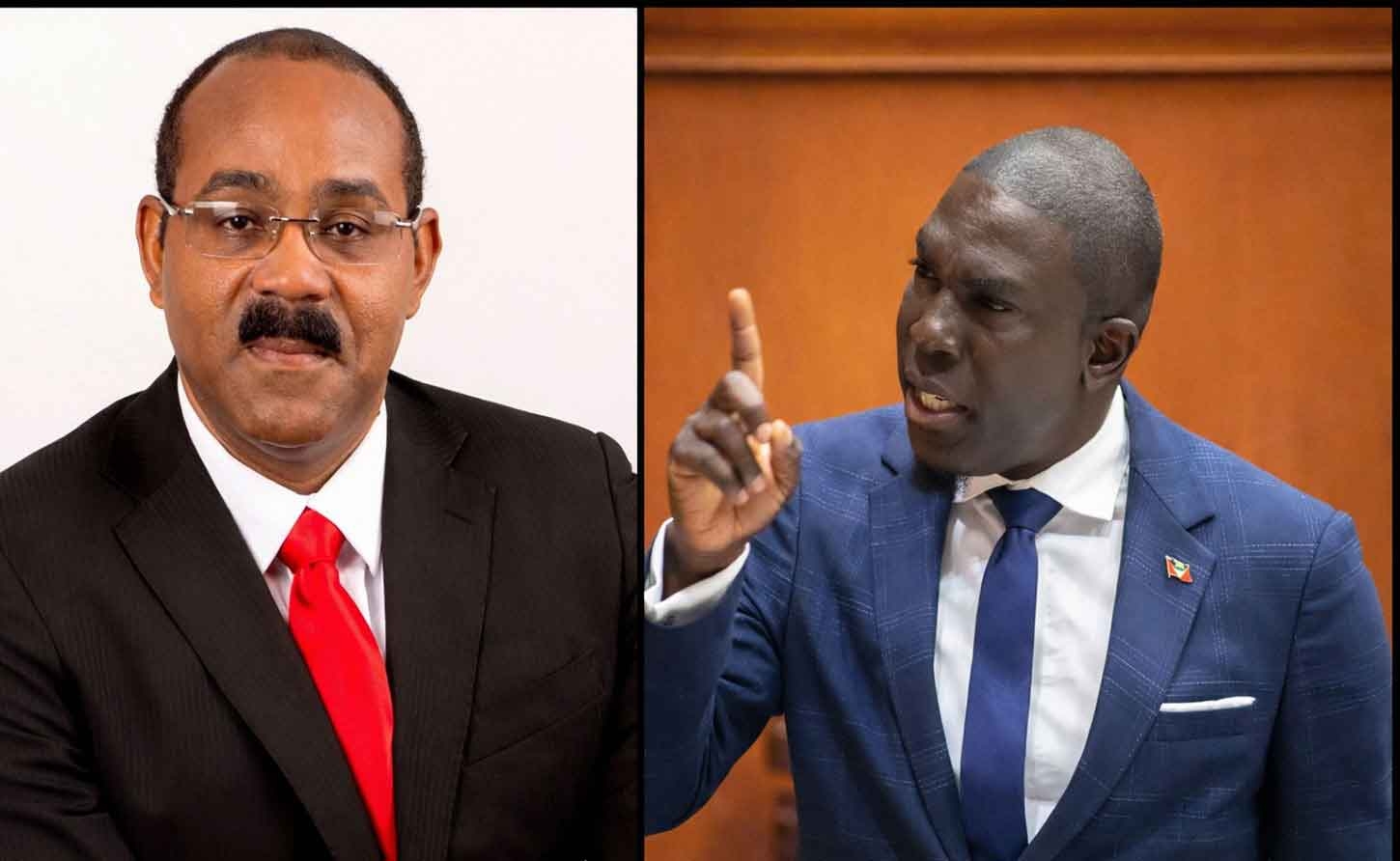
Prime Minister Gaston Browne and Opposition Leader Jamale Pringle
Antiguan Opposition Leader called in for questioning after PM's public directive exposes dangerous erosion of police independence
ST JOHN’S, ANTIGUA, December 26, 2025 -”The Real News” - The timing speaks volumes. While most Antiguans and Barbudans celebrate Boxing Day with family and leftover ham, Opposition Leader Jamale Pringle was instructed to report to Police Headquarters at 10 a.m. on December 26 for questioning regarding the burning of APUA-owned materials in Old Road, his constituency.
The Christmas Eve summons had been the original plan—a move that could have kept Pringle in custody through two public holidays and a weekend, exploiting the 48-hour legal custodial period that doesn't count non-working days. When that attempt failed, authorities settled for Boxing Day instead. "But dem couldn't allow the man to enjoy a happy Christmas wid he children and family? Is so wicked Police be now?" one resident asked, capturing the public's disgust.
What makes this summons particularly troubling isn't the investigation itself—arson is a serious crime deserving of proper inquiry. What rankles is the theatrical choreography that preceded it.
The Dog-Whistle and the Obedient Response
Just weeks earlier, Prime Minister Gaston Browne used his radio programme to publicly accuse Pringle of direct or indirect involvement in the act of arson, then called on Police Commissioner Everton Jeffers to haul the Opposition Leader in for questioning. The commissioner's Boxing Day summons followed with clockwork precision.
"From the time Gaston Browne gave the police commissioner the 'yes' a couple weeks ago, I knew something funny was going to happen," one woman told REAL News. She wasn't surprised. Nobody paying attention should be.
This is not how independent law enforcement operates in functional democracies. Police commissioners investigate evidence, not prime ministerial pronouncements. They follow leads, not radio show directives. The sequence here—accusation, instruction, summons—reveals a disturbing chain of command where the Police Commissioner appears less as an independent officer of justice and more as an instrument of political convenience.
The Silence That Condemns
Meanwhile, certain matters receive conspicuously different treatment. The admitted $15 million fraud known as "Vehicle-gate" has produced precisely zero police action. Commissioner Jeffers, so responsive to his prime minister's public calls regarding opposition figures, has remained deafeningly silent on corruption within government ministries.
The prime minister's wife has declared the matter "case closed"—an assertion that would be laughable if it weren't so brazen. Since when does a spouse of the head of government determine what qualifies as closed police business? Since when does $15 million in public funds vanish without investigation?
The answer, apparently, is when those implicated are on the right side of the political divide.
UPP Deputy Political Leader Sherfield Bowen captured the absurdity perfectly when police requested he bring in MP Pringle for questioning. His response? He would—on February 31st. The date doesn't exist, of course. Neither, it seems, does the pretense of impartial policing.
A Pattern, Not an Aberration
This is hardly Commissioner Jeffers' first rodeo in political enforcement. Antiguans remember the tear-gassing of vaccine protesters. They remember the arrests of UPP officials, including Serpent Watts and the party chairperson. They remember young Tabor. Each incident followed a familiar script: political tension, prime ministerial displeasure, police action.
As one political observer warned: "The prime minister and attorney-general are weaponizing the police. And the more desperate the prime minister gets—believe me—it's the more he's going to use the Police against the people."
Even the contrast in investigative priorities is telling. The November 2024 murder of Independent MP Asot Michael—a violent crime that shocked the nation—generated no similar public summons of the Rural North representative. The City South MP, who incidentally serves as minister responsible for Police and Public Safety, has never been called in despite crimes in his constituency. But burn APUA materials in the Opposition Leader's district, and watch how swiftly the commissioner moves.
Democracy's Dangerous Slide
Some observers speculate the Boxing Day timing might be retaliation against Bowen for his February 31st quip. Others suggest it's connected to the questioning of a West Indies Oil Company executive by U.S. authorities, which reportedly left the prime minister "on edge." Whatever the motivation, the message is clear: opposition politics in Antigua and Barbuda now comes with the threat of politically timed police harassment.
"When the prime minister can practically order law-enforcement officers to call in, question, and presumably lock up an Opposition member just because he says so," one observer notes, "this is another clear indication that Antigua and Barbuda is sliding from a democracy and into a dictatorship—quick, fast and in a hurry."
Supporters have been encouraged to show up at Police Headquarters this morning in solidarity with Pringle. Three lawyers are expected to accompany him. But the larger question looms: What becomes of democracy when the police force transforms from guardian of justice into enforcer of political grudges?
The Boxing Day summons may be about arson. But the real fire burning in Antigua and Barbuda is the one consuming the independence of its institutions—one politically motivated investigation at a time.
-30-
